Virtual makeup try-on: how cosmetics brands grow sales and collect leads
A shopper picks up a lipstick, holds it next to her face in the shop mirror, and puts it back. She has no idea how it looks on her. A screen that puts the shade on her own face, in motion, in that shop’s light, answers in under a minute and captures her email.
Key Takeaways
- Up to 500 photos a day on our event builds, with roughly as many opt-in contacts.
- Most in-store mirrors return a rendered still in seconds. A live generative feed is what makes a mirror behave like one.
- Software starts at 8,000 EUR, hardware adds 1,000 to 5,000 EUR, and a screen ships in brand colours in two weeks.
What a shopper sees when a shade lands on her face
Lipstick and foundation fail in different ways. Lipstick sits on top of the lip as an even block of colour, so an overlay gets close. Foundation is meant to disappear into skin, so the render has to read her undertone, the texture underneath and how shop light hits her jaw.
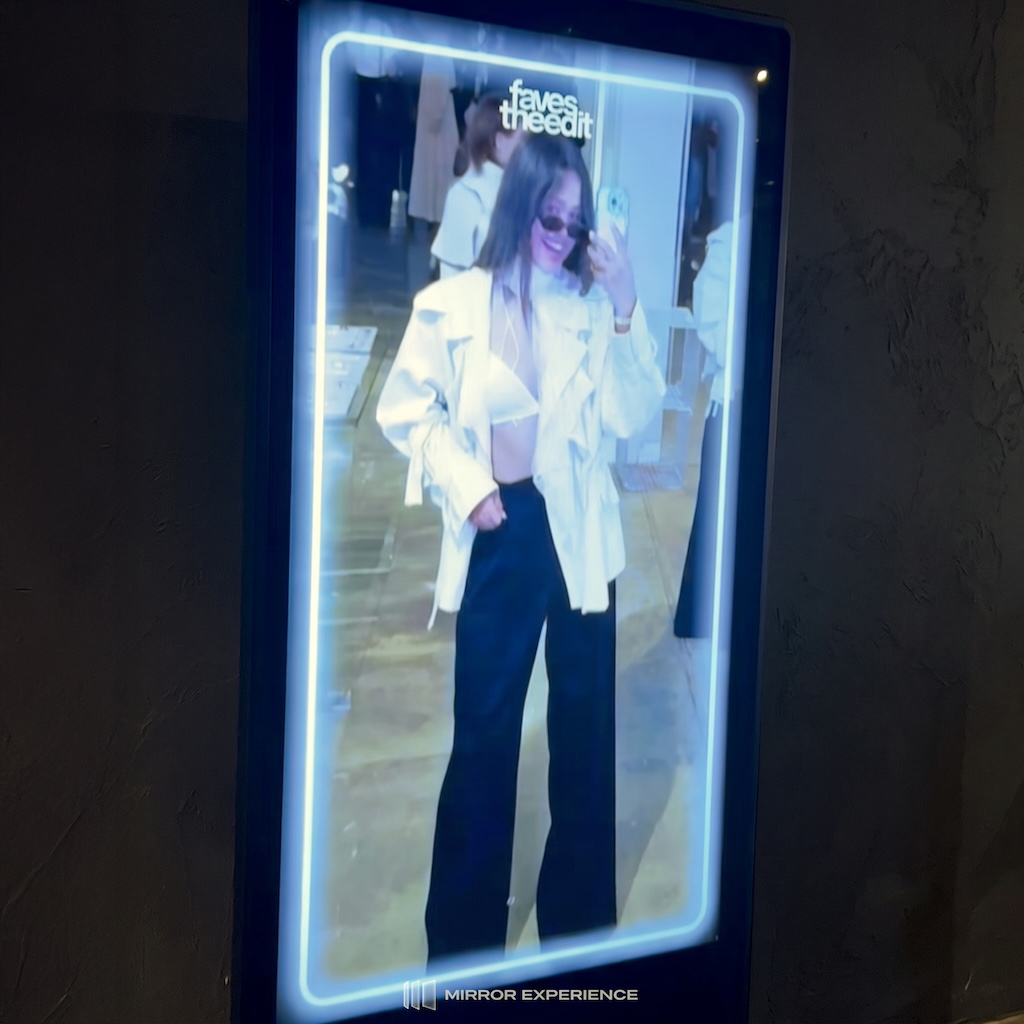
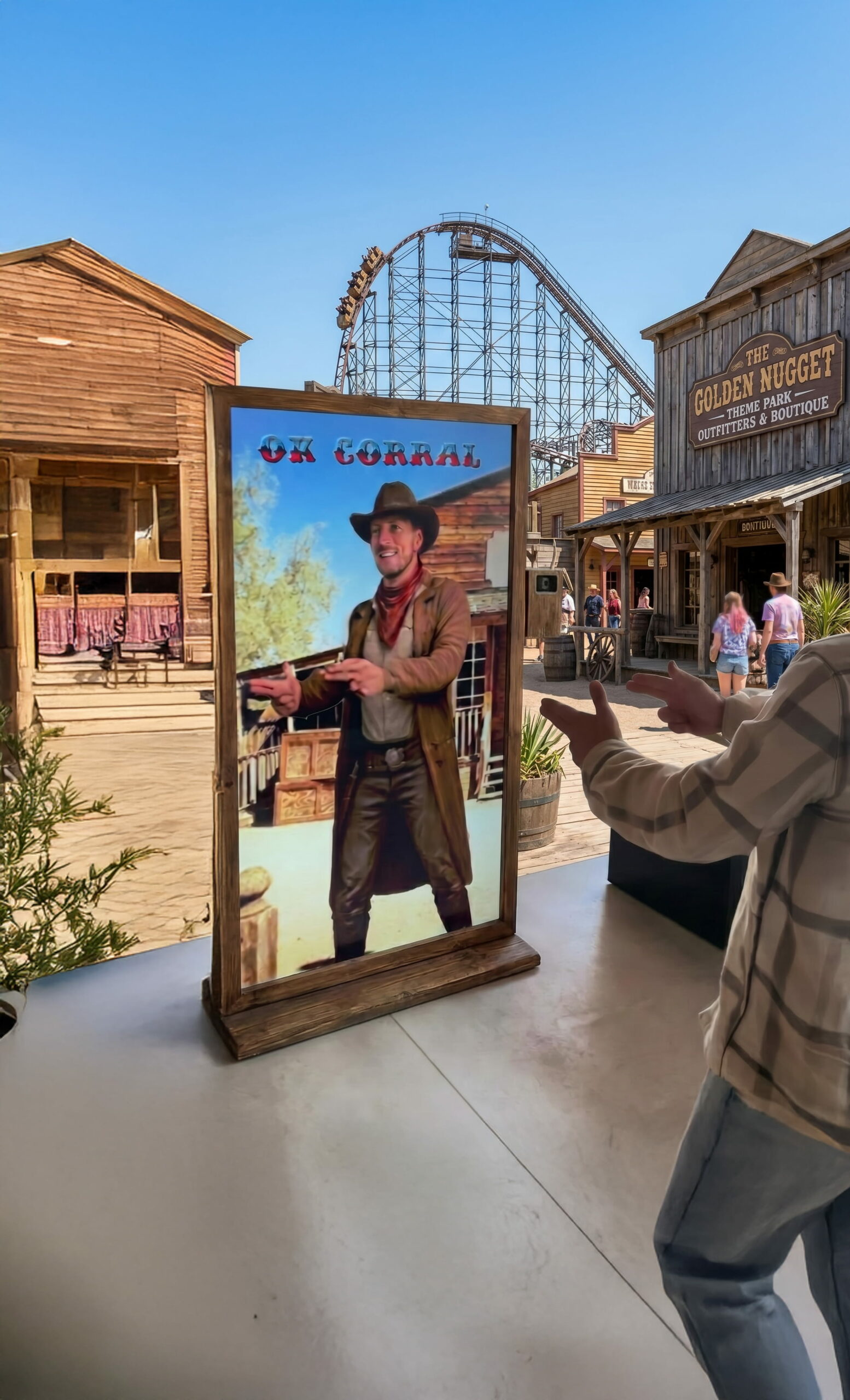
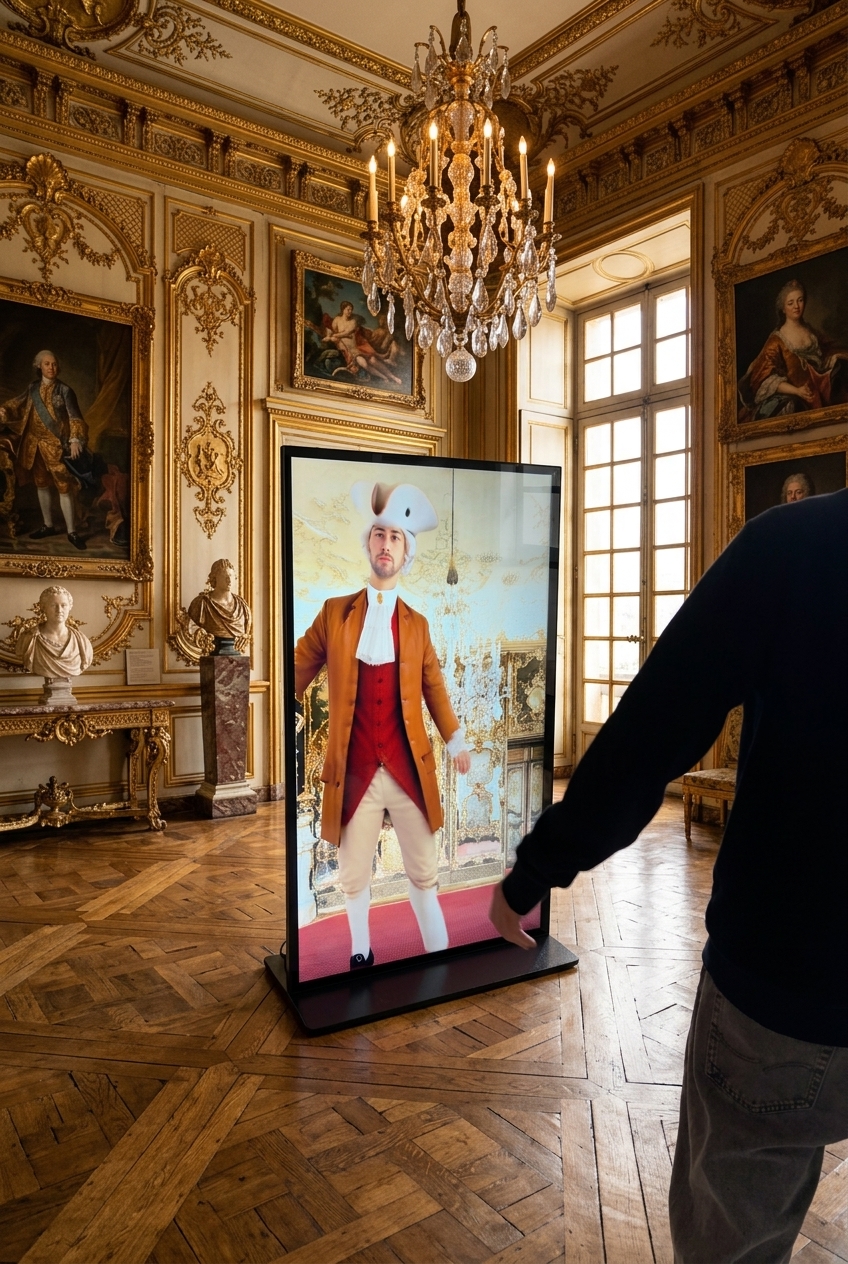
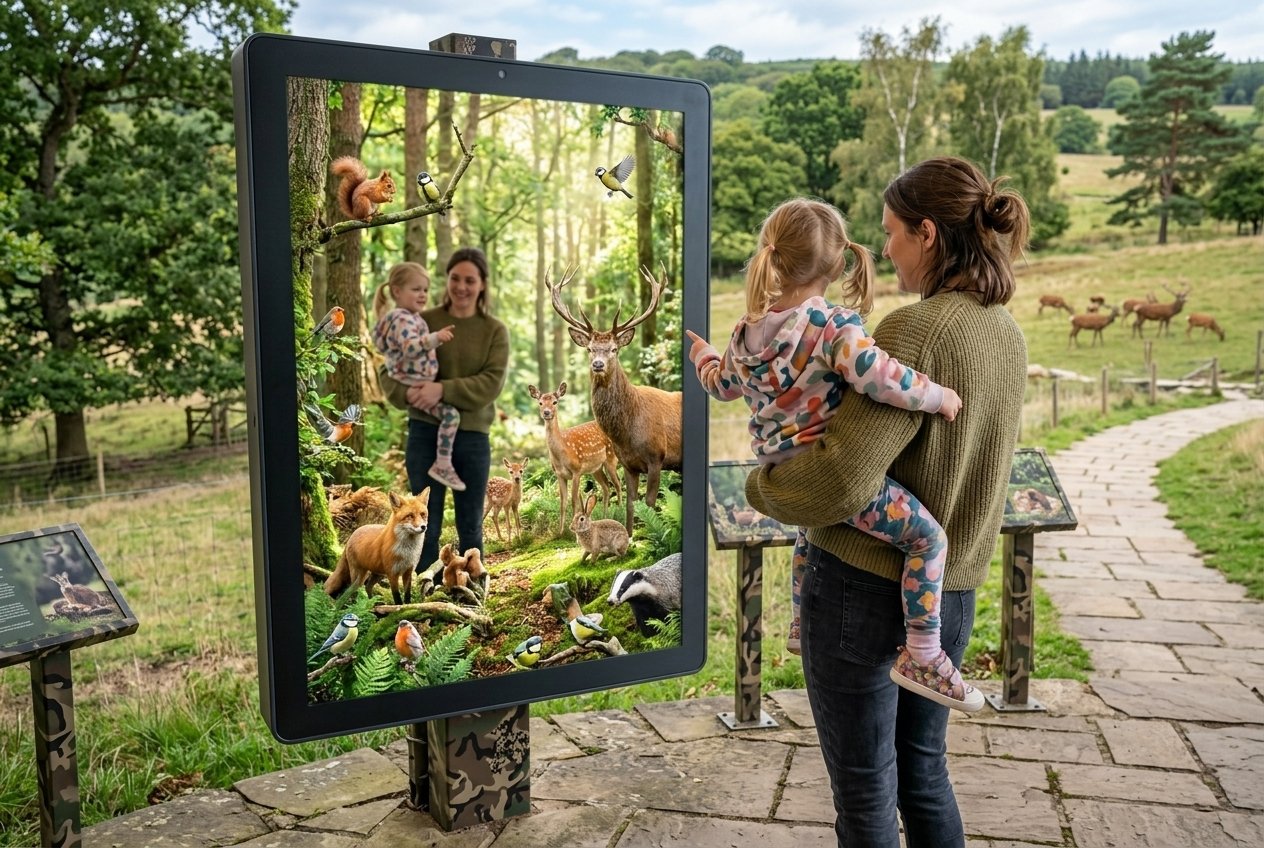
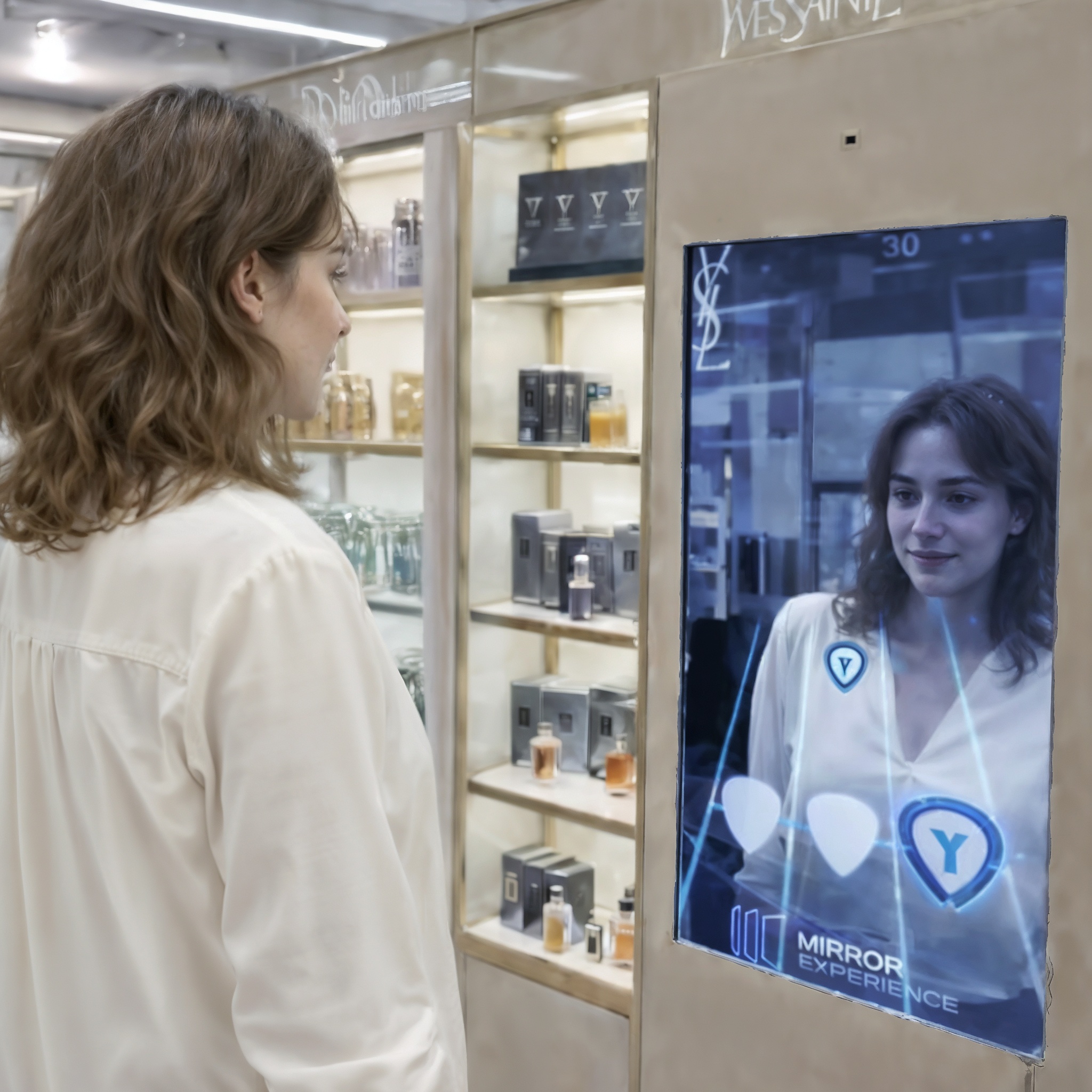
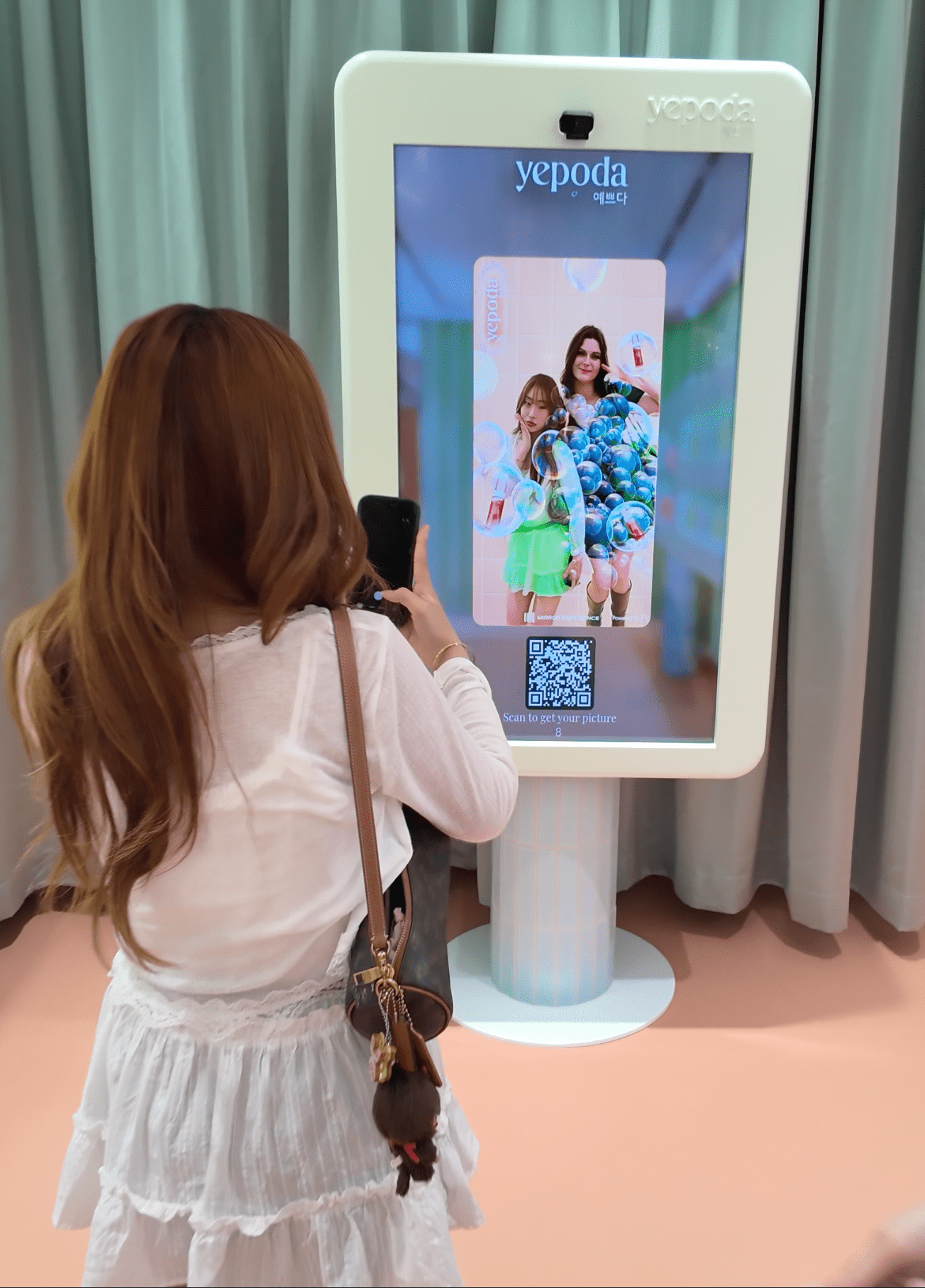
We run virtual makeup try-on on a screen of 55 to 75 inches framed on the face, and the useful part is speed. She turns her head, the light shifts, the colour follows, on the camera feed at about 25 frames per second.
What the evidence says about shade doubt
Google reported that shoppers interact with beauty products 10% more when AR is present, with more than 50 brands publishing AR beauty assets on its platform (Google, October 2023).
The sturdier evidence comes from a retailer’s app. Tan, Chandukala and Reddy followed 160,400 customers and 2,300 products over 19 months for the Journal of Marketing and found AR use raised sales, with the biggest lift on less familiar brands and new customers (Journal of Marketing, 2022).
Circana recorded US prestige makeup up 3% and mass makeup up 5% in the first half of 2026, with units down in both tiers (Circana, via Premium Beauty News, August 2026). Shoppers are not buying more lipstick. They buy the one they are sure of.
A rendered still or a live feed, and why a shopper can tell
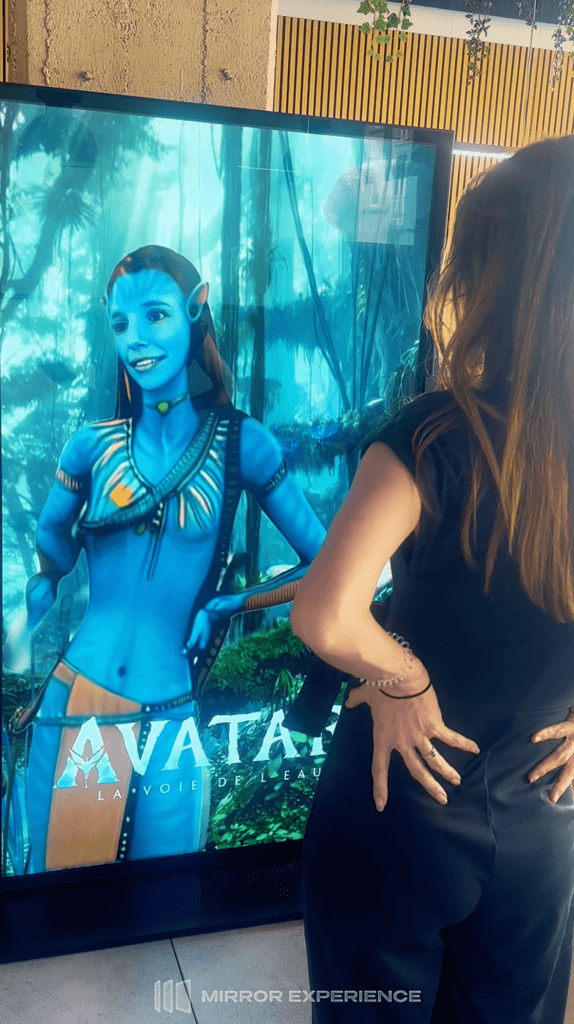
Several in-store mirrors quote render times of two to eight seconds per look, which is a generated photograph rather than a reflection. For makeup that breaks the loop, because she turns to check the shade from another angle and the image stops following her.
| Rendering method | What she sees | Where it breaks on makeup |
|---|---|---|
| AR overlay on face tracking | A flat colour layer on the lips | No texture, so matte reads as gloss |
| Generated still after capture | A realistic photo, seconds later | Frozen, so another angle needs a fresh capture |
| Generative model on the live feed | The shade on her face as she moves | Needs real compute, so hardware decides quality |
We work in that row. Decart’s LUCY VTON models render on the live feed, an official partnership we have held from the start, and we run them through Snapchat Camera Kit so a shopper can use her own phone. The AR mirror page covers the hardware.
How the screen earns its space in contacts
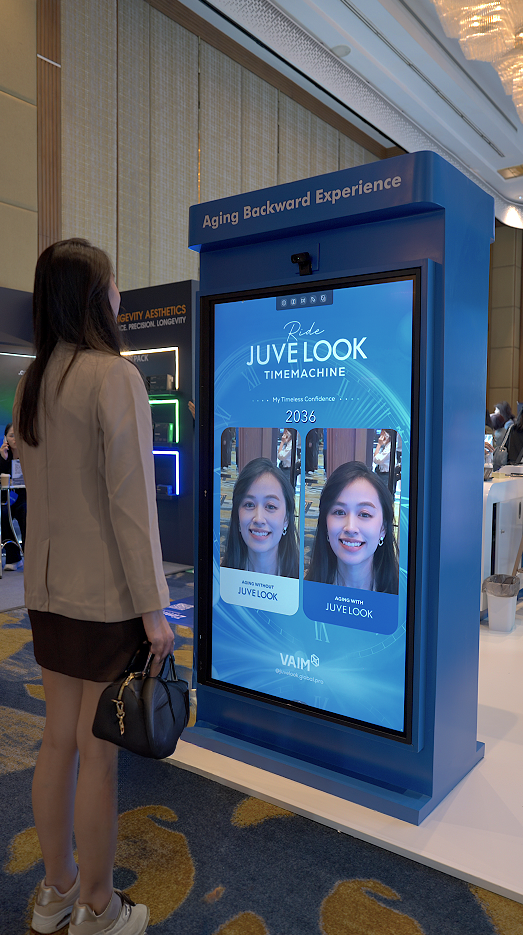
A mirror that only produces compliments is a cost. The version that pays for itself ends with a photo, a QR code, an email sign-up and the product on her phone.
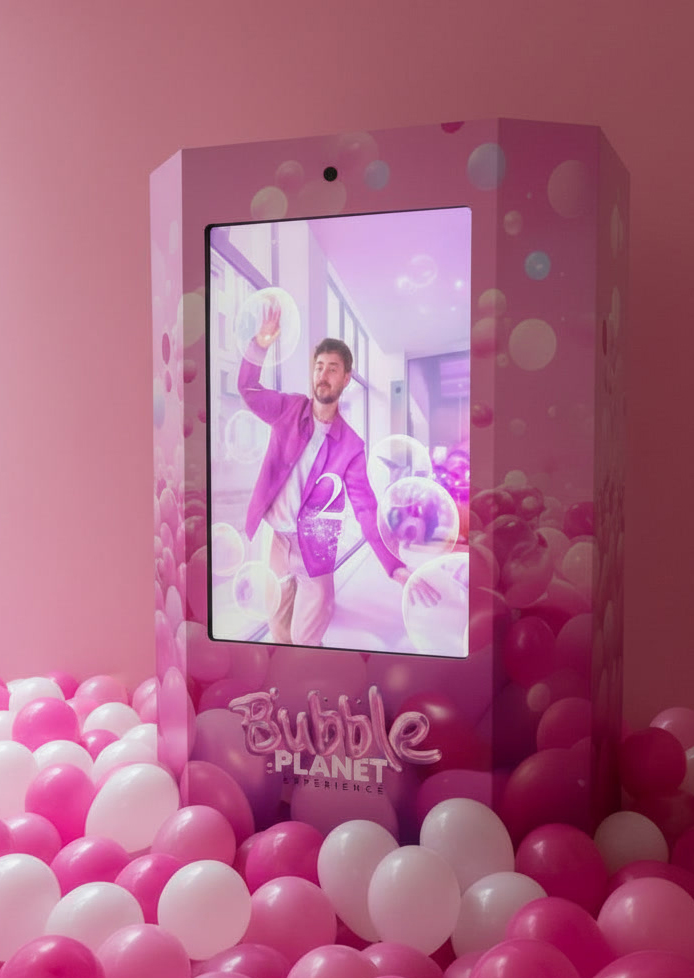
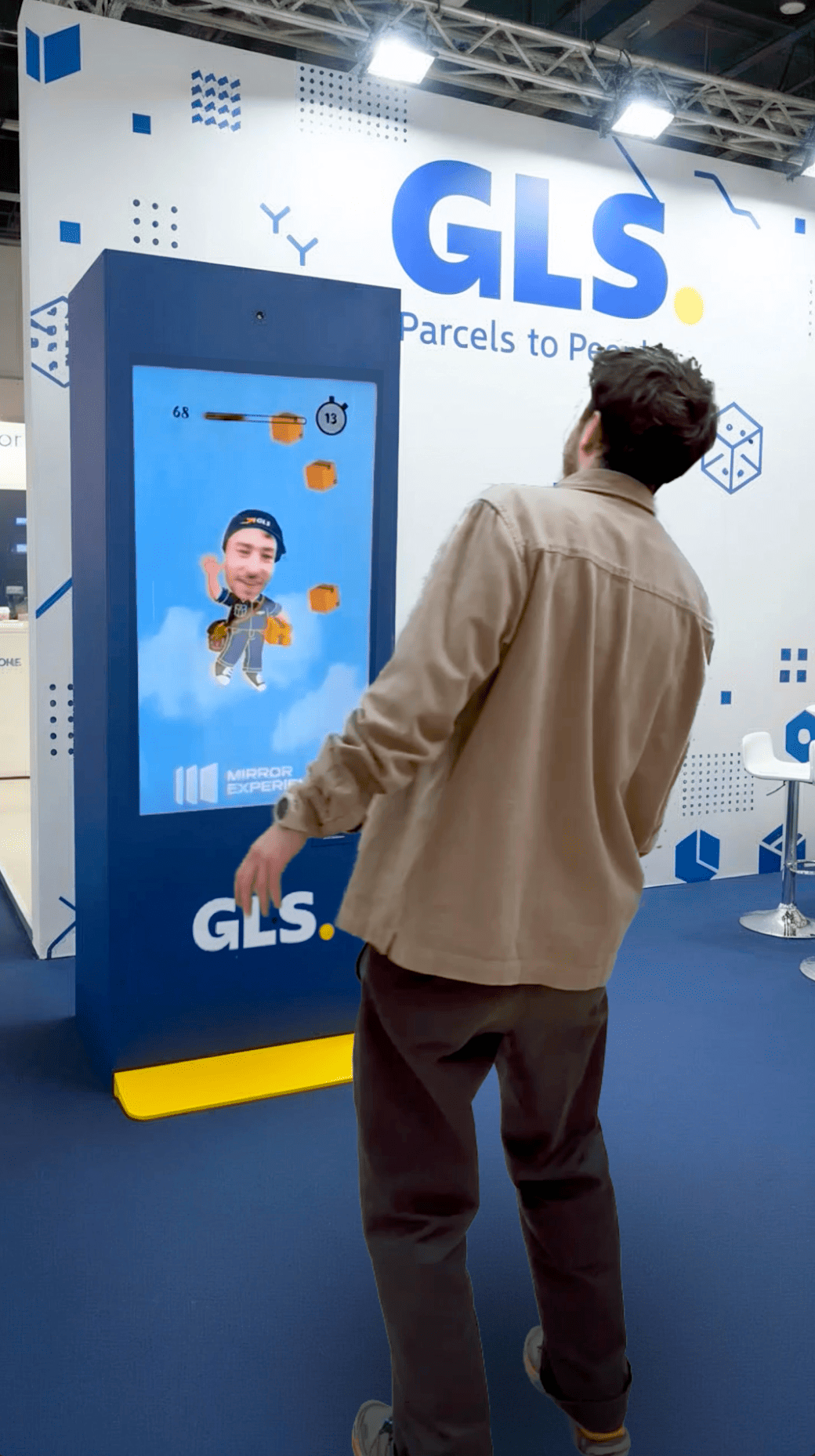
On event deployments we handle up to 500 photos a day, collect roughly the same volume of emails on an explicit opt-in, and see about 70% of participants share their result as a story. A gift or a discount code lifts that further. Sessions run 30 seconds to a minute, so the next visitor steps in without a queue. At London Fashion Week we ran 26 pieces on one screen.
There is no conversion figure. We never measured one cleanly, and a number invented for a deck is worse than none.

Two weeks in brand colours, plug and play
A screen is built and delivered in your brand colours in two weeks, at 55 to 85 inches depending on the space, and the hardware is plug and play.
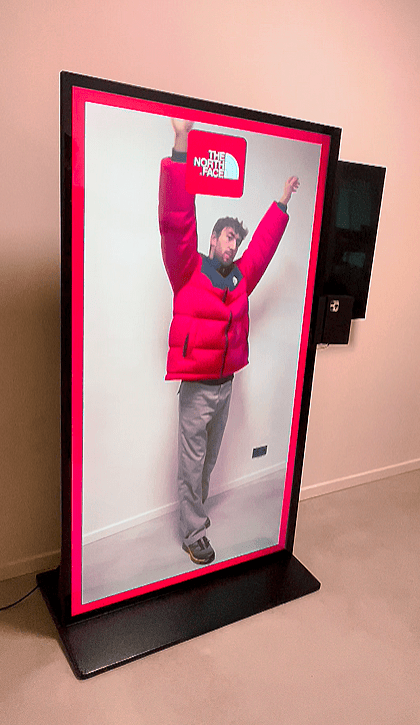
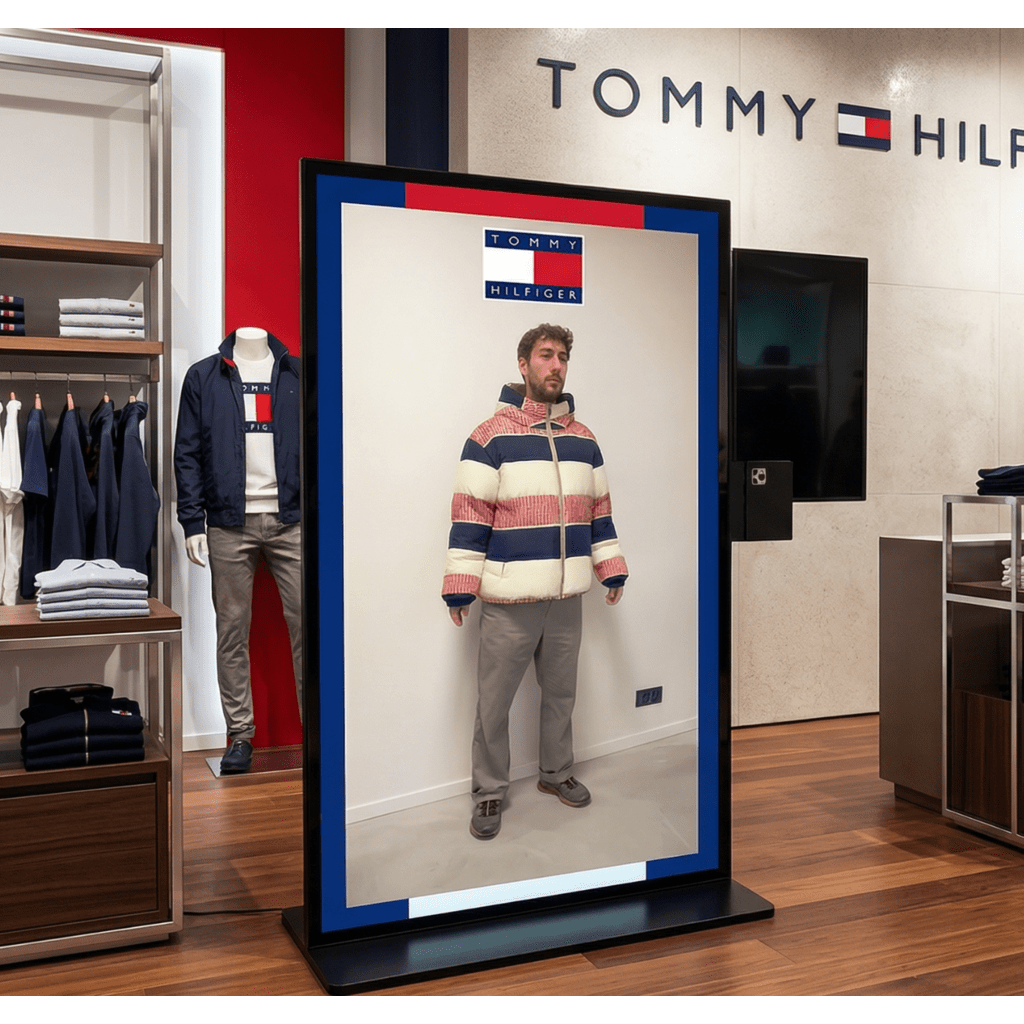
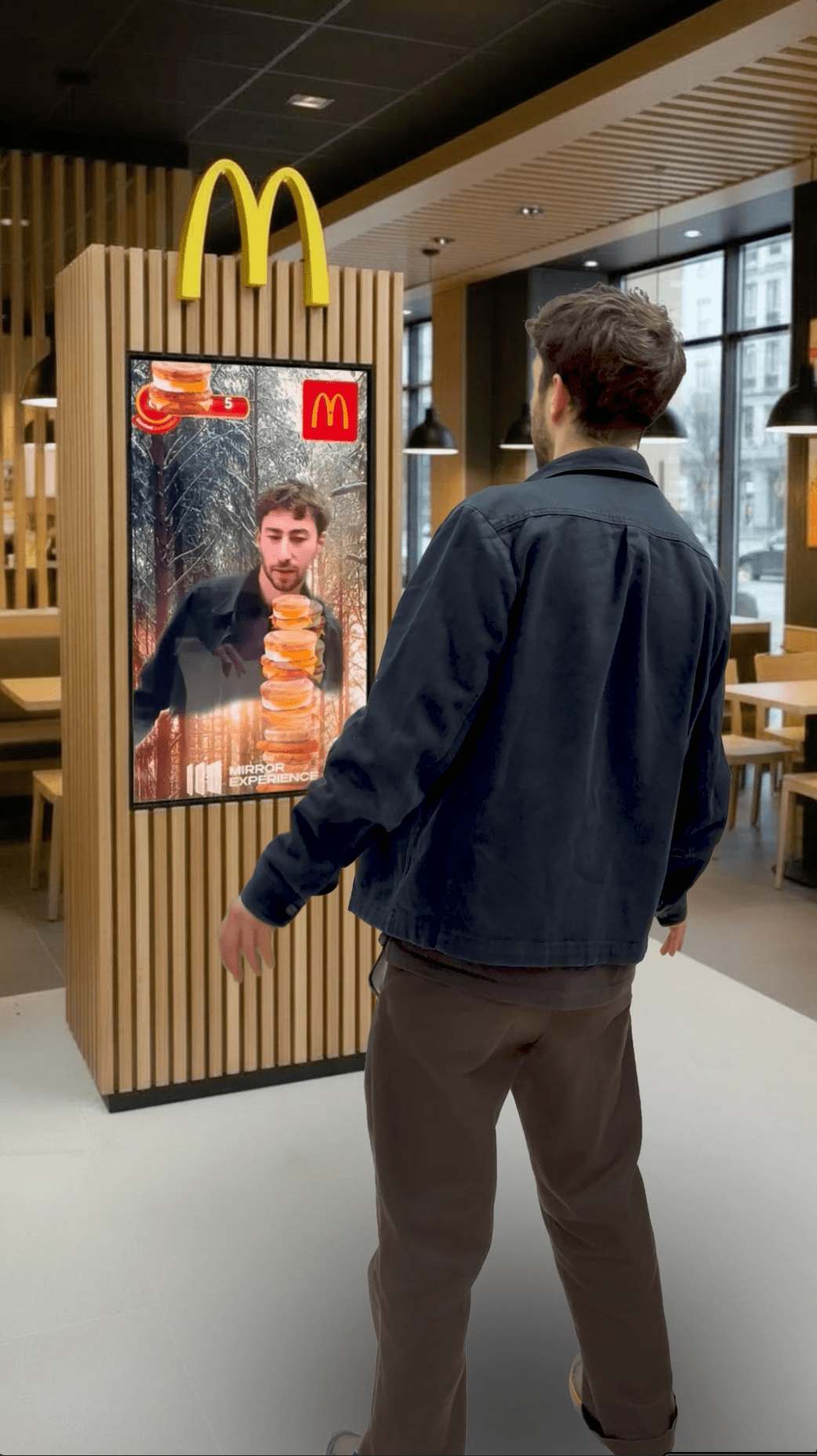
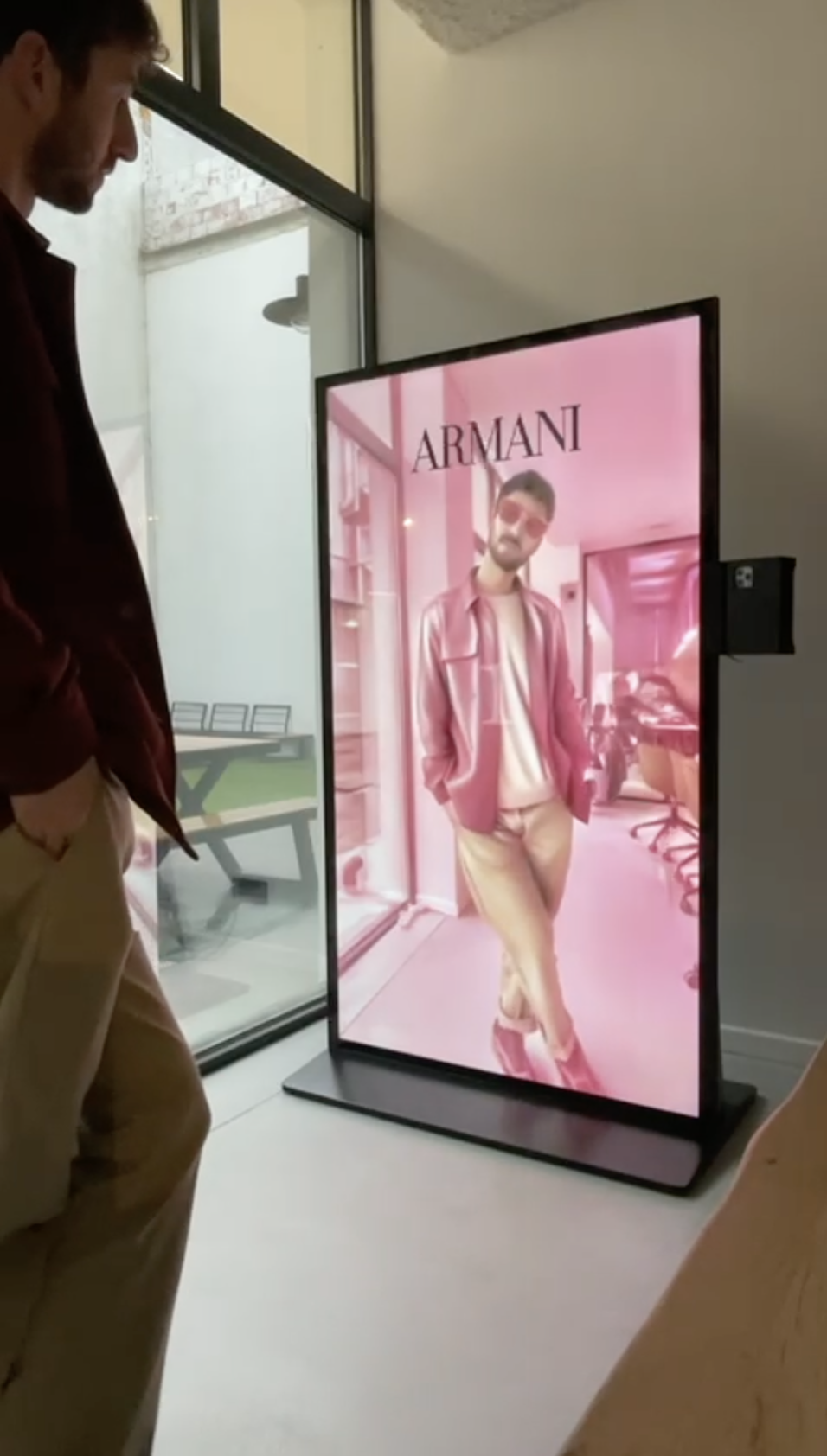
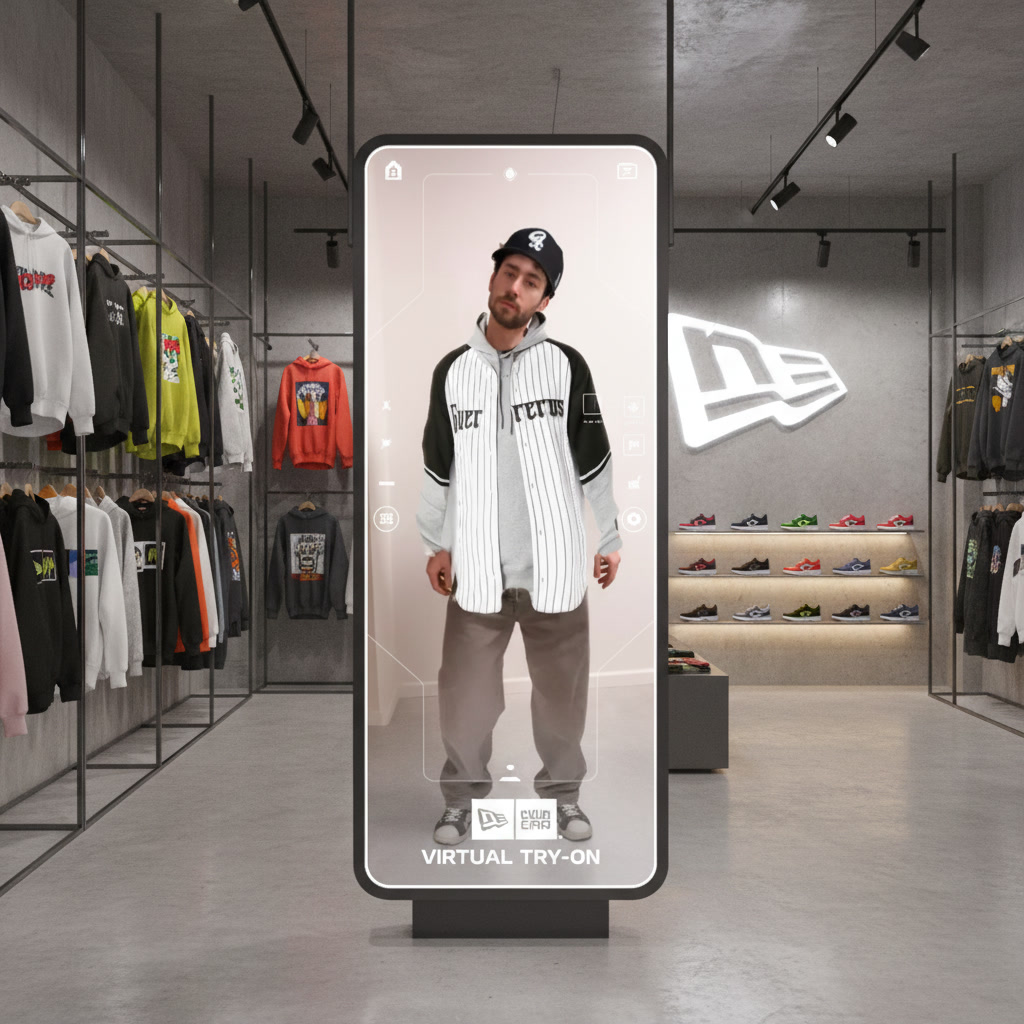
Installation is direct in Europe, the United States and Asia, with the team on site for events. Elsewhere we ship with local partners and deploy the software remotely. Yepoda, Sephora, Dolce & Gabbana, Tommy Hilfiger, Nike, Armani, Yves Saint Laurent, New Era, The North Face and McDonald’s have run our screens.
Software starts at 8,000 EUR. Hardware adds 1,000 to 5,000 EUR for screen size and structure, so a working installation lands between 9,000 and 13,000 EUR. Permanent builds with custom joinery go beyond. Every project opens with a free pilot on iPad, iPhone or computer.
For a fragrance counter the same screen runs a different routine, covered in the beauty mirror for perfumeries setup. For a full room, see the virtual dressing room build.
Where it still disappoints
Light is the hard problem, and no model fixes it from a desk. Shop lighting runs warmer at 6pm than at 10am, so a shade that looked right in the morning reads yellow after lunch. Ask for a calibration pass on site, at your busiest hour.
Deeper skin tones come next. AR makeup has a long record of getting them wrong, and the fix is data rather than a slider. Ask any vendor, including us, for validation on darker tones, then test on your own shoppers.
A screen gives advice, while a good assistant gives advice plus a swatch on the back of the hand. The screen starts that conversation rather than replacing it.
Questions brands ask before a pilot
How long does a shopper stay at the screen?
30 seconds to a minute: enough to try a few shades and take the photo, short enough to keep the counter moving.
Does it need the cloud, and where do the images go?
The models can run locally with no cloud dependency, and the setup can run with no data collection. Email capture stays opt-in.
What does virtual makeup try-on cost?
Software starts at 8,000 EUR. Hardware adds 1,000 to 5,000 EUR for size and structure, so a working installation lands between 9,000 and 13,000 EUR. Bigger permanent builds are quoted per project.
Can it talk to our CRM and stock system?
Yes. We connect to an API, a product database or a CRM, so the shade, the product page and store availability reach her phone.
Try it on your own counter
Send the shades you want shoppers to try, the store or event date, and the space. We will tell you which screen size fits and what the pilot looks like on your own products, at no cost. Start at mirror-experience.com.