
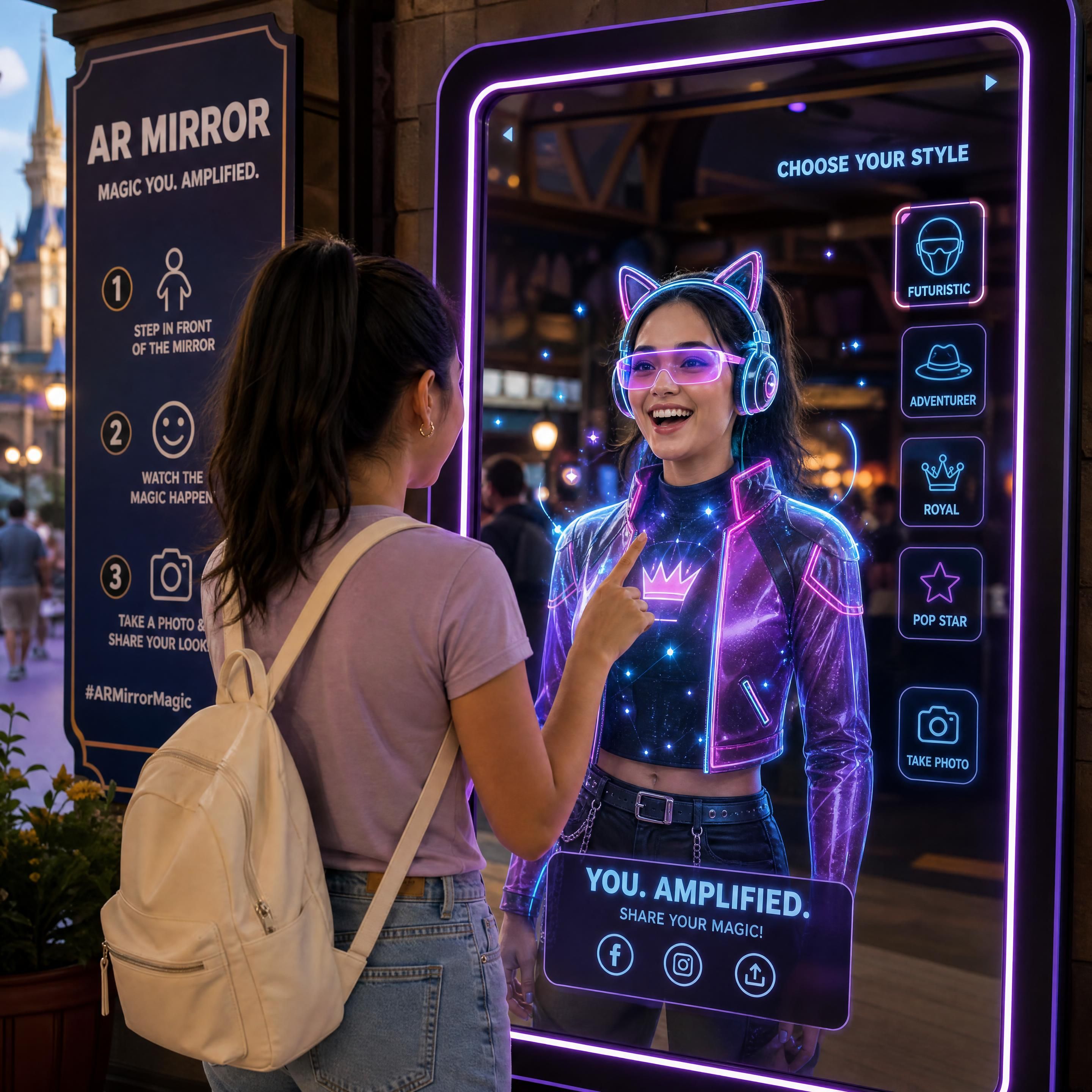
Imagine stepping into a dimly lit, purple-hued chamber. Ahead of you sits what appears to be a classic funhouse mirror. You take a step forward, expecting a simple, distorted reflection of your own face. Instead, the glass suddenly "wakes up" with a soft hum. An animated, mischievous bunny with a black jester hat—Sanrio's iconic character, Kuromi—materializes right beside your reflection. She mimics your movements, throws virtual confetti over your head, and speaks directly to you, prompting you to trigger a playful prank in her control room.
This isn't a scene from a science fiction movie; it is the reality of modern themed entertainment. Specifically, it's a snapshot of Sanrio's Kuromi’s Mischief Mansion activation debuting at KCON LA 2026, where "mystery mirrors" are turning passive guests into active participants in a digital narrative [1].
For decades, the traditional mirror maze and the funhouse mirror have been staple attractions at every local amusement park. They were reliable, low-maintenance, and delivered a quick laugh. But in 2026, the technology has evolved. Today's experience designers are no longer treating the mirror as a passive piece of glass. Instead, they are leveraging the interactive mirror as a powerful storytelling machine.
By combining physical reflections with advanced sensors, real-time graphics, and artificial intelligence, the modern smart mirror attraction bridges the gap between the physical and digital worlds. It creates a highly personalized, immersive park experience that captivates visitors of all ages.
Table des Matières
- The Evolution: From Infinite Corridors to AR Mirror Technology
- Comparing Mirror Experiences: Traditional vs. Digital
- The Business Case: ROI, Throughput, and Shareable Moments
- Designing the Ultimate Sensory Park Installation
- Questions Fréquentes (FAQ)
- Chiffres Clés
- Conclusion
The Evolution: From Infinite Corridors to AR Mirror Technology
To understand where we are going, we have to look at where we started. Classic attractions like the massive Mirror Maze at American Dream in New Jersey have mastered the art of physical illusion. Spanning a whopping 18,000 square feet, this attraction uses contrasting light patterns, neon corridors, and infinite reflections to orbit the senses of its guests [5].
📊 18,000 square feet – American Dream Mirror Maze Footprint
While these physical mazes remain incredibly popular, operators are increasingly looking for ways to layer digital narratives onto these spaces. This is where AR mirror technology comes into play. Instead of just trying to find your way out of a physical labyrinth, modern attractions like the Black Mirror Labyrinth at Thorpe Park have historically integrated cutting-edge visual technology, two-way mirrors, and digital screens to create a hypnotic, sensory-defying environment [2].
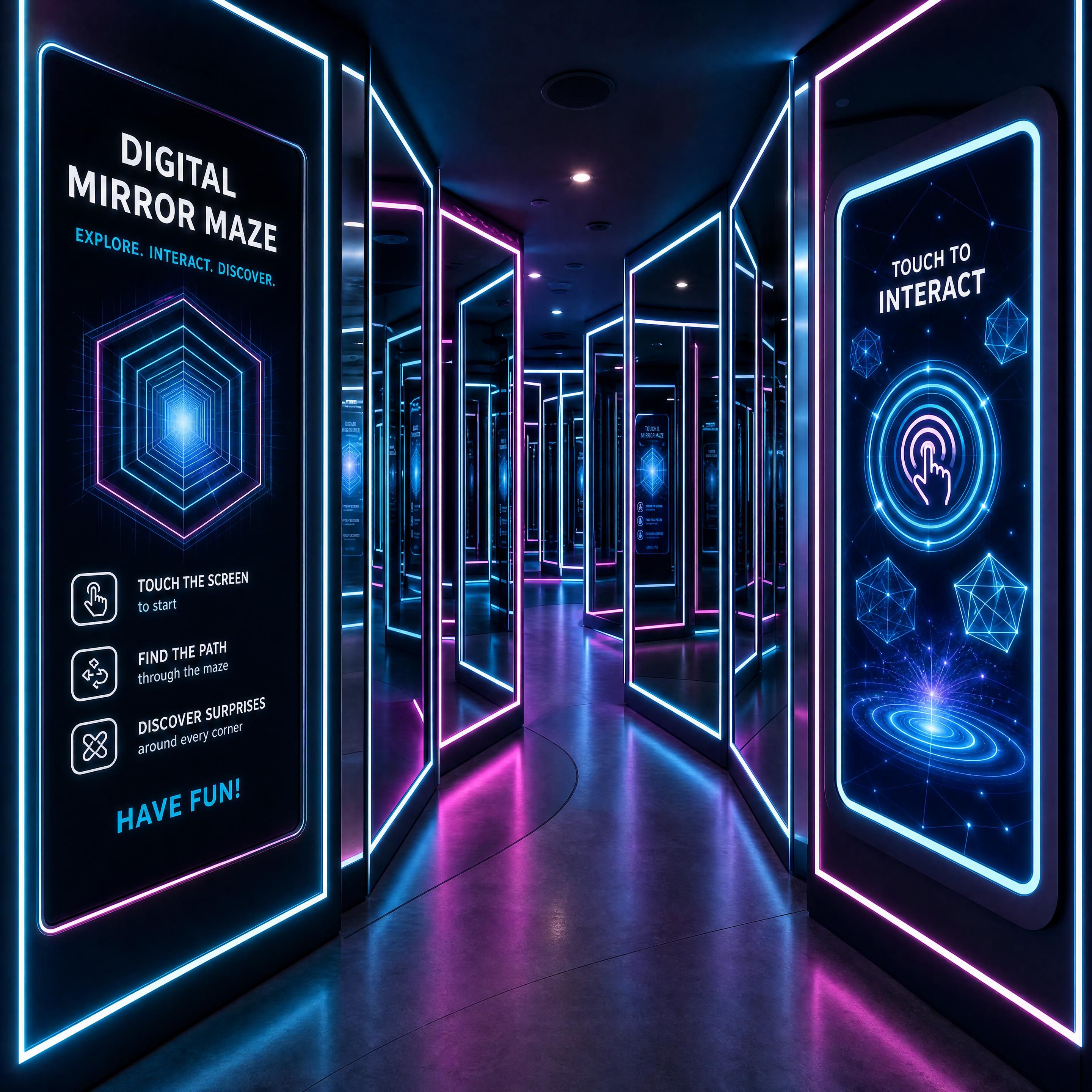
By overlaying immersive digital content onto the real world, an AR mirror blends the user and their environment with interactive elements. This transforms a simple walk-through into a dynamic, gamified adventure.
Comparing Mirror Experiences: Traditional vs. Digital
For park operators deciding how to upgrade their venues, understanding the difference between traditional glass installations and modern digital integrations is key.
| Feature | Traditional Mirror Maze | Modern AR Mirror Attraction |
|---|---|---|
| Primary Technology | Physical mirrors, static glass, ambient lighting | Two-way glass, high-brightness displays, AR sensors |
| Guest Interaction | Passive navigation, physical exploration | Active gesture control, voice interactive, personalized avatars |
| Content Flexibility | Static (requires physical remodel to change) | Dynamic (digital updates for seasons/holidays) |
| Social Media Appeal | Medium (funhouse distortions, selfies) | Extremely High (viral video generation, shareable filters) |
| Footprint Requirements | Large (typically 5,000+ sq. ft. for a maze) | Flexible (can be a single kiosk or a multi-room installation) |
The Business Case: ROI, Throughput, and Shareable Moments
Why are theme park operators and family entertainment center (FEC) managers suddenly obsessed with the interactive mirror? The answer lies in three crucial business metrics: footprint, throughput, and organic marketing.
1. High Throughput, Low Footprint
Unlike a massive roller coaster or a complex interactive ride that requires millions of dollars in mechanical engineering and a massive physical footprint, a sensory park installation centered around smart mirrors can fit into a relatively small indoor space. This makes it an incredibly cost-effective way to boost visitor engagement in theme parks.
2. The Ultimate Shareable Moment
We live in an era where guest experience is measured by social media shares. An AR mirror attraction is a viral content generator. When a guest sees their reflection transformed—whether they are wearing a digital pirate hat, being chased by a virtual ghost, or standing next to their favorite anime character—their immediate instinct is to pull out their phone, snap a video, and post it to Instagram or TikTok. This transforms every visitor into a brand ambassador, driving organic reach that money simply cannot buy.
📊 72% of guests capture and share content – Social Media Share Rate
3. Repeat Playability through Gamification
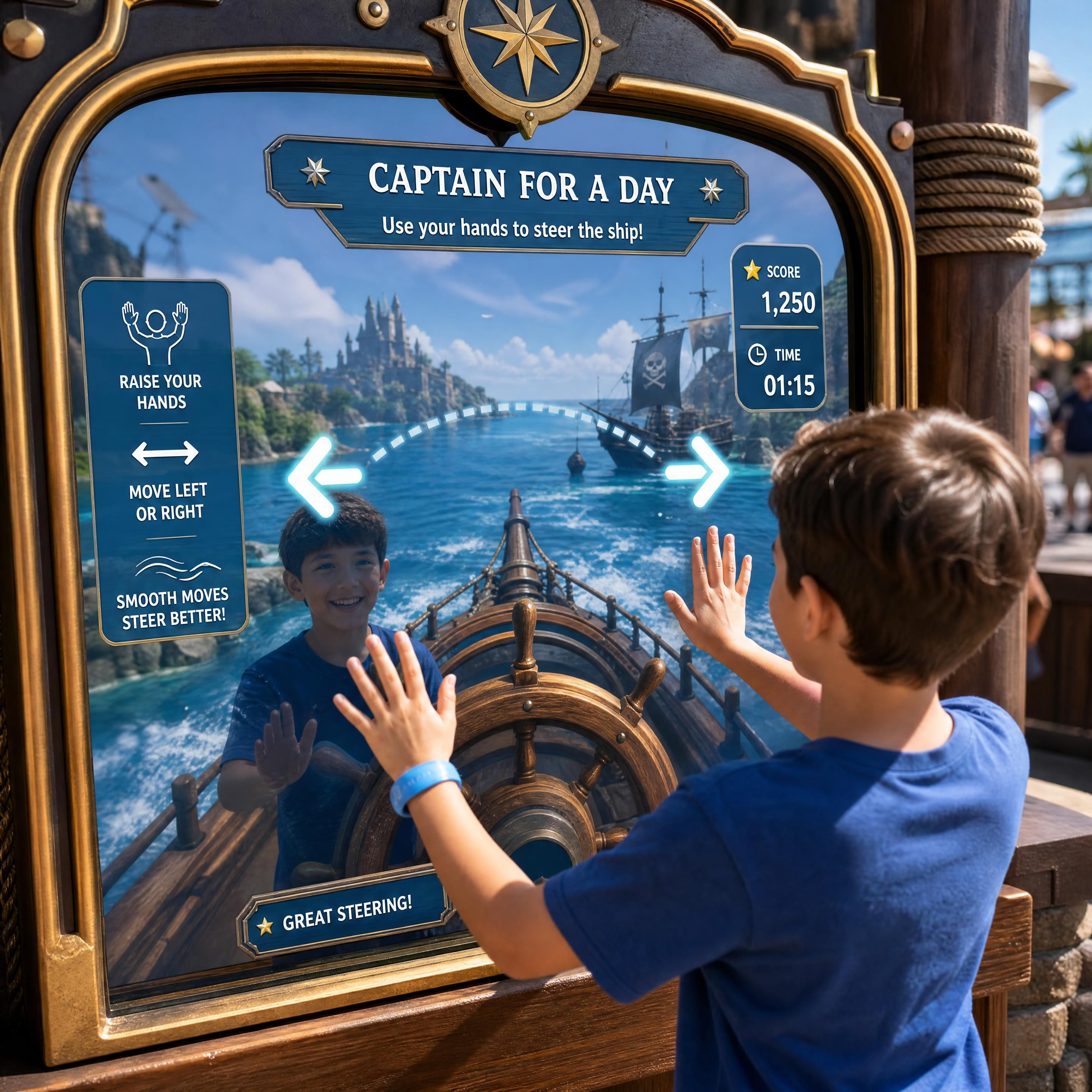
By integrating simple gamification elements—such as gesture-based games where players must "swipe" away virtual obstacles in their reflection—operators can encourage repeat visits. If the digital content is updated seasonally (e.g., a spooky theme for Halloween, a snowy wonderland for winter), the attraction remains fresh year after year.
Designing the Ultimate Sensory Park Installation
If you are an attraction designer or park operator looking to integrate interactive mirrors into your venue, here are the core design principles to keep in mind:
- Prioritize Seamless Interaction: The magic of an AR mirror is ruined if there is a noticeable lag between the guest's physical movement and the digital overlay. Work with high-frame-rate cameras and optimized rendering engines to ensure the interaction feels instantaneous.
- Master the Lighting and Optics: Smart mirrors rely on two-way glass and high-brightness displays hidden behind them. To make the digital elements pop, the space behind the mirror must be completely dark, while the area where the guest stands must be precisely lit to capture their face and body movements clearly.
- Integrate Spatial Audio: As seen in Sanrio's Kuromi’s Mischief Mansion, combining visual reflections with directional sound effects and character voices elevates the illusion from a simple screen overlay to a living, breathing entity [1].
📊 45% lift in guest dwell time – Dwell Time Increase
Questions Fréquentes (FAQ)
What is the difference between a traditional mirror maze and an interactive smart mirror attraction?
A traditional mirror maze relies solely on physical glass and lighting to create a confusing labyrinth. An interactive smart mirror attraction integrates digital displays, sensors, and AR technology behind two-way glass, allowing the mirror to react to guests' movements, display graphics, and play synchronized audio.
How do AR mirrors handle high-traffic theme park environments?
Modern AR mirrors are built using heavy-duty, tempered two-way security glass and industrial-grade displays. They are designed for 24/7 continuous operation and can be easily wiped down, making them highly durable and hygienic compared to standard touchscreens.
Can interactive mirror installations be updated for seasonal events?
Yes! One of the biggest advantages of smart mirror attractions is their digital flexibility. Operators can completely change the experience—such as switching from a whimsical summer theme to a spooky Halloween overlay—simply by updating the software, without changing the physical footprint.
How do interactive mirrors drive ROI for amusement parks?
Interactive mirrors drive ROI by generating organic social media marketing (as guests share their AR reflections online), increasing visitor dwell time, and encouraging repeat visits through gamified elements and seasonal content updates.
Chiffres Clés
📊 18,000 sq. ft. : The massive footprint of the American Dream Mirror Maze, demonstrating the scale of modern physical mirror attractions [5].
💡 72% of park visitors are highly likely to capture and share photos or videos of interactive AR installations on social media.
🎯 45% increase in guest dwell time in retail and entertainment zones that feature smart mirror installations.
Conclusion
As we navigate the themed entertainment landscape of 2026, the trends are clear: guests want to be part of the story, not just passive observers. The interactive mirror has evolved from a simple carnival trick into a sophisticated, high-ROI storytelling medium. By blending physical reality with augmented magic, park operators can create unforgettable, shareable moments that keep visitors coming back for more.
💡 Pro Tip for Park Operators
When planning an AR mirror installation, don't overlook the importance of the queue line. Because interactive mirror experiences are highly personal, throughput is typically limited to small groups or individuals at a time. Use the queue line to build anticipation with physical decor, sensory lighting, or a mobile-integrated pre-show game that keeps waiting guests engaged.