AR Mirror for Theme Parks
Theme parks are rediscovering their queues. The global attractions industry generated 83.6 billion USD in 2024, with the top 25 parks alone drawing over 260 million visitors, and interactive queue experiences raise guest satisfaction by 15 to 28% even when wait times stay identical (Utsubo theme park guide, 2026). Engaged guests also spend 18 to 25% more on merchandise and food. An AR mirror is one of the fastest ways to capture that value: it turns waiting time into play, and the souvenir shop into a revenue line.
Key takeaways
- Interactive queues reduce perceived wait times by 30 to 40% and lift merchandise spending by 18 to 25% (Utsubo, 2026).
- An AR mirror covers both ends of the visit: queue entertainment and printed souvenir photos at the shop.
- Mirror Experience is in discussion with leading European parks, including Parc Astérix, Bellewaerde and Pairi Daiza.
Why parks are upgrading with AR mirrors
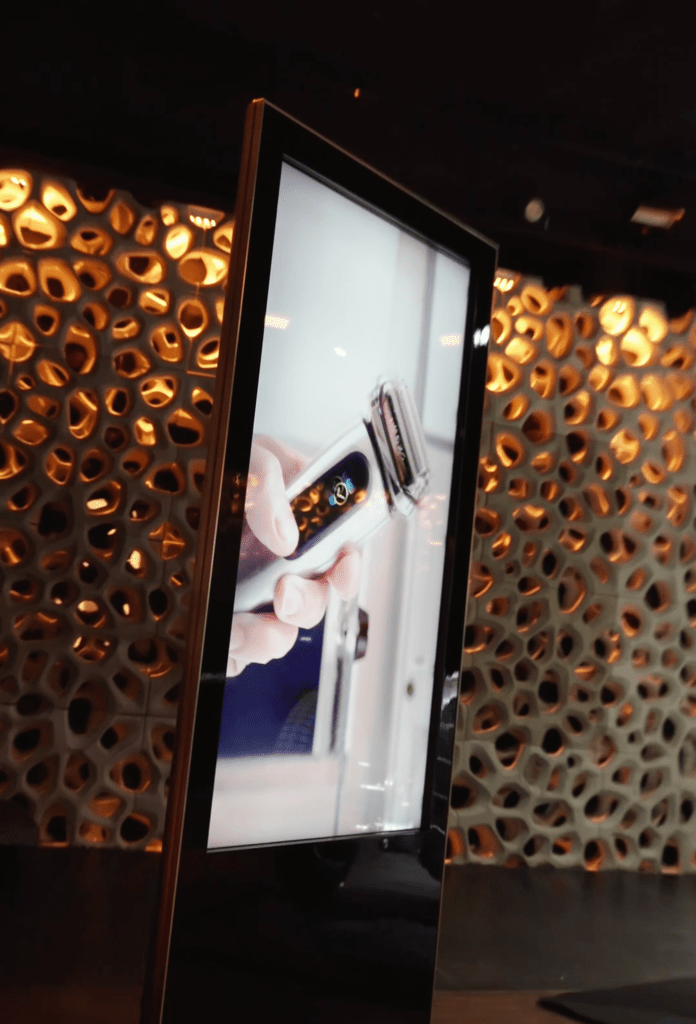
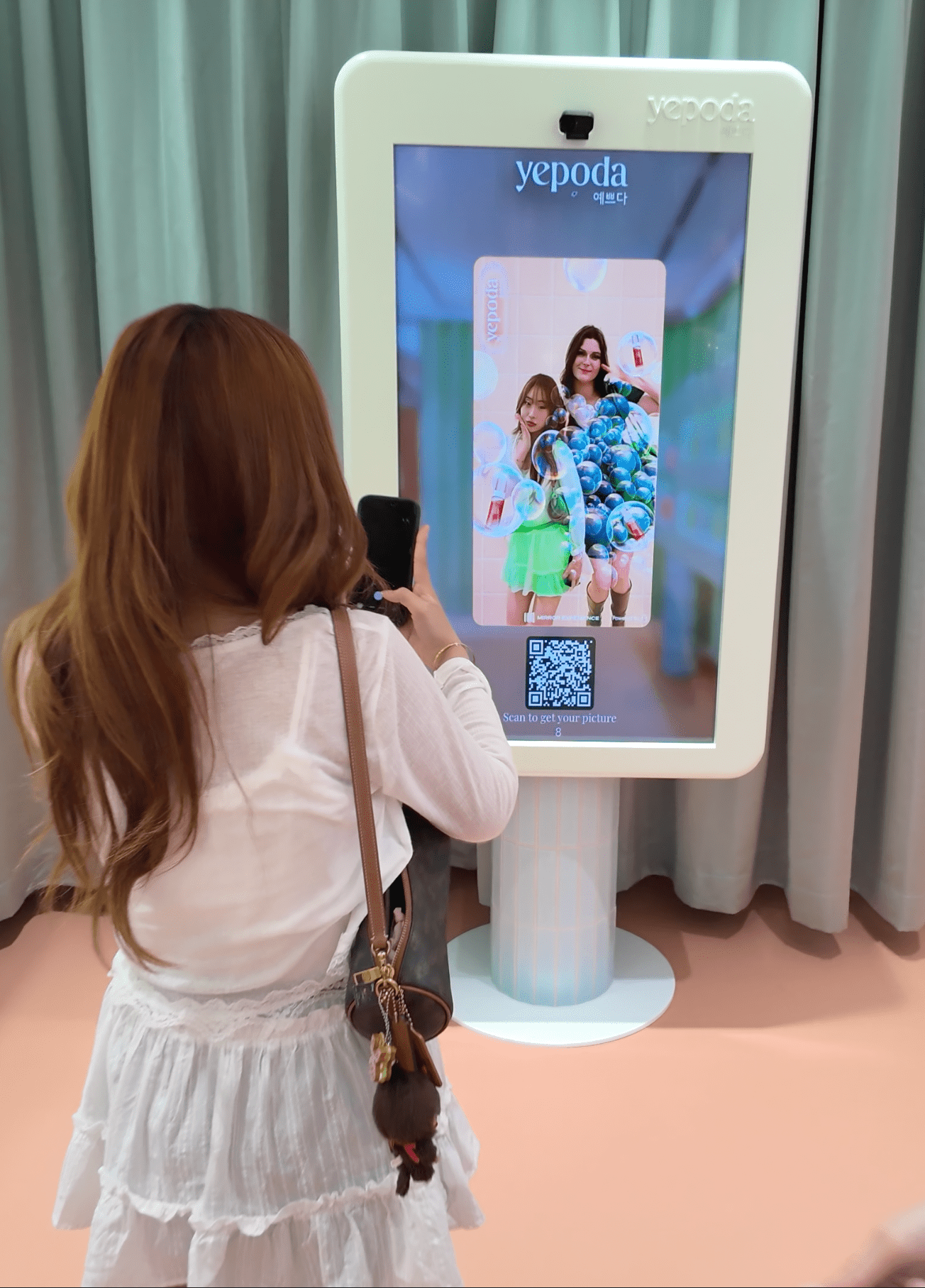
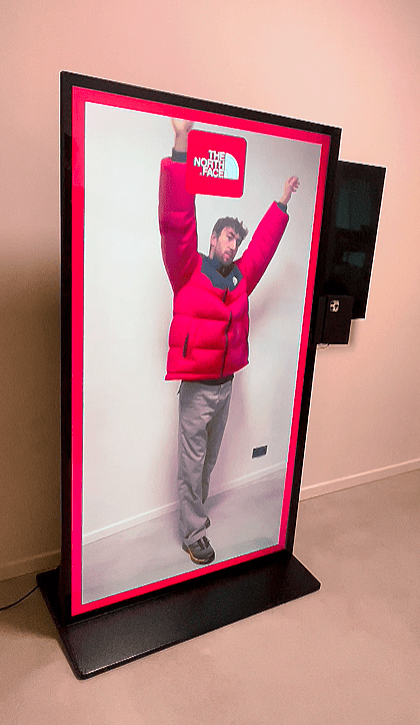
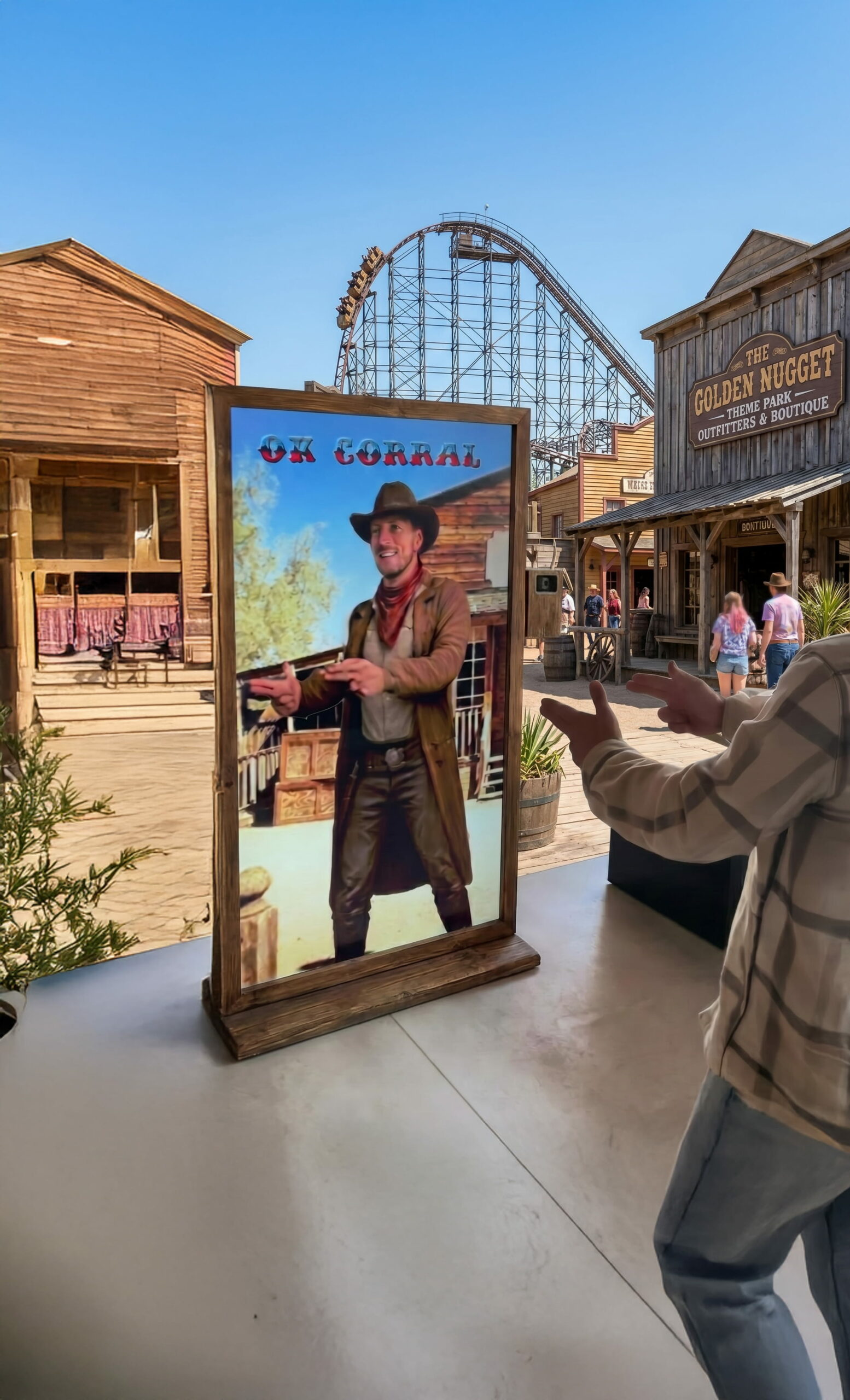
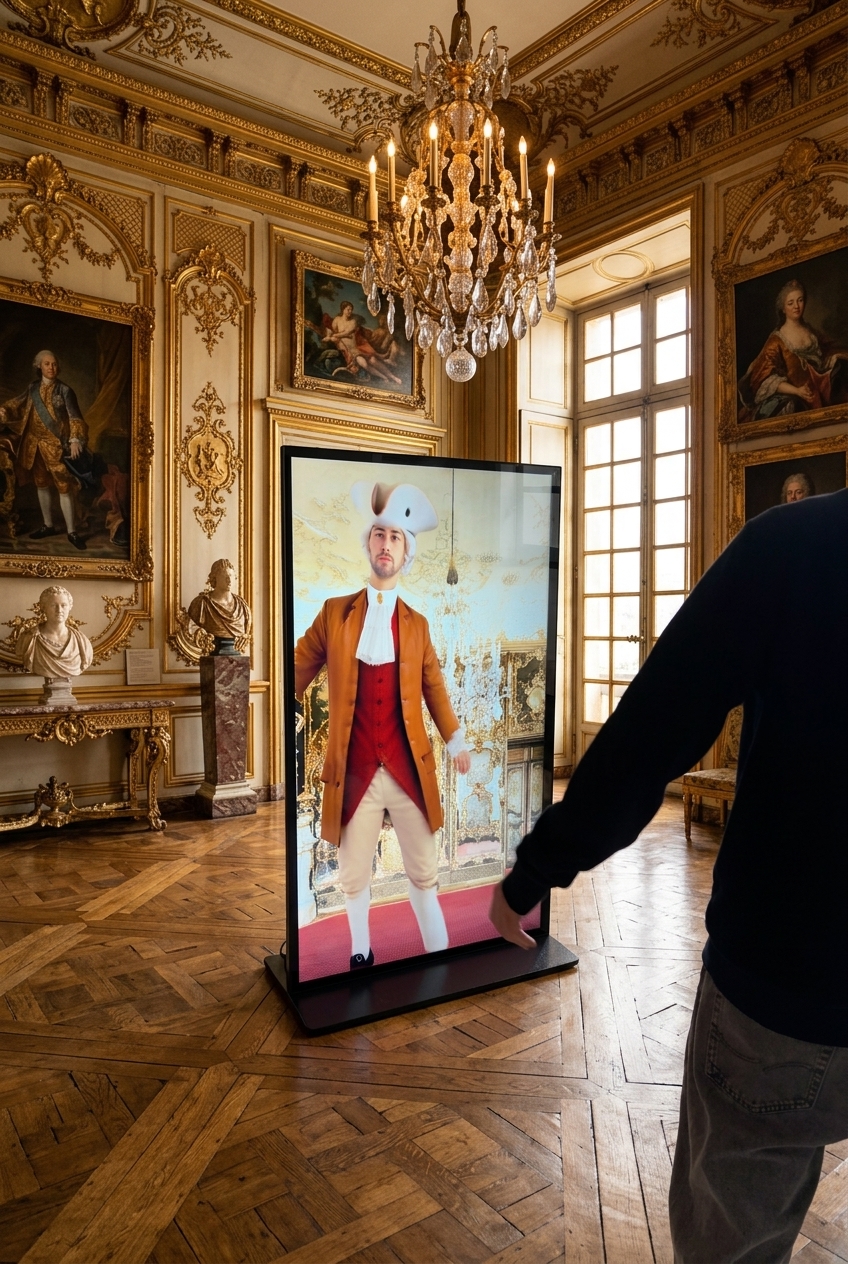
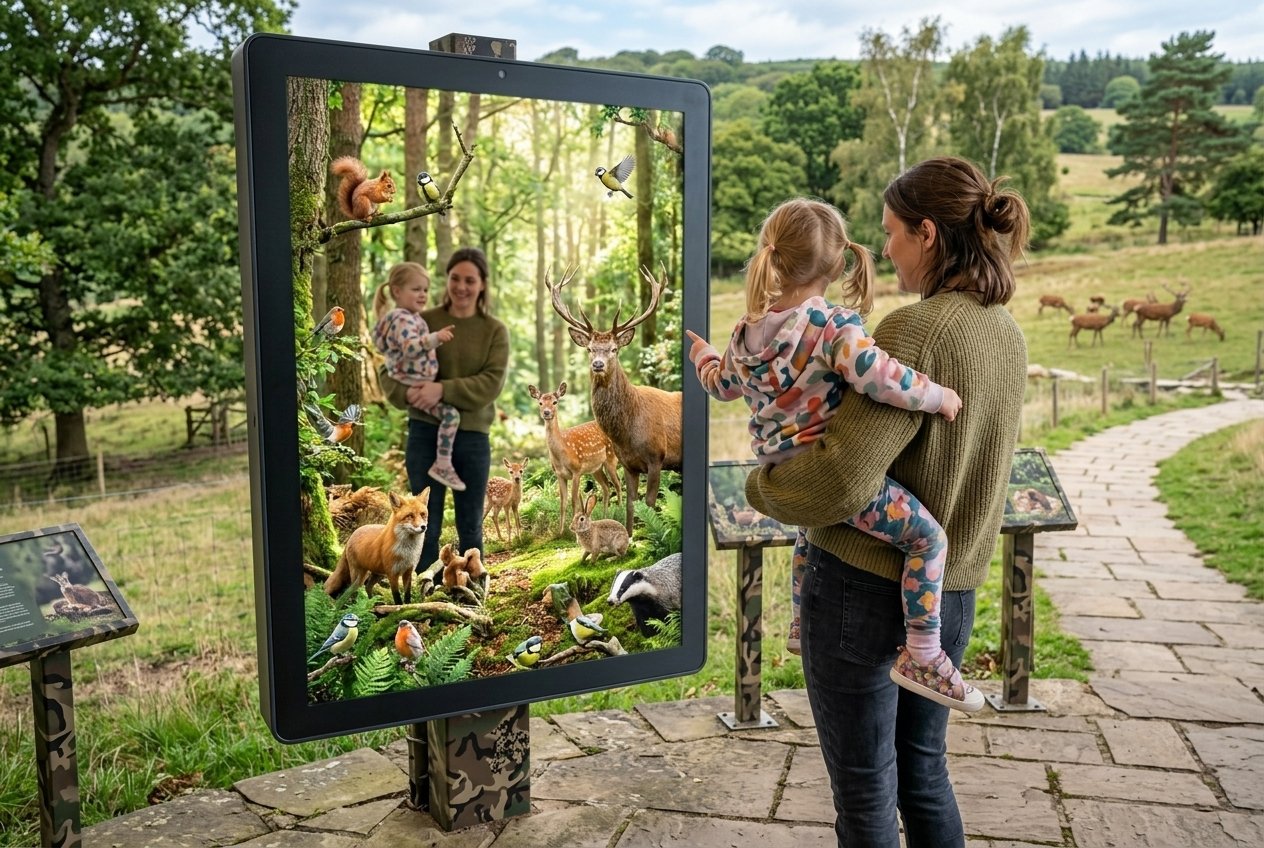
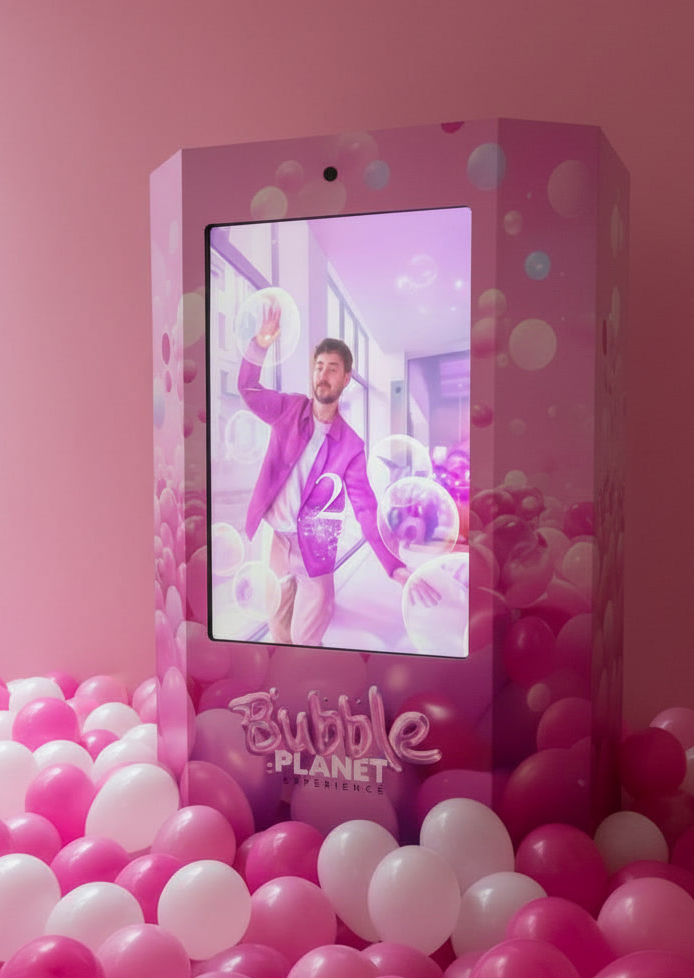
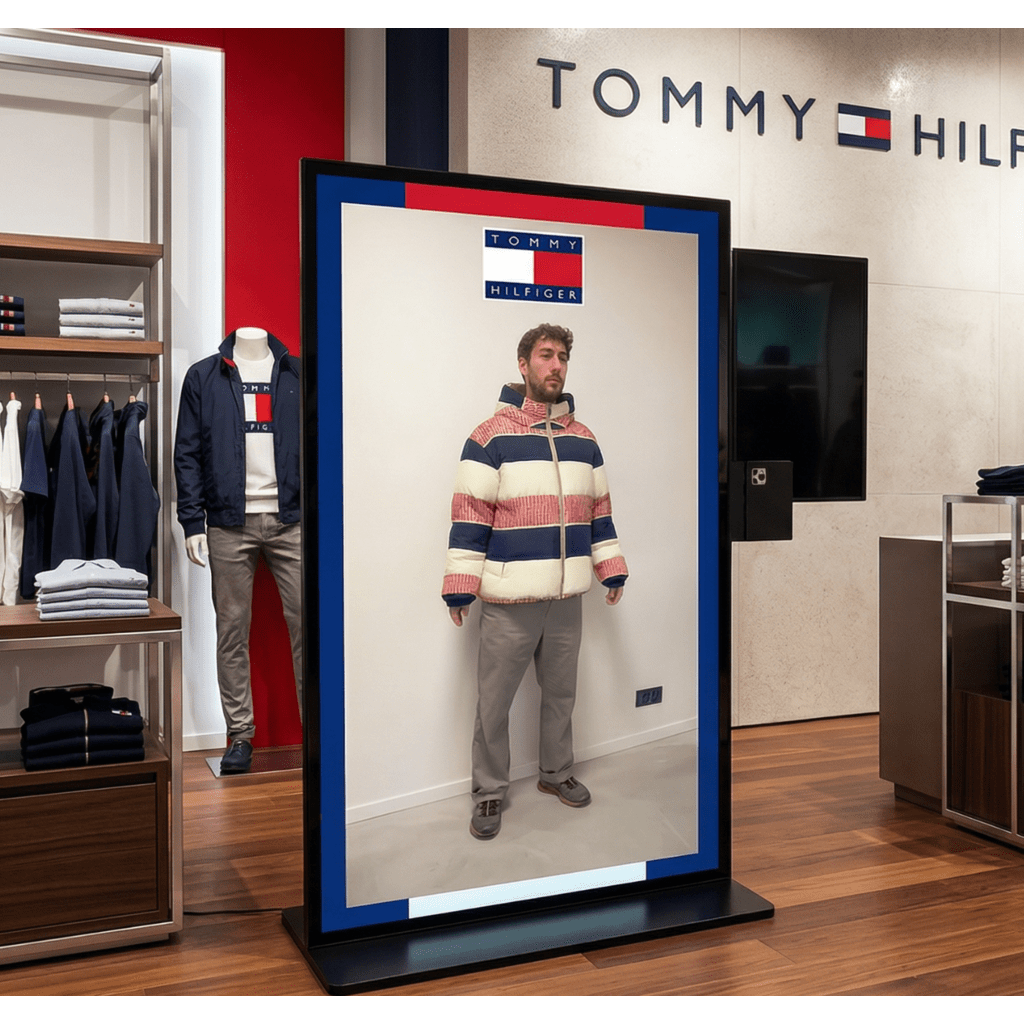
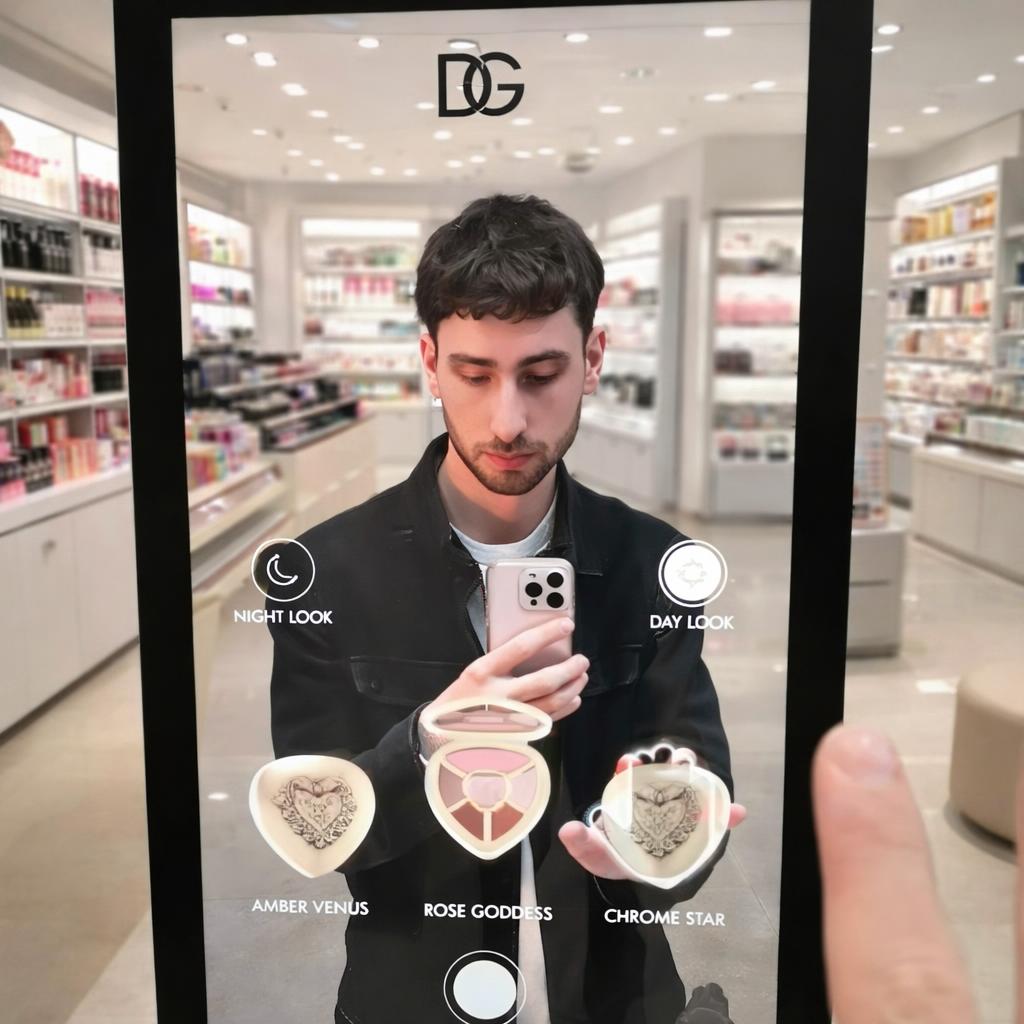
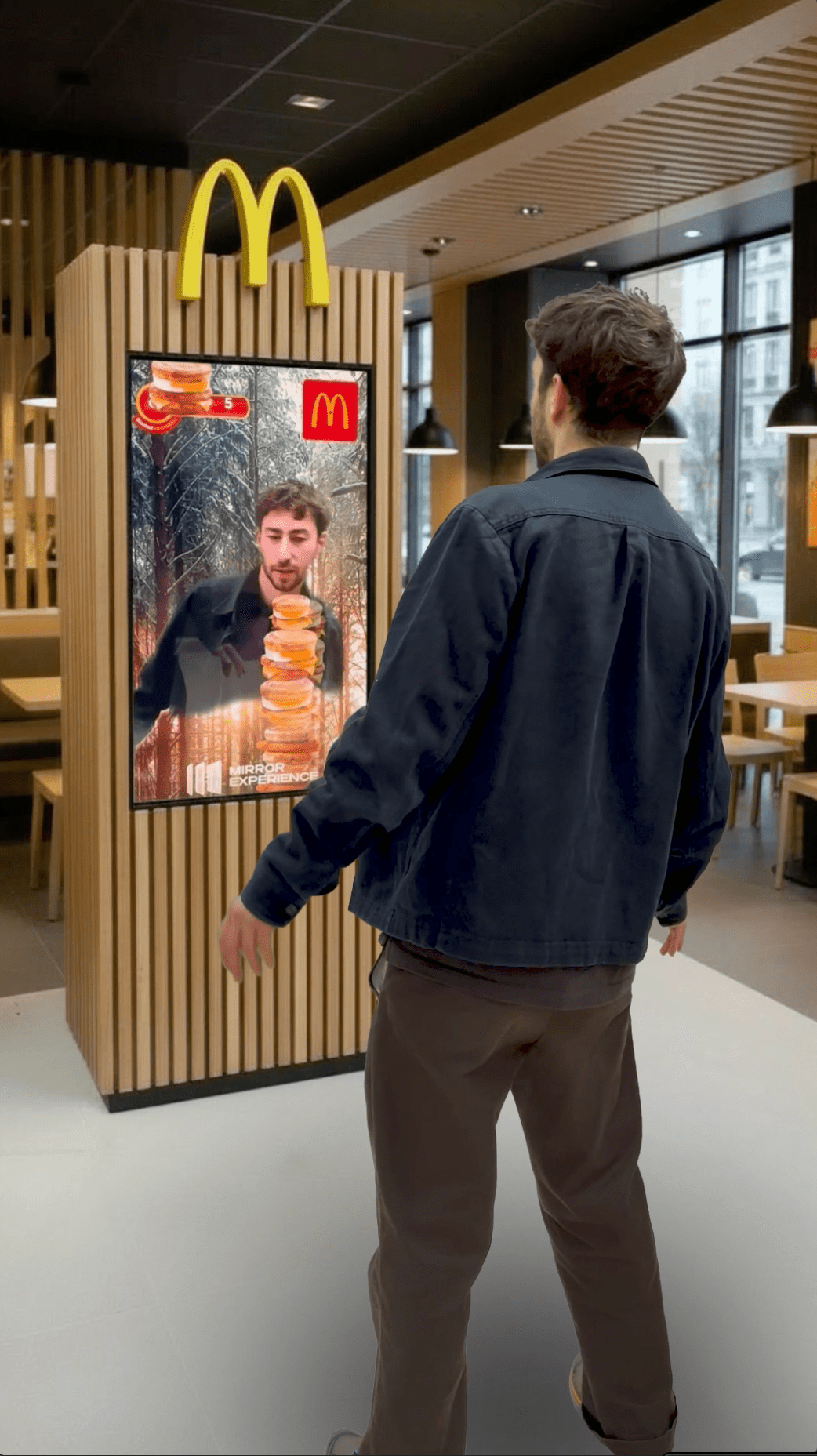
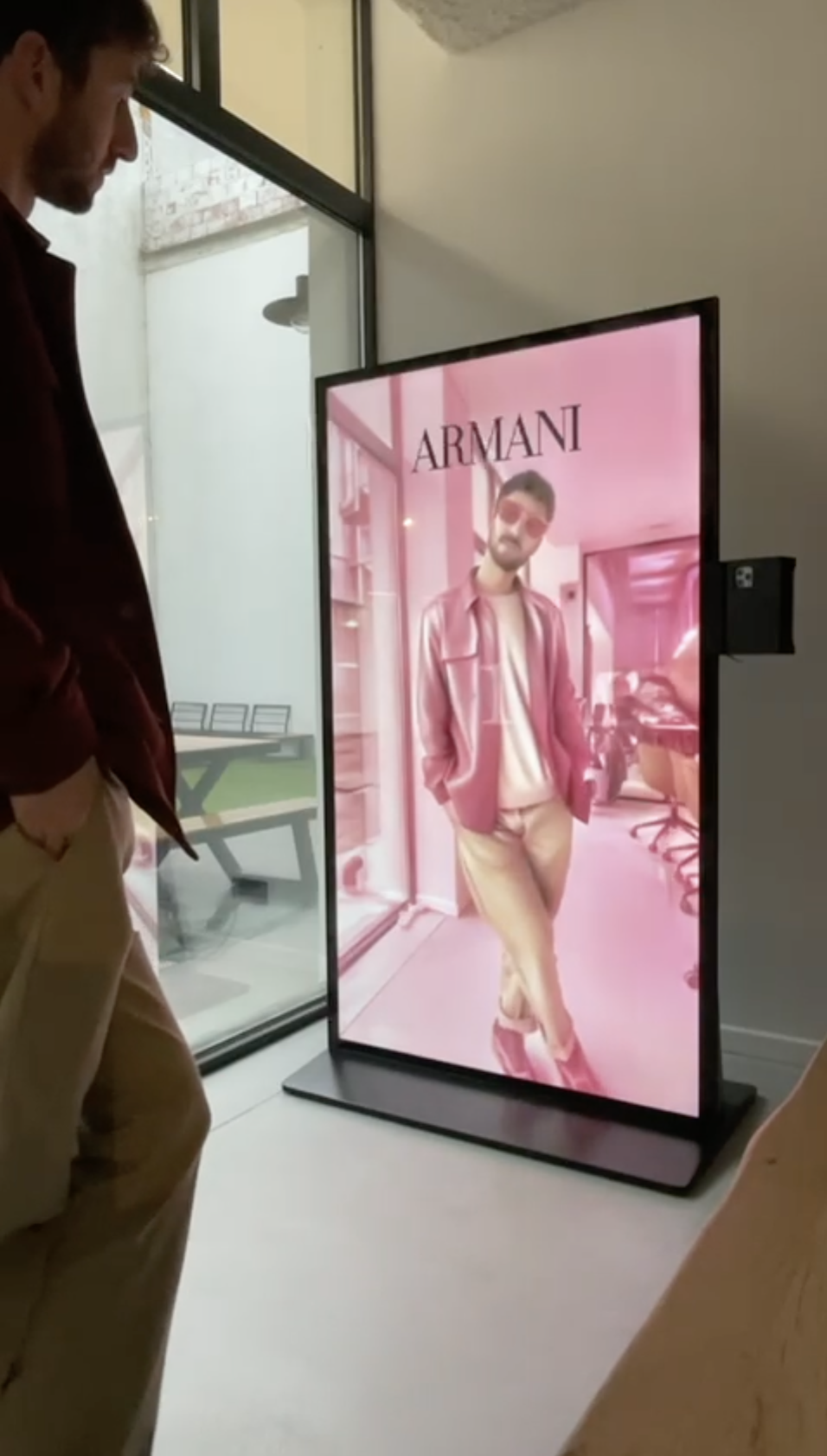
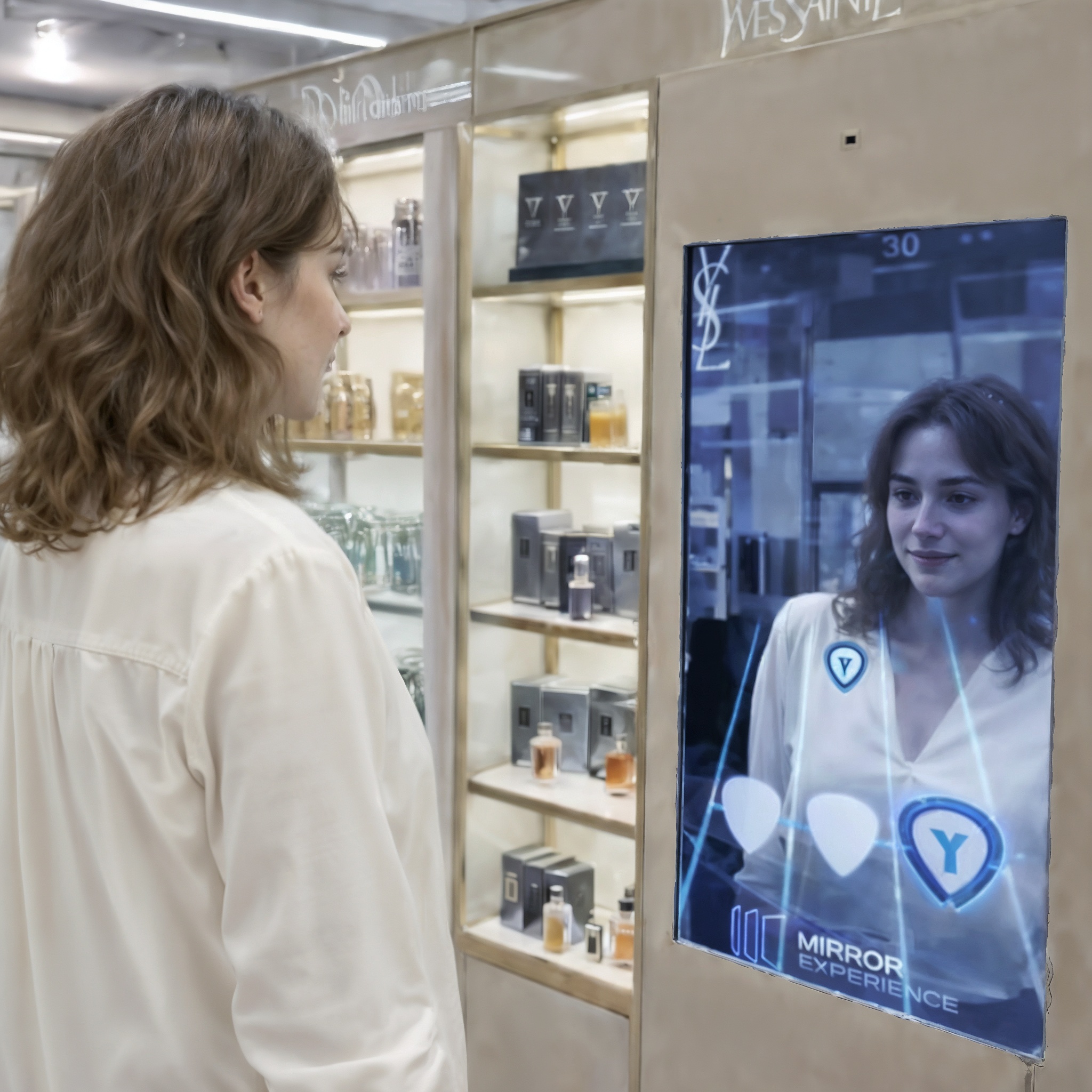
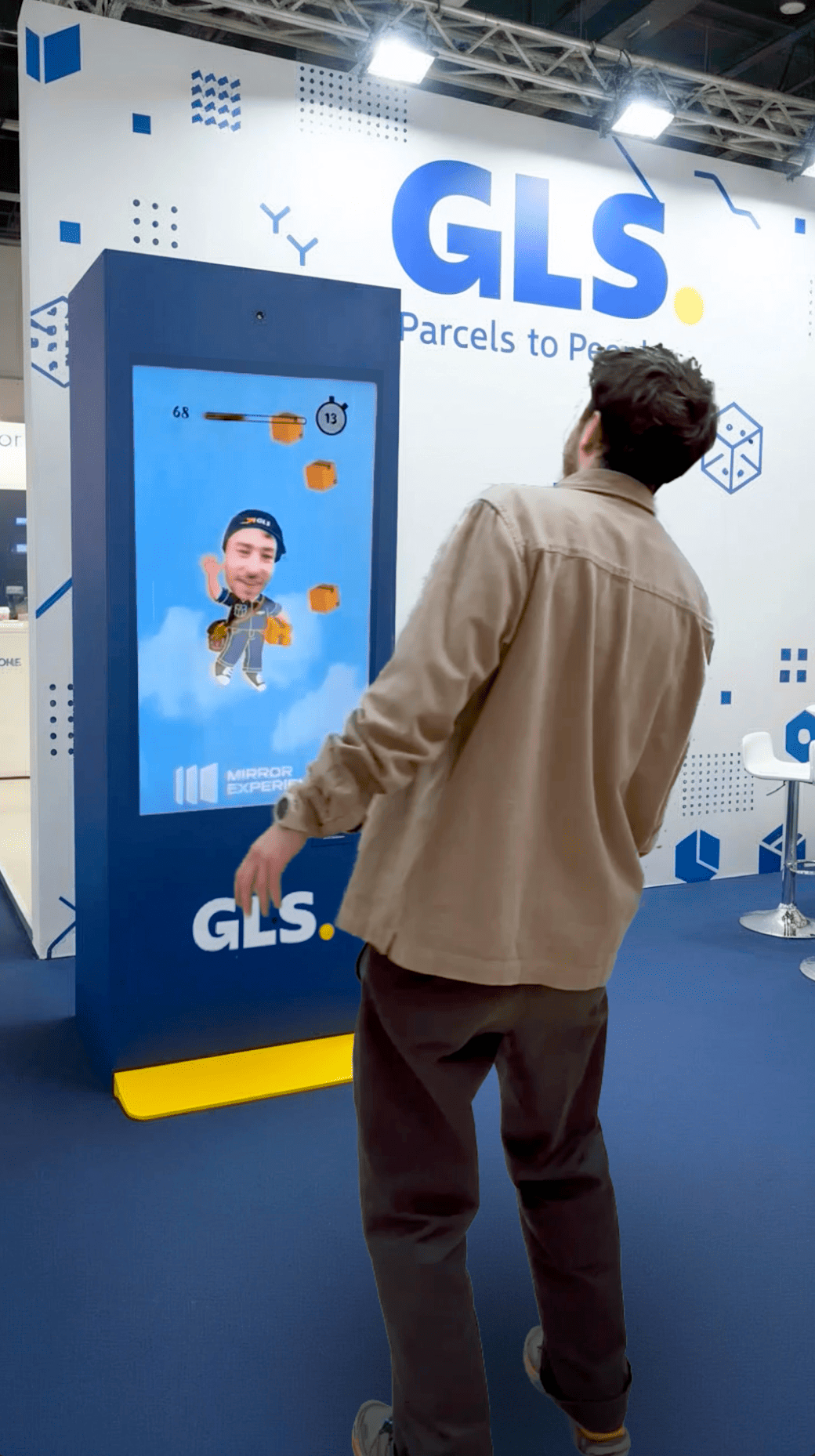
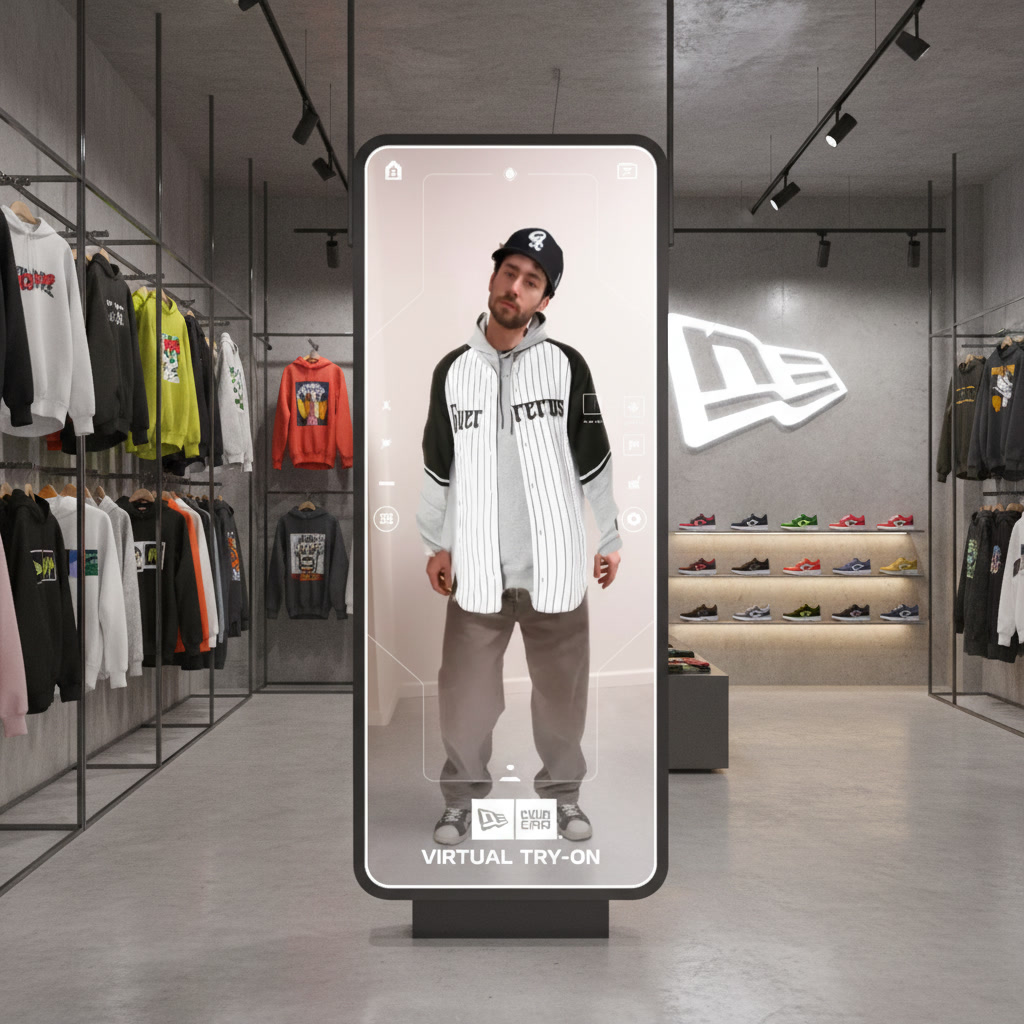
A park does not need a new 250 million USD ride to feel renewed. A modular interactive screen can upgrade an existing attraction, animate a queue, and add a photo product to the gift shop, all in weeks rather than years. The mirror works for character transformation, costume play, and mini-games that guests play with their own bodies. Because it renders at 25 frames per second, the experience is instant: guests see themselves change as they move, which is what makes them laugh and call their friends over.
Queue entertainment that pays for itself
Visitors standing in line are the park’s most wasted asset. Games and transformations on a mirror make those minutes fun, and the perception of waiting drops by 30 to 40% (Utsubo, 2026). The same installation, placed in the souvenir shop, prints the photo on site or sends it by QR code. The printed photo is a high margin item, and the email capture builds a database for the park. One screen, two revenue effects.
Renewing an existing attraction
Interactive screens are the standard answer to the retrofit question: how do we bring renewal without closing a ride for a season? A mirror at the exit of a dark ride, in a walkthrough area, or at the entrance of a themed land adds a new moment to an experience guests already know. Parks in Belgium and France are currently evaluating this approach with Mirror Experience, alongside international deployments in the US and Asia.
How it works in a park environment
Park hardware has to survive continuous use, all day, every day. The mirror runs locally with no cloud dependency, which means no latency and no connection risk in crowded areas. Content is managed remotely, so new costumes, seasonal themes and character licenses can be pushed to every screen without a technician on site. Deployment takes about three weeks, and a pilot can run on a portable unit during a live park day.
Frequently asked questions
How much does an AR mirror cost for a theme park?
An event mirror costs around 9,000 EUR. A permanent installation with a 75-inch vertical screen costs around 20,000 EUR. The pilot is free.
Can guests get a printed photo?
Yes. The mirror can print the photo on site or deliver it by QR code, which makes it a natural addition to souvenir shops.
Does it work outdoors?
Indoor installations are standard. For covered or shaded outdoor areas, weather-resistant options can be configured.
How fast can we deploy before the season?
A standard installation takes about three weeks, which fits most pre-season planning windows.
Try it during a park day
Mirror Experience offers a free pilot so your team can test the mirror with real visitors, measure queue behavior and shop revenue, and decide from results. Contact us for a demo, references, or a discussion about your next season.