
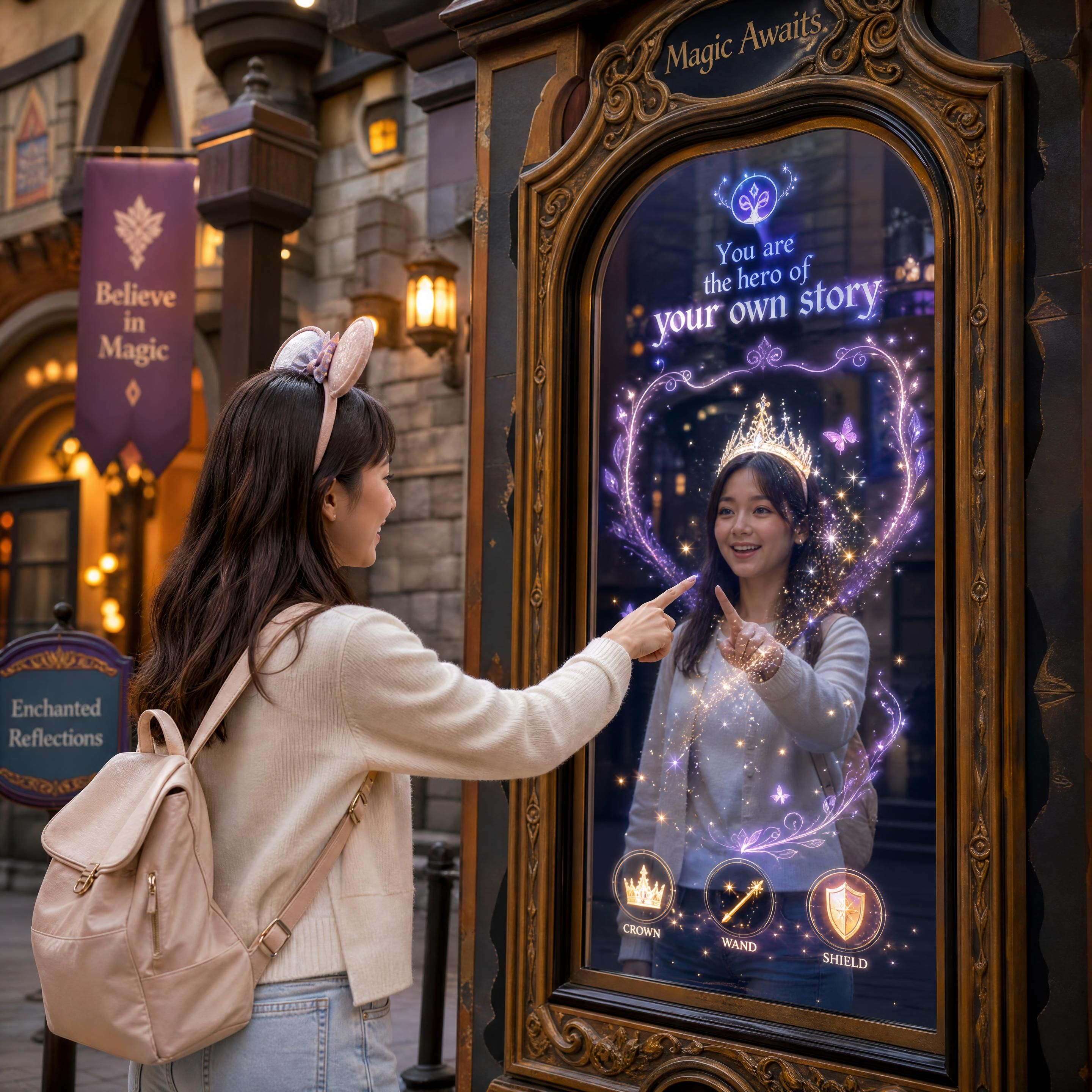
You step into a dimly lit chamber of the ancient castle queue line. The air is cool, smelling of stone and dry ice. Ahead of you stands a massive, gold-framed mirror. You stop to adjust your jacket, expecting a simple reflection. But as you look closer, your reflection doesn't just look back—it shifts. A glowing, azure wisp of magical energy spirals around your wrists, reacting to every gesture of your hands. A collective gasp rises from the family standing behind you as a digital crown of light gently lowers onto your head. With a single tap on the glass, a camera clicks, and a QR code flashes on the screen. In less than ten seconds, you've gone from a passive observer waiting in line to the hero of your own augmented reality adventure.
This is the power of the modern interactive mirror. No longer a passive decoration or a simple piece of glass, the mirror has evolved into a dynamic storytelling machine. In 2026, forward-thinking operators are leveraging this technology to completely redefine the immersive park experience, turning dead spaces like queue lines and retail shops into high-engagement zones.
The evolution of reflections: from funhouse to smart mirror attraction
For over a century, mirrors have been a staple of the global amusement park landscape. From the classic funhouse mirror that warped our bodies into hilarious shapes to the classic mirror maze that challenged our sense of direction, reflections have always fascinated us.
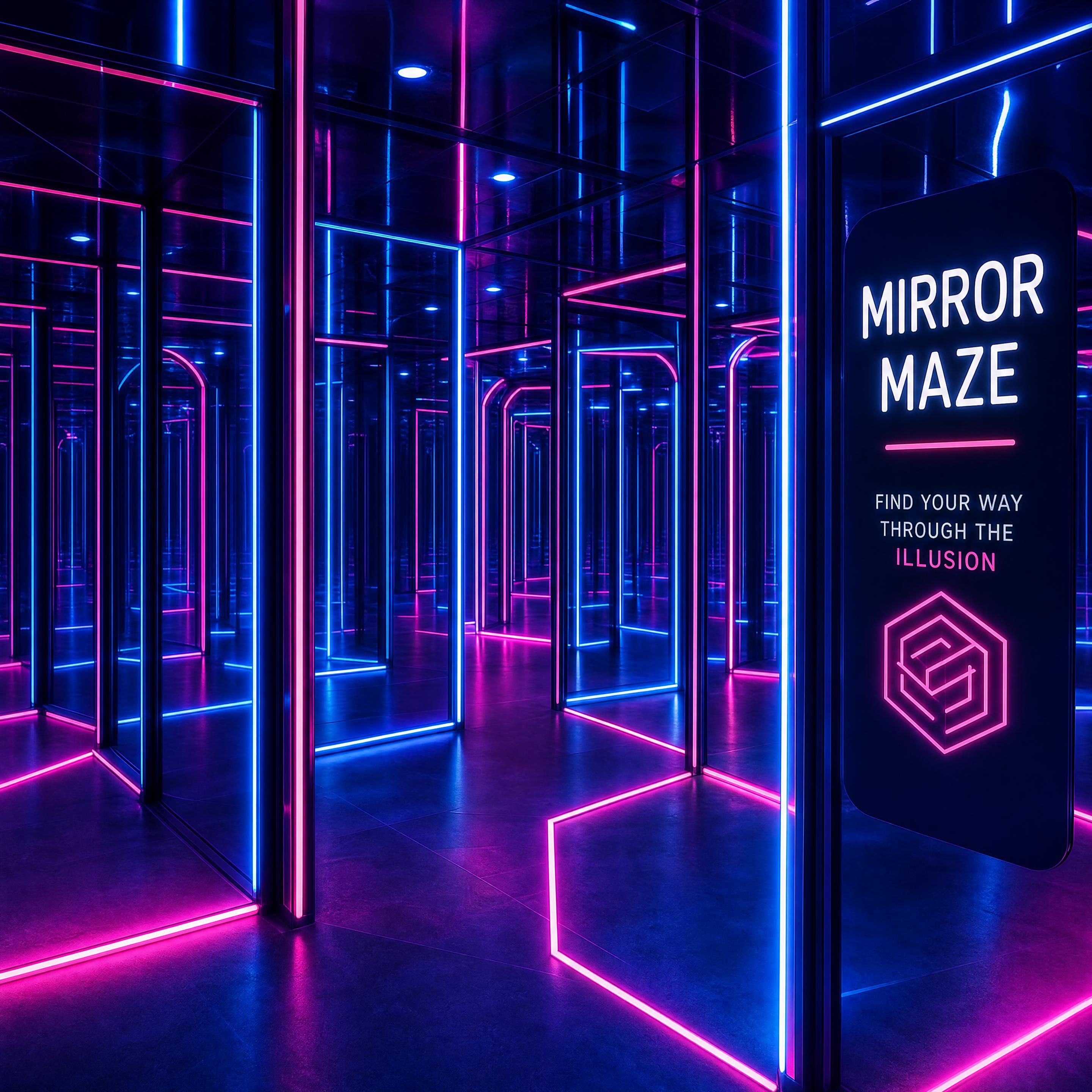
However, today's visitors demand more than passive, physical illusions. They want agency, narrative, and personalization. This shift has driven the rise of the smart mirror attraction. Modern installations combine the physical intrigue of reflections with cutting-edge digital technology, creating a highly engaging sensory park installation.
A prime example of this evolution is the famous Black Mirror Labyrinth at Thorpe Park in the UK [1]. This attraction took the classic mirror maze concept and supercharged it with narrative-driven sensory design, special effects, and disorienting digital overlays [1, 4], demonstrating how mirrors can become active storytelling environments.
"Black Mirror Labyrinth at Thorpe Park represents a new era of disorienting, narrative-driven sensory design in modern park attractions"
— Blooloop
Similarly, premier destinations like the American Dream Mirror Maze in New Jersey use endless corridors of LED lights and smart glass to challenge and delight guests. But the true frontier of mirror innovation lies in the integration of an AR mirror—where physical reality and digital fantasy blend seamlessly in real-time.
The tech behind the magic: how AR mirrors work
At its core, an AR mirror consists of a high-definition display concealed behind a semi-reflective two-way mirror, paired with advanced computer vision sensors and real-time rendering software. When a visitor steps in front of it, the system tracks their skeletal movements, facial expressions, and even clothing, overlaying high-fidelity digital graphics in perfect sync.
This technology allows parks to implement highly interactive elements without forcing guests to wear clunky VR headsets or carry bulky handheld devices. The interaction is completely natural: your body is the controller.
- Real-time Interaction: Guests can cast virtual spells, try on digital costumes, or play active games.
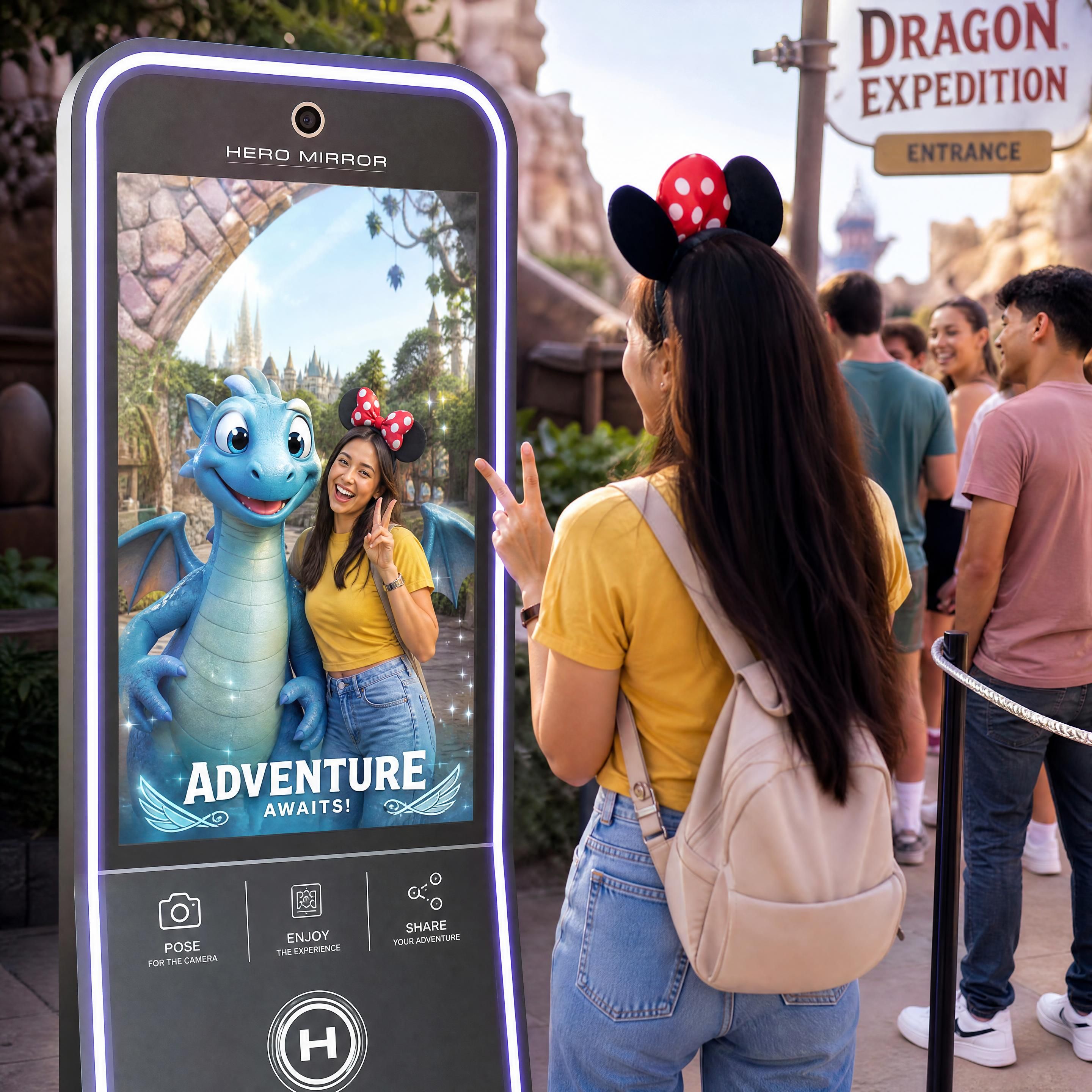
- Character Integration: Using systems like INDE’s HeroMirror, parks can let visitors stand side-by-side with beloved animated characters, creating an unforgettable, personal photo opportunity.
- Seasonal Adaptability: Unlike physical props, the digital content of a smart mirror can be updated instantly. A mirror that casts spooky spells during Halloween can easily switch to throwing snowballs for a winter holiday theme.
"AR can update the look but also change the way guests engage with attractions, significantly reducing the cost to refresh rides"
— DOF Robotics
The operator’s perspective: driving ROI and visitor engagement
While the visitor experiences pure magic, the park operator sees a highly efficient, revenue-generating theme park attraction. In an era where physical space is at a premium and constructing a new interactive ride can cost tens of millions of dollars, smart mirrors offer a remarkably high return on investment (ROI).
1. high throughput, small footprint
A major challenge for any amusement park is managing wait times and maximizing space. An interactive mirror installation requires only a fraction of the square footage of a traditional ride, yet it can entertain hundreds of guests per hour. It can be installed in underutilized areas, such as queue lines, gift shops, or transition corridors.
2. the ultimate shareable moment
In 2026, guest-generated content is one of the most powerful marketing tools available. An AR mirror is a natural photo-op. By integrating automated cameras and instant QR code sharing, operators can encourage guests to post their magical reflections directly to social media. This turns every visitor into a brand ambassador, driving organic awareness and boosting visitor engagement theme park metrics.
For more on how to optimize your attraction's layout and maximize these touchpoints, see our guide on mirror maze design, or explore the financial metrics in our comprehensive breakdown of visitor engagement ROI.
Comparing mirror experiences: traditional vs. modern
To understand how far this technology has come, let's look at how modern smart mirrors compare to traditional reflections:
| Feature | Traditional Funhouse / Mirror Maze | Modern Smart Mirror & AR Attraction |
|---|---|---|
| Primary Appeal | Physical disorientation, simple optical illusions | Immersive digital storytelling, active role-playing |
| Technology | Curved glass, physical corridors, basic static lighting | Real-time computer vision, AR graphics, smart sensors |
| Visitor Engagement | Passive viewing, high risk of quick wear-and-tear | Dynamic interaction, gamified achievements, high replayability |
| Shareability | Low (difficult to take good photos in standard glass) | Extremely High (automated photo/video capture, instant QR sharing) |
| Content Flexibility | Static (requires major physical overhaul to change) | Dynamic (software updates allow seasonal or branded overlays) |
Key statistics
📊 $12.4 Billion – Theme Park AR & VR Market Growth
📊 73% of Gen Z and Millennial guests share park photos in real-time – Social Media Sharing Potential
📊 40% average increase in gift shop dwell time with AR mirrors installed – Retail Dwell Time Boost
Frequently asked questions
What is an AR mirror in a theme park setting?
An AR (Augmented Reality) mirror is an interactive display that blends a guest's real-world reflection with digital graphics, animations, and special effects in real-time. It allows visitors to interact with virtual characters, wear digital costumes, or play games without needing headsets.
How do interactive mirrors improve visitor engagement in amusement parks?
Interactive mirrors turn passive waiting times (like queue lines) into active entertainment zones. They encourage physical movement, offer personalized experiences, and provide instant, shareable digital keepsakes, which keeps guests entertained and increases brand visibility online.
Can smart mirror attractions be updated for seasonal events?
Yes! One of the biggest advantages of smart mirror attractions is their digital flexibility. Operators can completely change the visual themes, characters, and interactive games via simple software updates, making them perfect for seasonal events like Halloween or Christmas without requiring physical construction.
Are interactive mirrors expensive to maintain compared to traditional rides?
No. Because they rely primarily on digital software and standard commercial-grade screens behind two-way glass, interactive mirrors have significantly lower maintenance costs and physical wear-and-tear than mechanical rides or physical funhouse mazes.
Conclusion: the reflection of the future
The era of treating mirrors as passive, decorative glass is officially over. As we navigate 2026, the theme park industry is proving that mirrors are, in fact, ultimate storytelling machines. By blending physical reflections with augmented reality, operators can create highly personalized, emotional, and shareable memories that resonate with guests long after they leave the park.
Whether you are looking to breathe new life into a classic mirror maze or want to turn a crowded queue line into a magical pre-show experience, AR mirror technology offers an innovative, cost-effective, and highly engaging path forward.
💡 Pro Tip for Operators: When installing an AR mirror, always place it in a well-lit but glare-free area. Avoid direct sunlight or heavy overhead spotlights, which can wash out the digital overlay on the glass. Ensure the QR code generator for photo sharing is large, clear, and positioned at the end of the interaction to keep guest flow moving smoothly.