Beauty mirror for perfumeries: 200 shades tried without opening a single tester
A shopper walks into a perfumery, opens a tester, swipes a lipstick across her hand and reaches for the next shade. Ten minutes later the counter has one more opened unit and no record of what she liked. A beauty mirror replaces that loop. The shade range lands on a screen and sits on the shopper’s own face, live, with no tester opened.
Key Takeaways
- A beauty mirror renders lipstick, blush, eyeshadow and foundation on the shopper’s face at 25 frames per second, so no tester is opened to find a match.
- Mirror Experience builds on Decart’s LUCY VTON models and Snapchat Camera Kit, and is an official partner of both.
- A screen in your brand colours ships in 2 weeks, from 55 to 85 inches, after a free pilot. At events the setup has taken up to 500 photos a day, and around 70% of visitors shared their story.
What a beauty mirror does in a perfumery
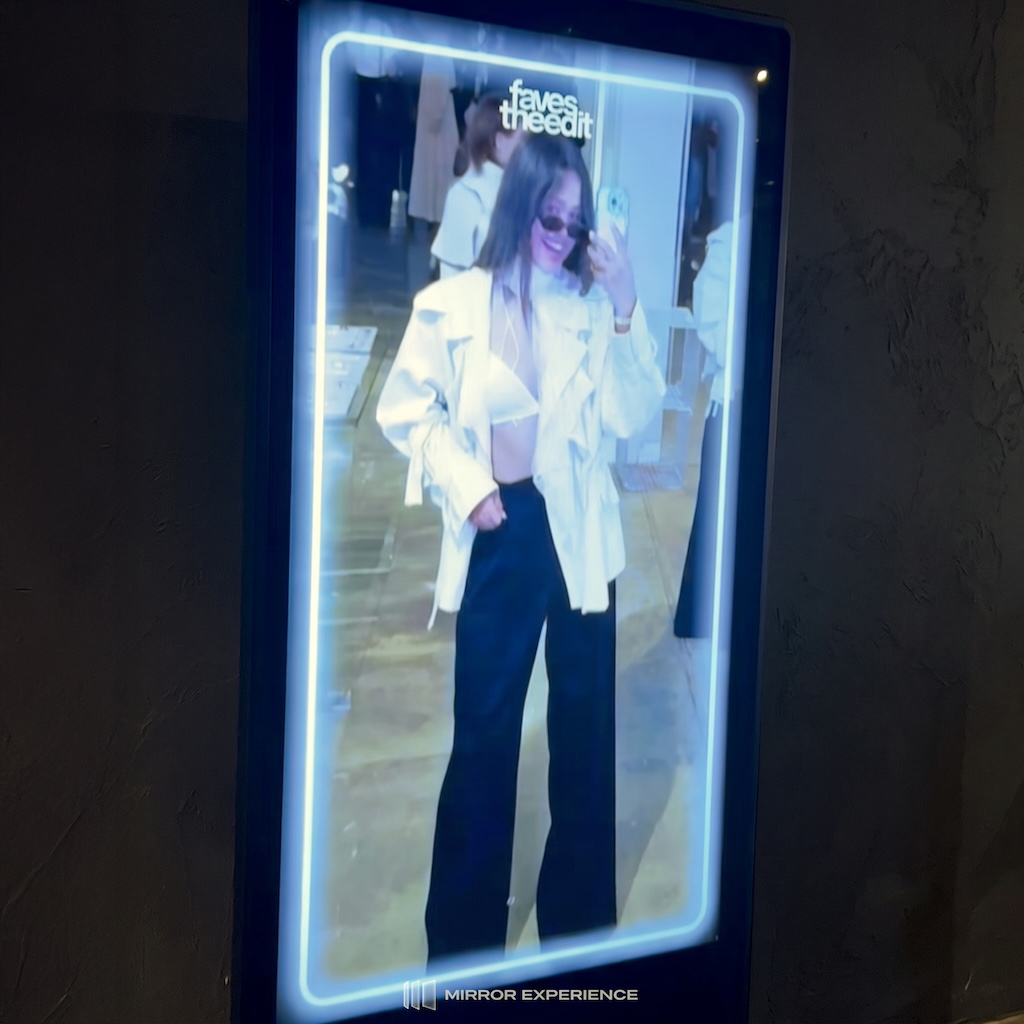
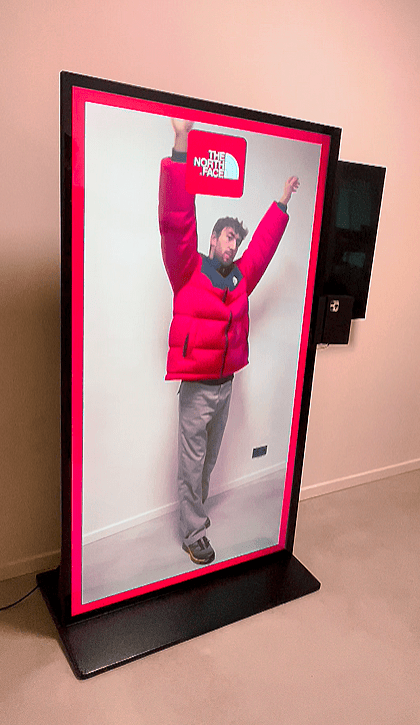
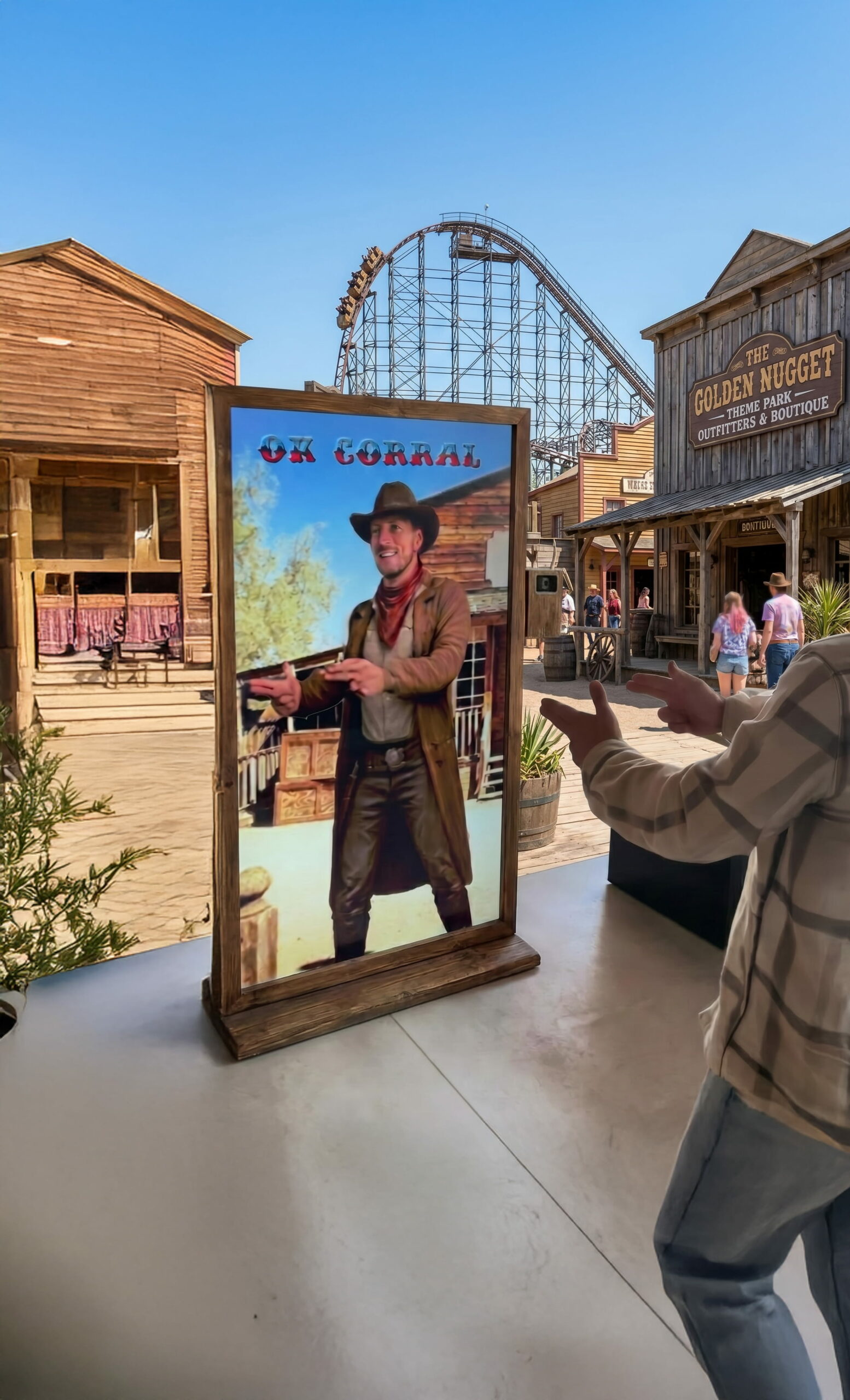
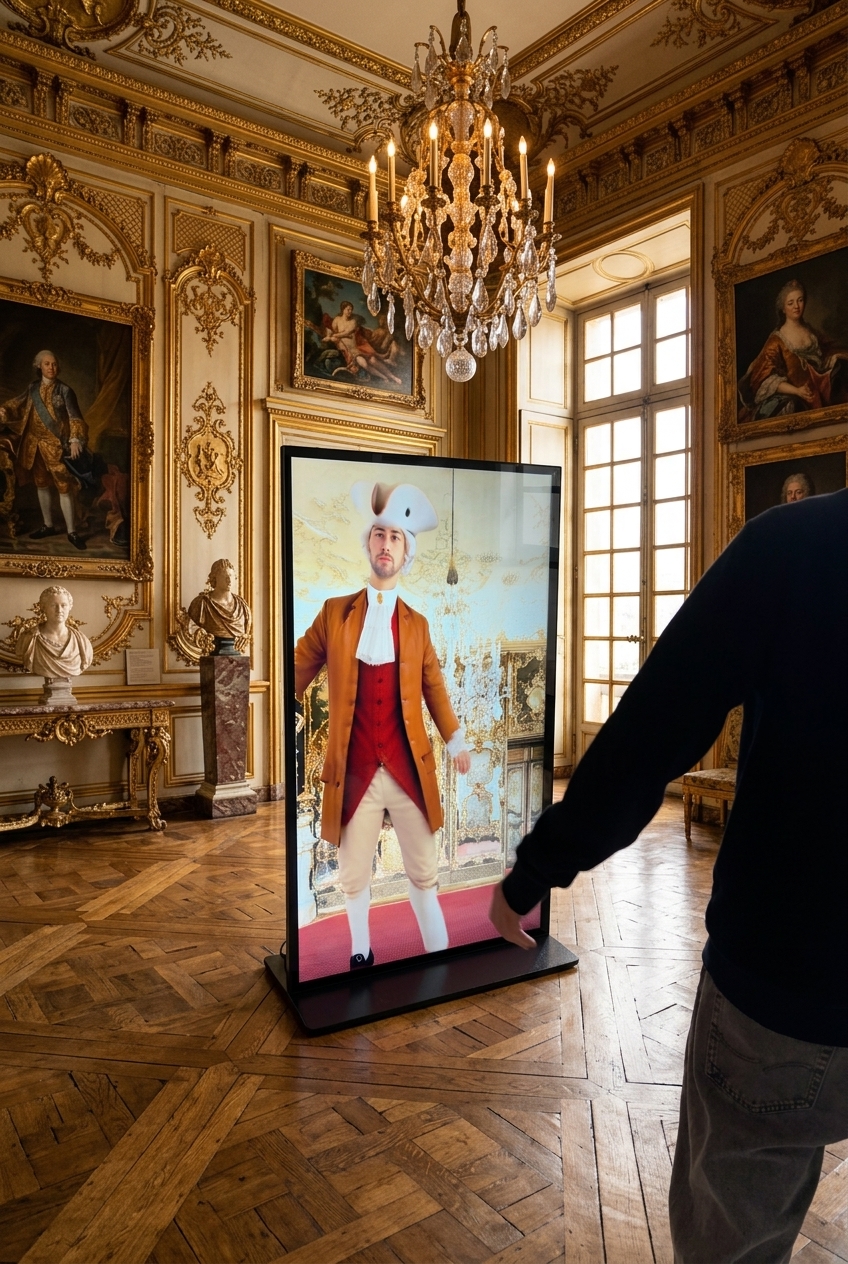
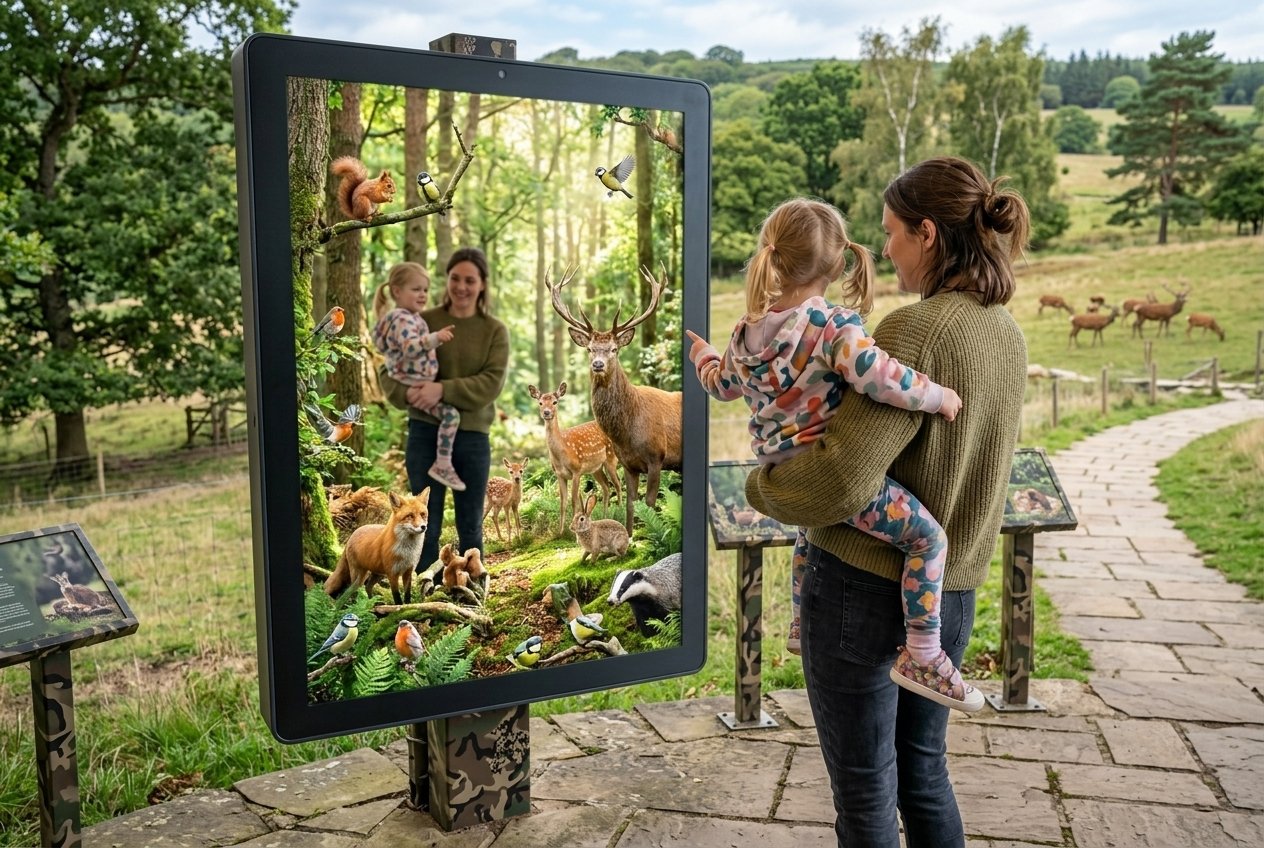
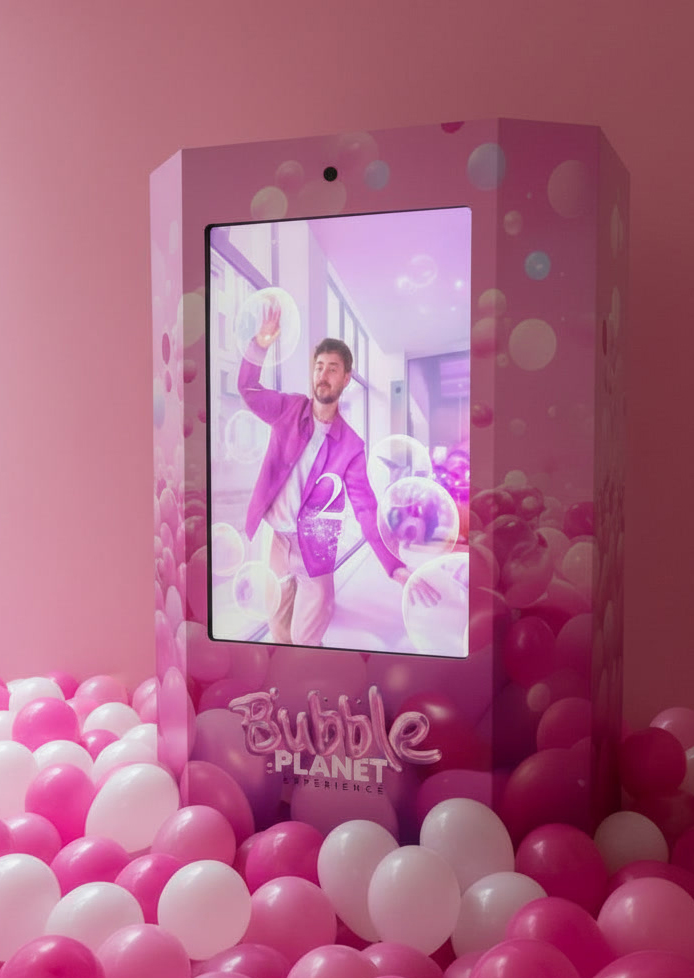
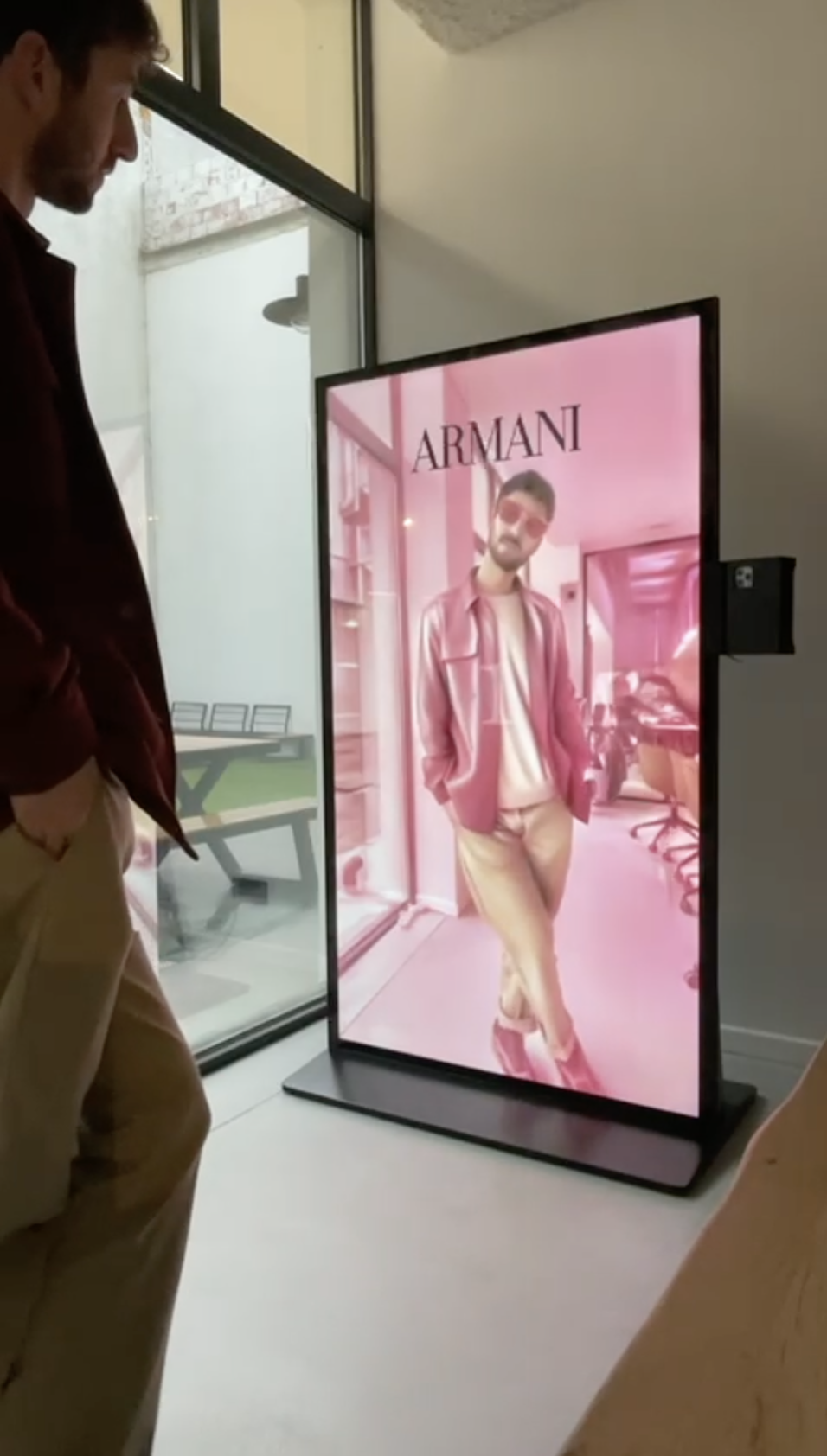
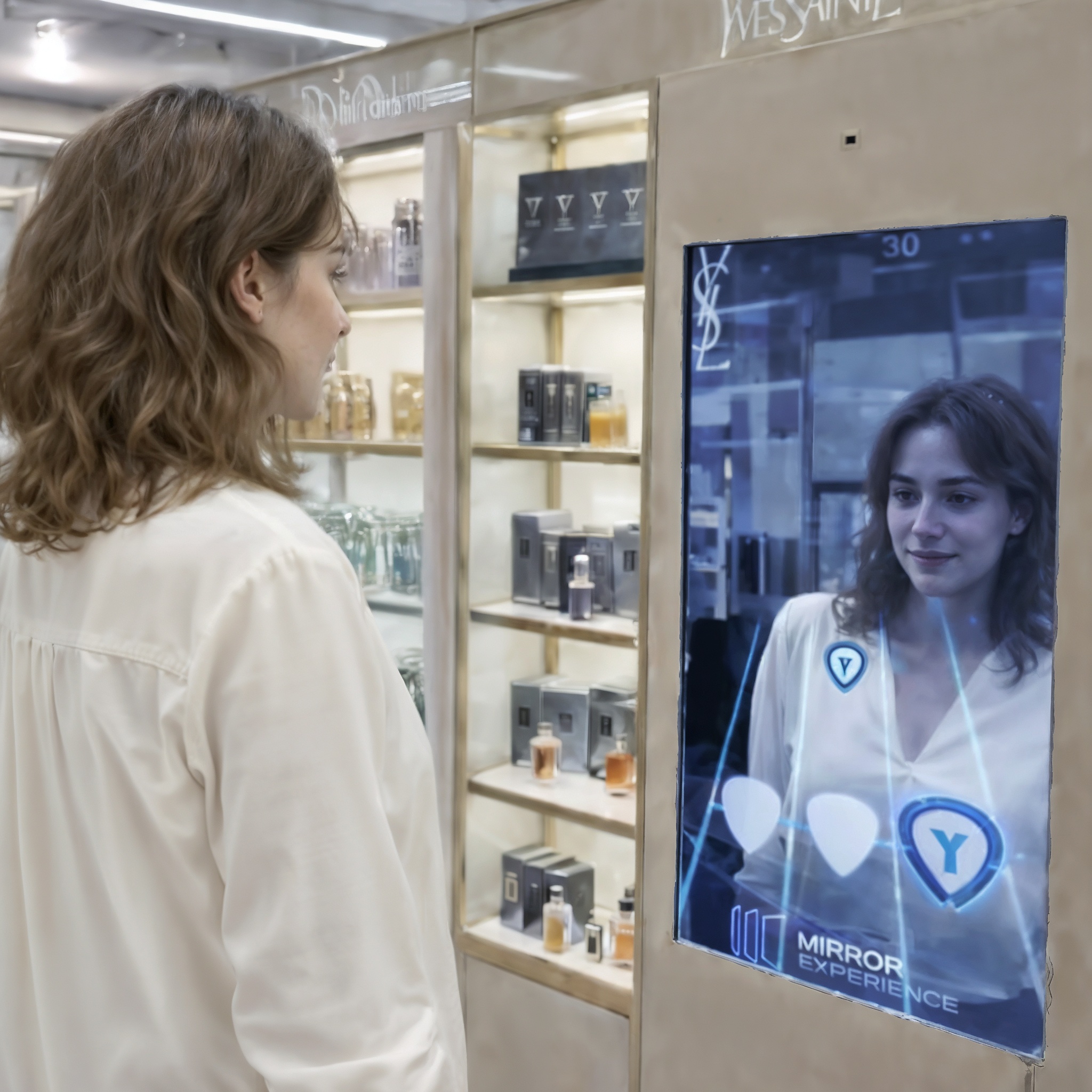
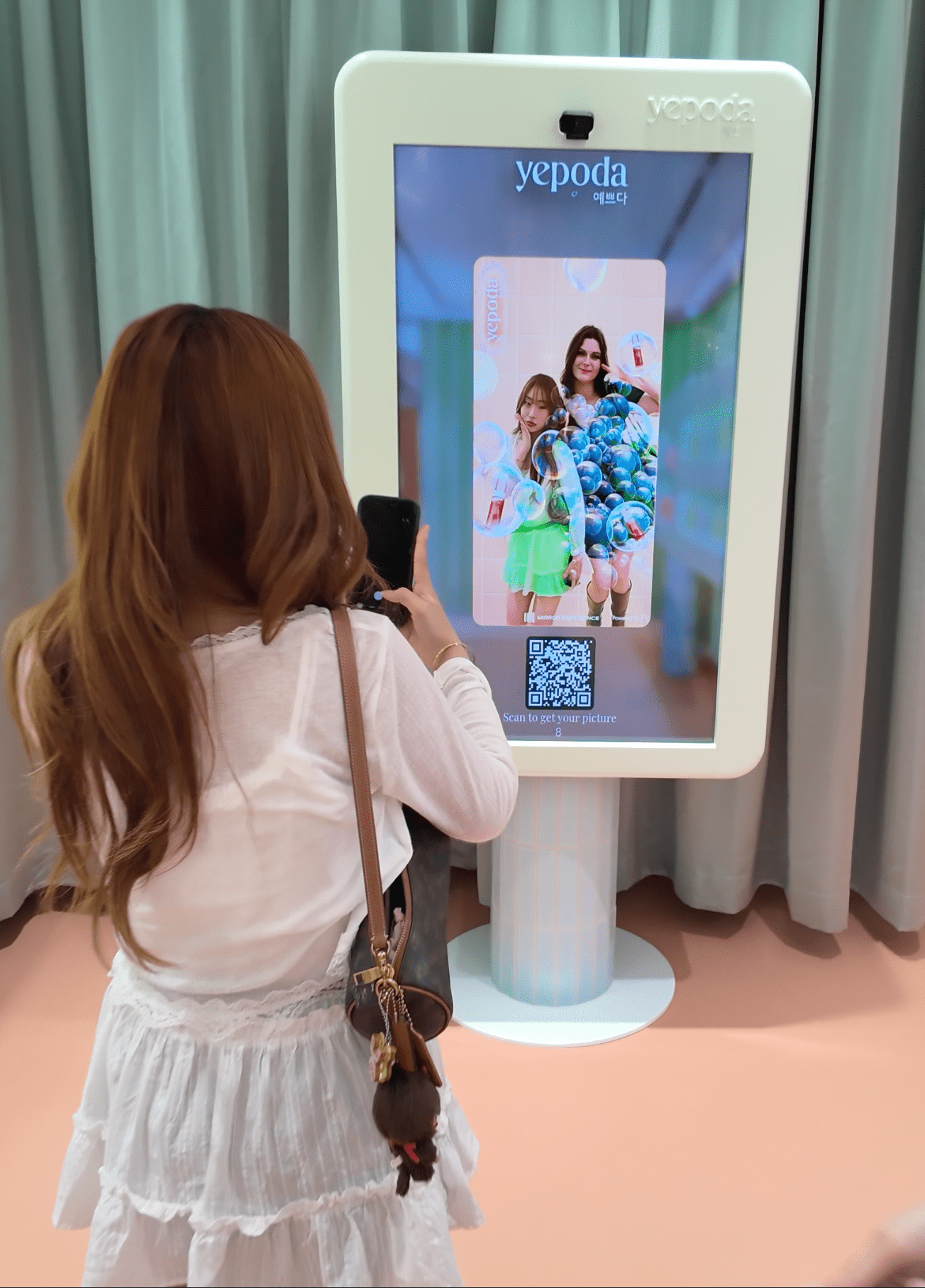
A beauty mirror is a vertical screen, 55 to 85 inches, that turns a reflection into a live try-on. The shopper taps a shade and sees it settle on her lips, cheeks or eyes as she moves. Nothing touches her skin.
The shade wall leaves the display unit and lands on the screen, so a cosmetics corner can carry around 200 references without 200 open testers ageing on the shelf. A warm nude and a cool berry can be compared in seconds.
The real cost of an opened tester
An opened tester is stock you never sell, and shoppers wary of shared applicators often skip the try-on step and guess a match from a chart. In a 2025 Snap and Publicis study of 4,028 shoppers across four countries, 80% said AR made them more confident in a buying decision and 66% said they were less likely to return an item. Ulta Beauty’s Snapchat AR lens produced 30 million product try-ons and 6 million dollars of sales in two weeks, according to the BrandXR 2026 retail research report.
Real-time AI, AR overlay or a frozen picture
The technology behind virtual beauty counters splits into three families, and they do not look the same to the shopper.
| Approach | What the shopper sees | Where it falls short |
|---|---|---|
| AR overlay with 3D tracking | A flat product image positioned over the face | The shade sits on top of the skin instead of blending with it |
| Generative image, rendered first | A photorealistic still of the result | Frozen, so the shopper waits and cannot move inside it |
| Generative AI in a live video stream | A moving try-on that follows the shopper | Needs real compute, so the hardware has to be chosen with care |
The third row is where Mirror Experience works. The models come from Decart, and Mirror Experience has been an official Decart partner since the partnership began. Snapchat Camera Kit handles tracking, and the company is an official Camera Kit partner too. It is the only one to have wired Decart into the Snap camera pipeline inside an iOS app, where try-on, AR effects and garment selection share one interface.
Putting the whole shade wall on one screen
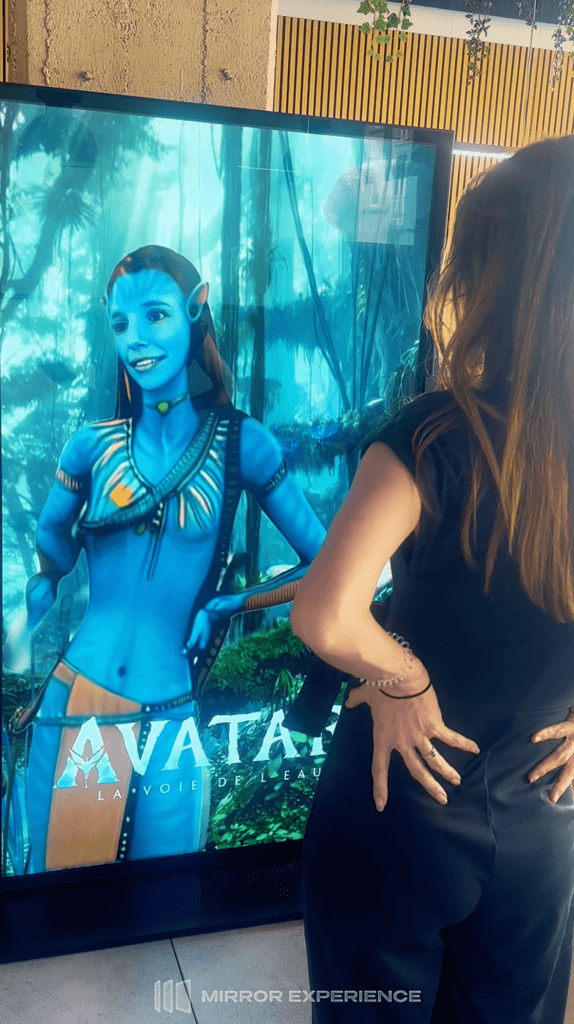
Shade volume is where a screen earns its place. Sephora’s Virtual Artist, a phone version of the same idea, has logged more than 200 million shade try-ons, according to Frame Sixty’s 2026 roundup of AR try-on results. A Mirror Experience screen carries that volume on the shop floor and adds body segmentation, live colour retouching, background swaps, virtual makeup and hand tracking in the same stream. A shopper can hold a product beside her face, drop the background into the seasonal campaign and keep the shade she liked.
From shade trial to a contact the store keeps
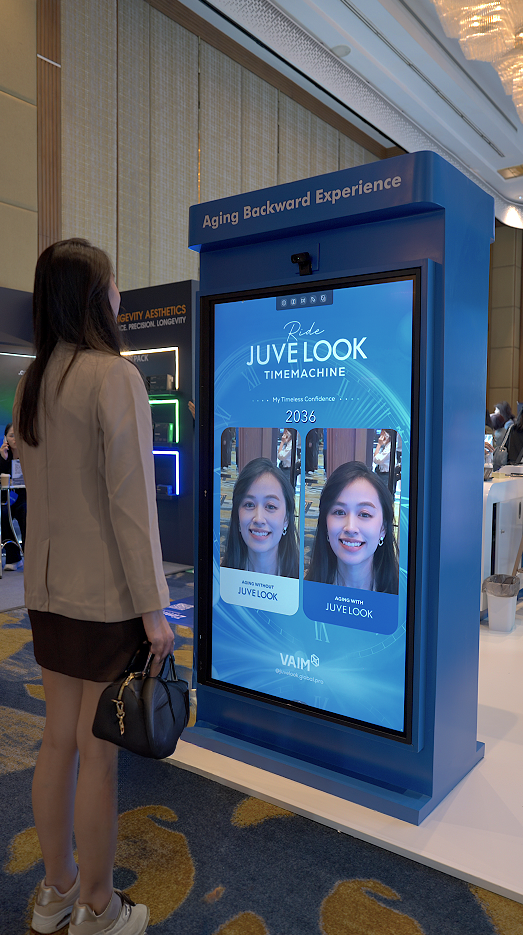
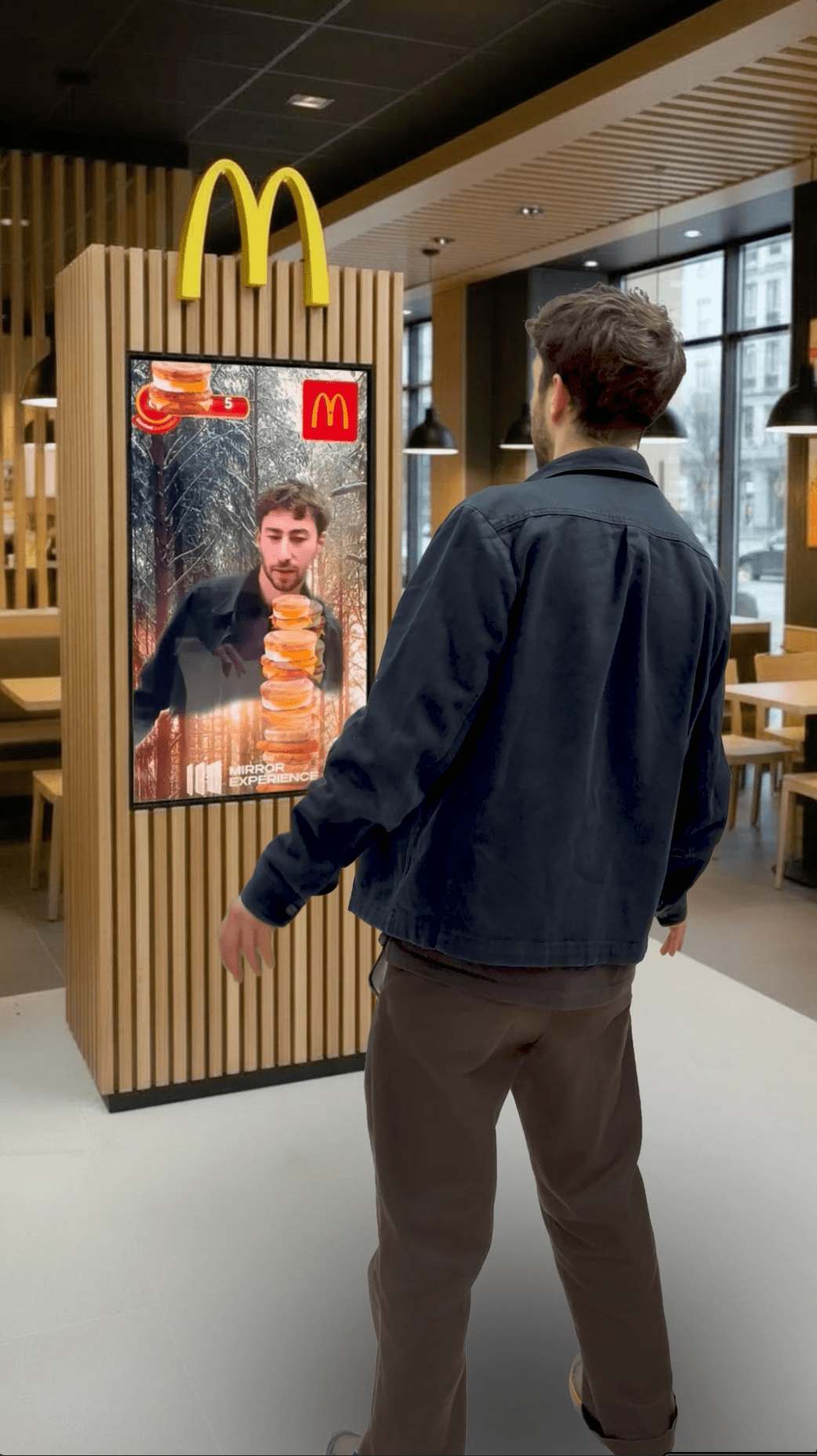
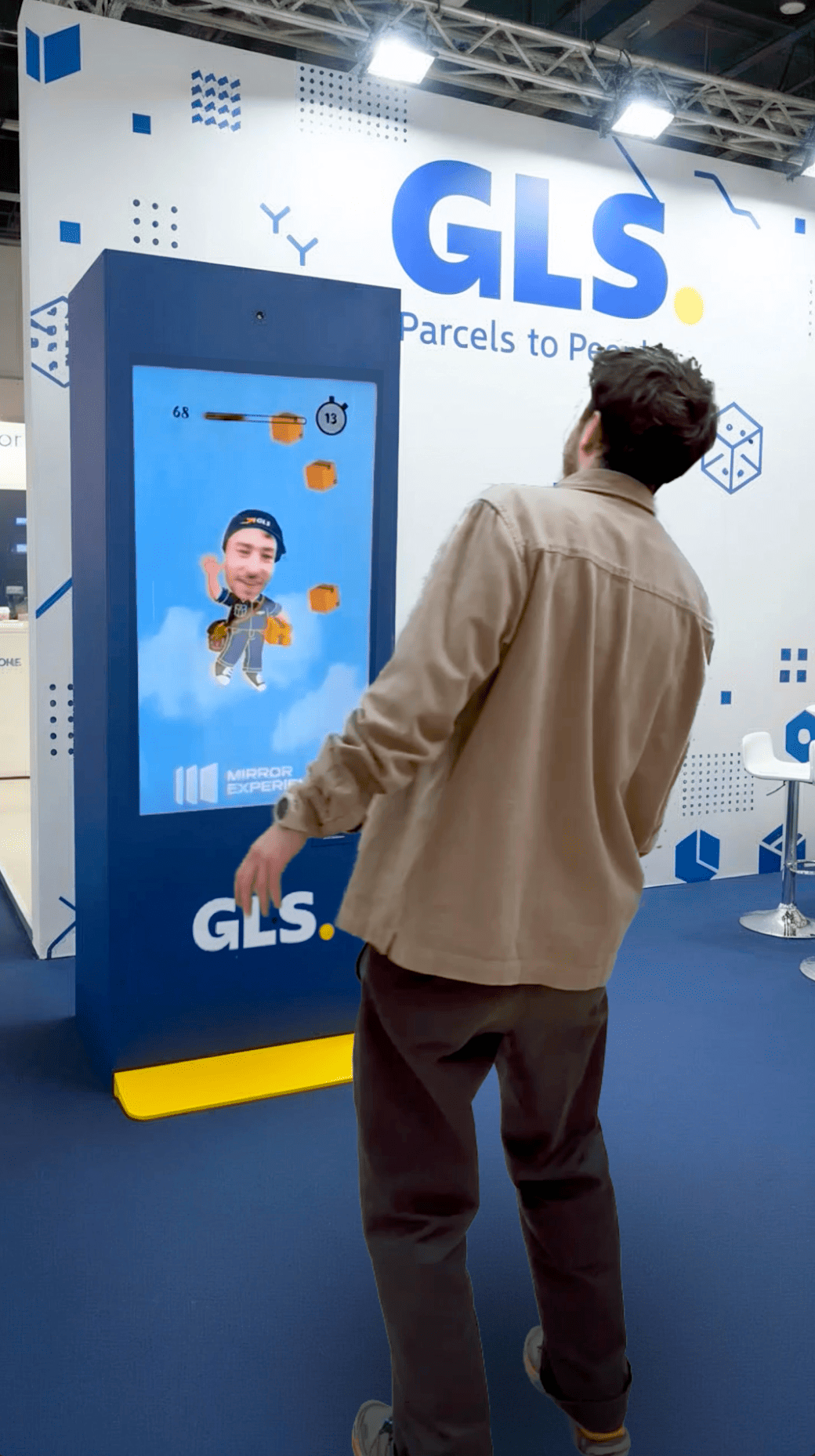
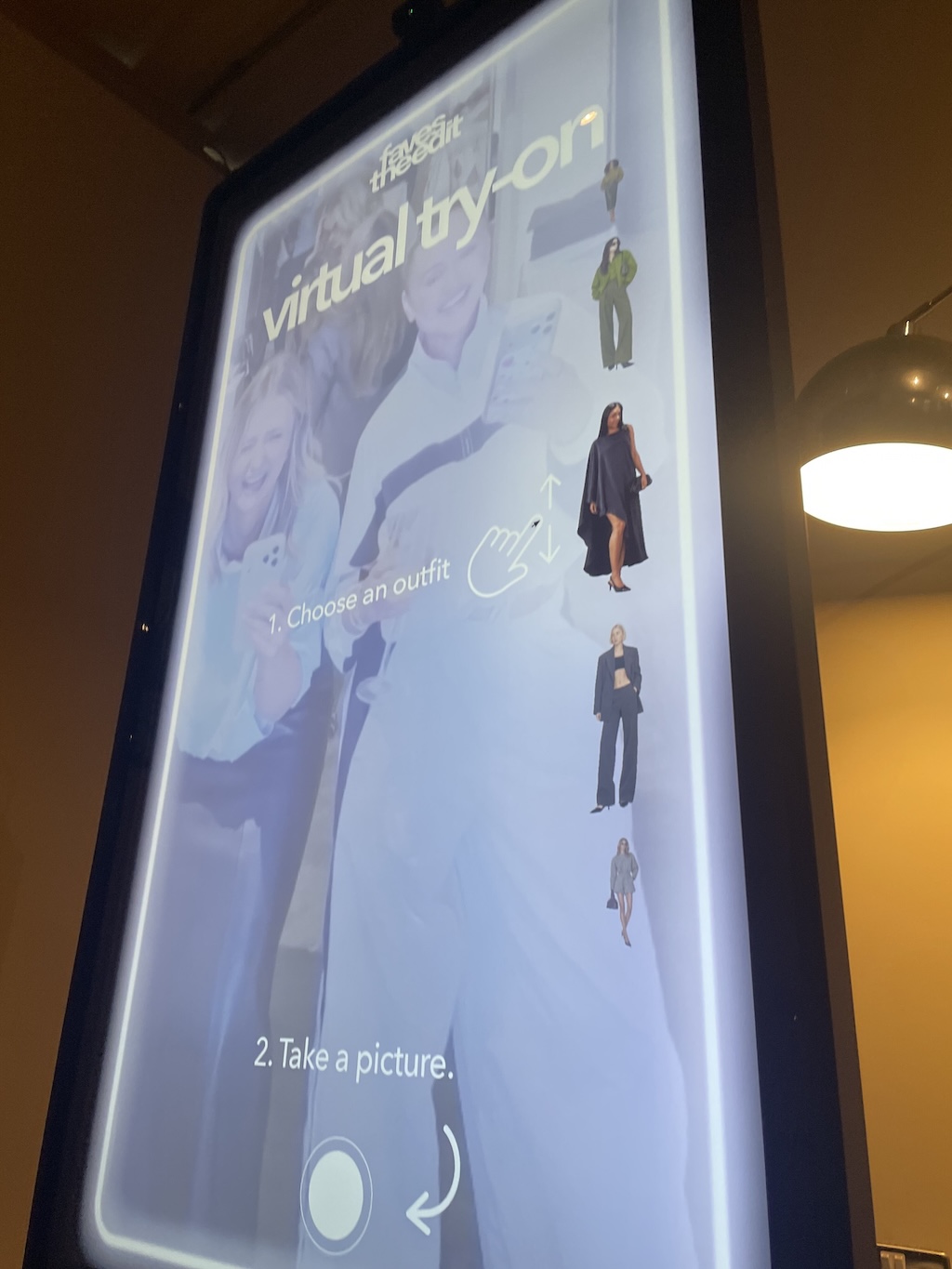
A try-on that ends when the shopper walks away leaves money on the floor. The measured numbers come from live deployments: up to 500 photos a day on the screens, the same volume of emails collected through an opt-in, and roughly 70% of participants sharing their story afterwards. Sharing goes further with a reward such as a gift, a discount code or branded goodies. The setup has been deployed in Los Angeles, Las Vegas, Bangkok, Seoul, Italy, France and Belgium, and shown at London Fashion Week in September 2026 and at Paris Fashion Week in 2026.
Plug and play, two weeks, your brand colours
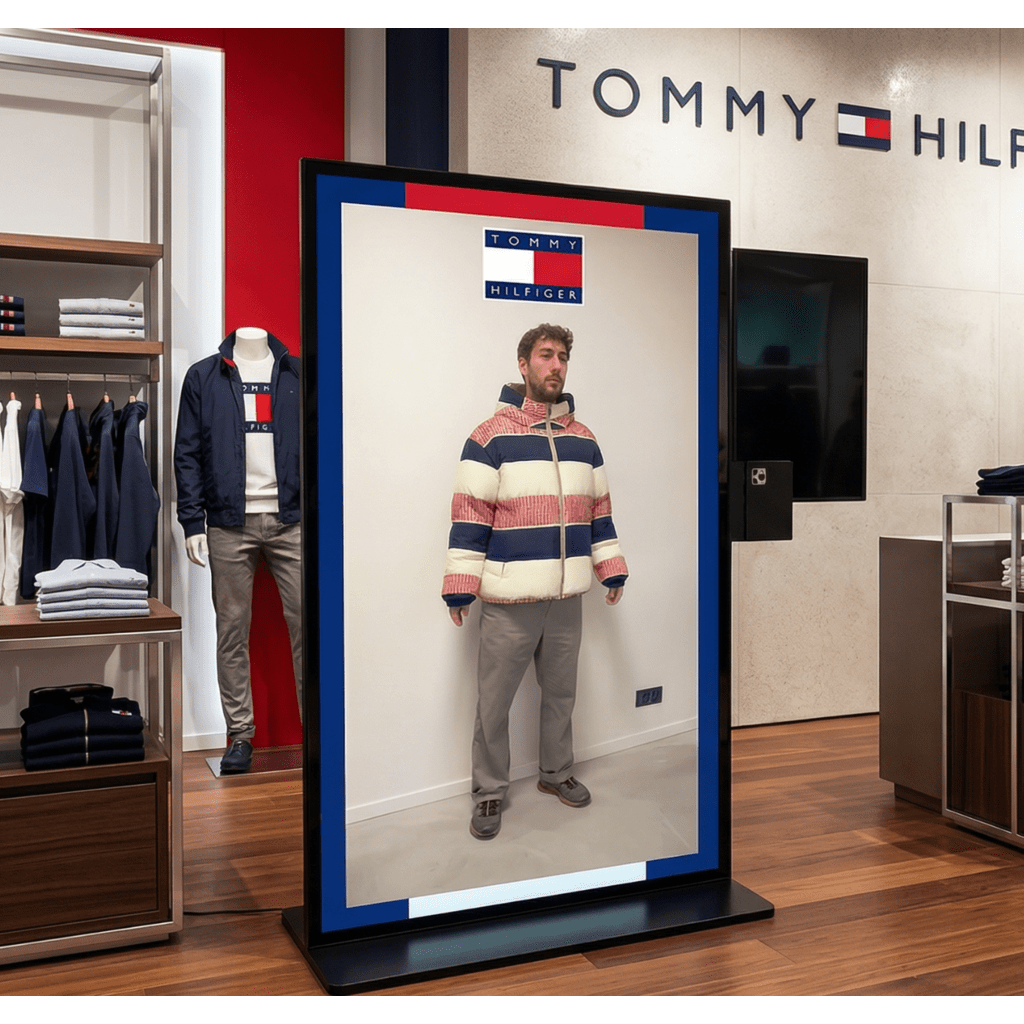
Most perfumeries assume a screen like this needs a development budget and an IT team. The installation is plug and play, with no code to maintain and no integration project to run, and a screen is built and delivered in the colours of the brand in 2 weeks. Mirror Experience can take the whole installation or work alongside the company already handling the booth design, the retail design or the fit-out. Delivery and installation happen worldwide, and the team stays on site during the event. Processing can run locally at the edge, which keeps latency low and images inside the building.
What a perfumery actually commits to
Public pricing is around 8,000 EUR for an event and around 20,000 EUR for a permanent installation, for the software layer, with the screen, hardware and on-site presence quoted per project. The hardware adds between 1,000 and 5,000 EUR on top, depending on the screen size and the structure. A free pilot runs before any commitment, and a typical deployment lands in 2 to 4 weeks once the pilot is signed off. For a flagship counter it replaces a recurring spend on testers and on staff time spent matching shades by hand.
Frequently asked questions
Does the shopper need to install an app?
No. The screen works on its own. Mirror Experience also ships an iOS app that combines virtual try-on with AR effects for brands that want the visit to continue on a phone.
Can the same screen show clothes as well as makeup?
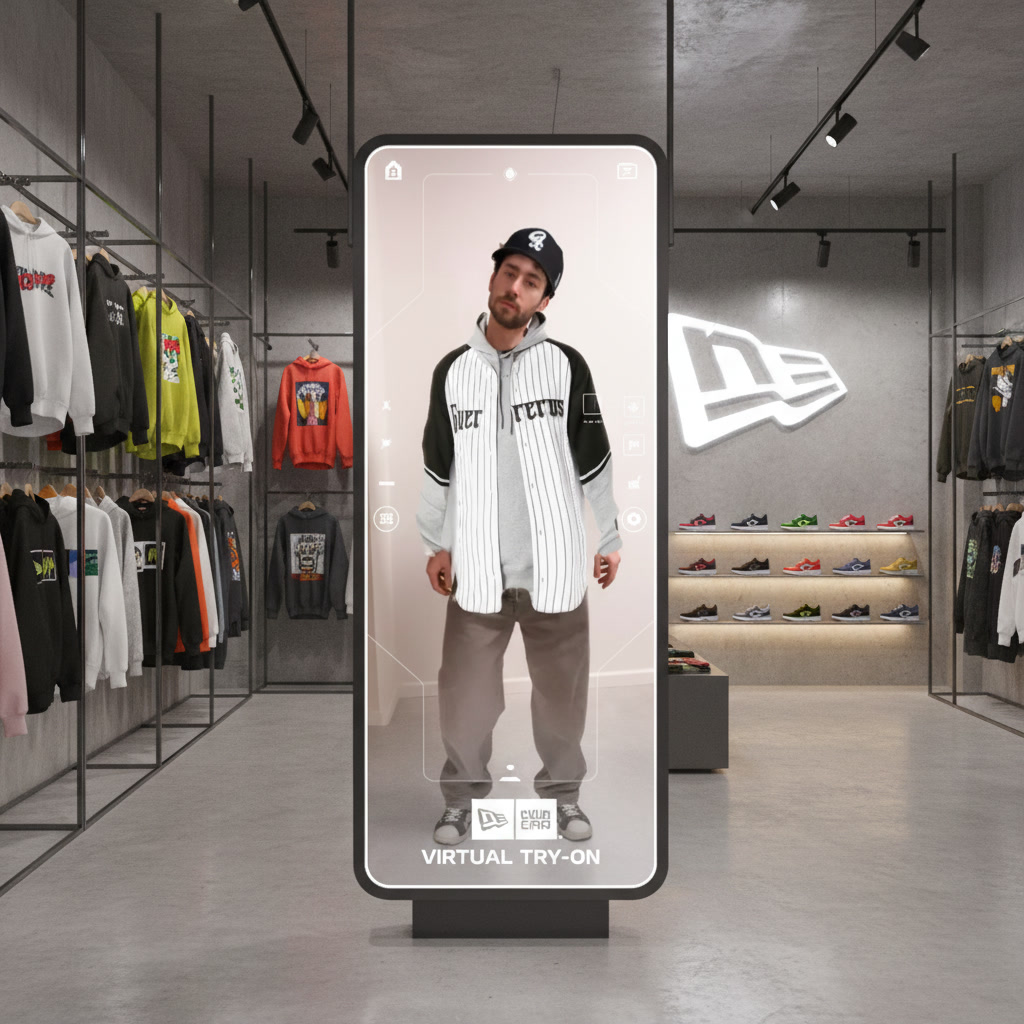
Yes. The Decart models handle garments in the same live stream, so a store that also sells scarves or seasonal accessories can run more than one try-on on one installation.
Where do the photos and email addresses go?
Photos and email addresses are collected by the brand through an opt-in. Processing can run at the edge, so images do not depend on a cloud round trip.
How long before it runs in my store?
A screen in your brand colours is built and delivered in 2 weeks, then installed by the team on site. The free pilot comes first, and a full deployment usually takes 2 to 4 weeks.
Want to see a full shade range tried without opening a tester? Start with a free pilot on mirror-experience.com and put the screen in front of your own shoppers before you commit.