Interactive mirror in aesthetic and medical clinics: show the result before the decision
A patient arrives for a consultation with screenshots on her phone and no clear idea of what the treatment will do to her face. A screen at the entrance can show her before she sits down with the doctor.
Key Takeaways
- 87% of consumers said AI visualisation would raise their trust in a provider (Perfect Corp, May 2026).
- The screen covers the experience layer of a clinic, not the clinical decision, and it does not predict tissue response.
- Screens run 55 to 85 inches and ship in clinic colours in two weeks. Software starts at 8,000 EUR.
What the mirror does before a consultation starts
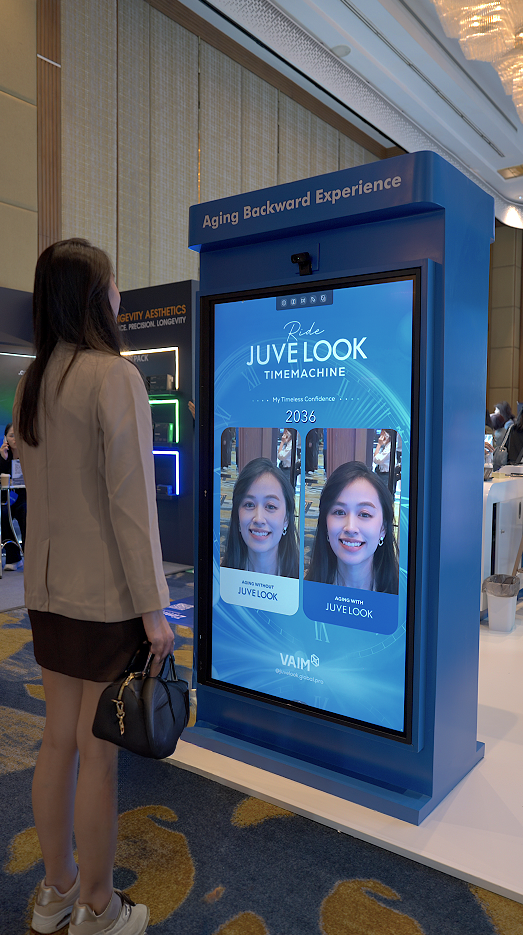
It shows a patient her own face or look on a live camera feed, puts a treatment area into visual terms, and hands her a photo at the end. The doctor still makes the call. Nothing on the screen predicts how tissue will respond.
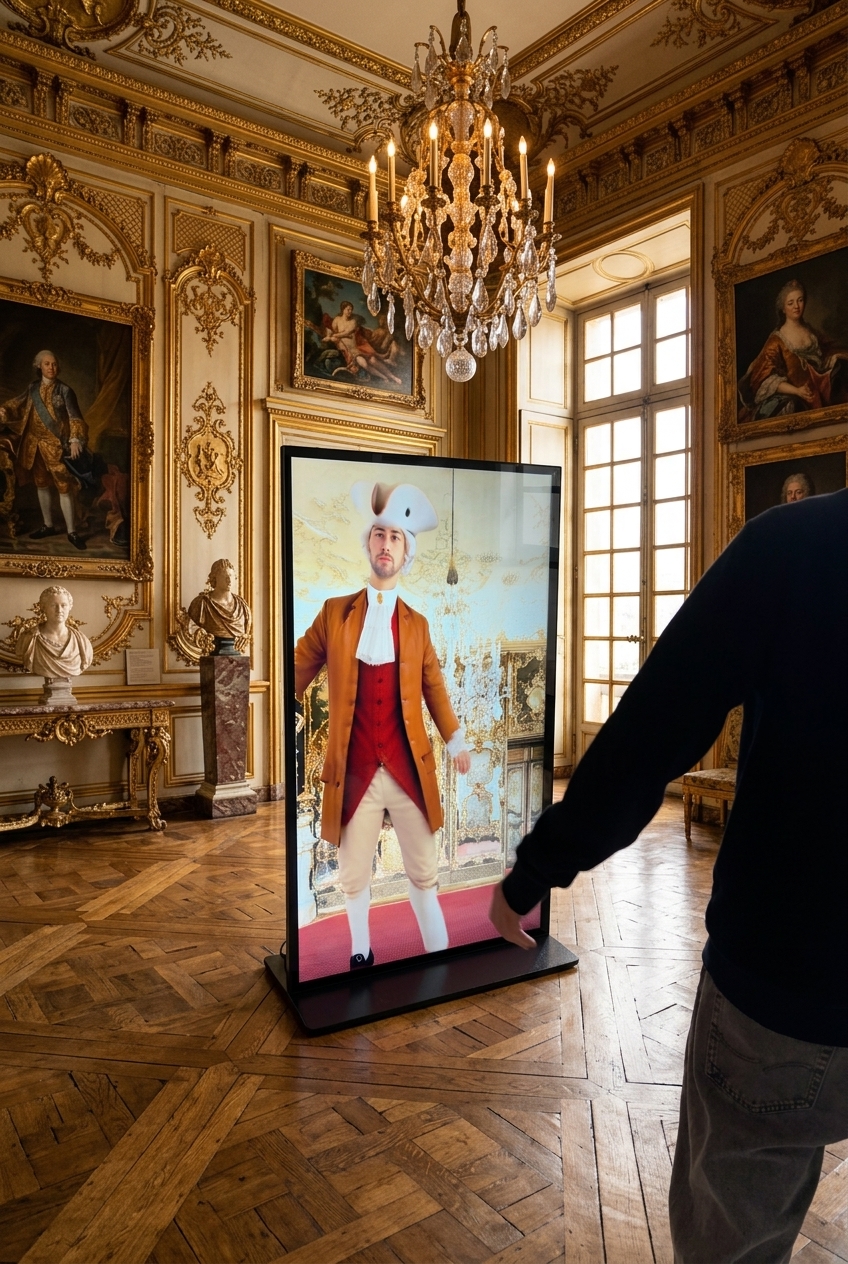
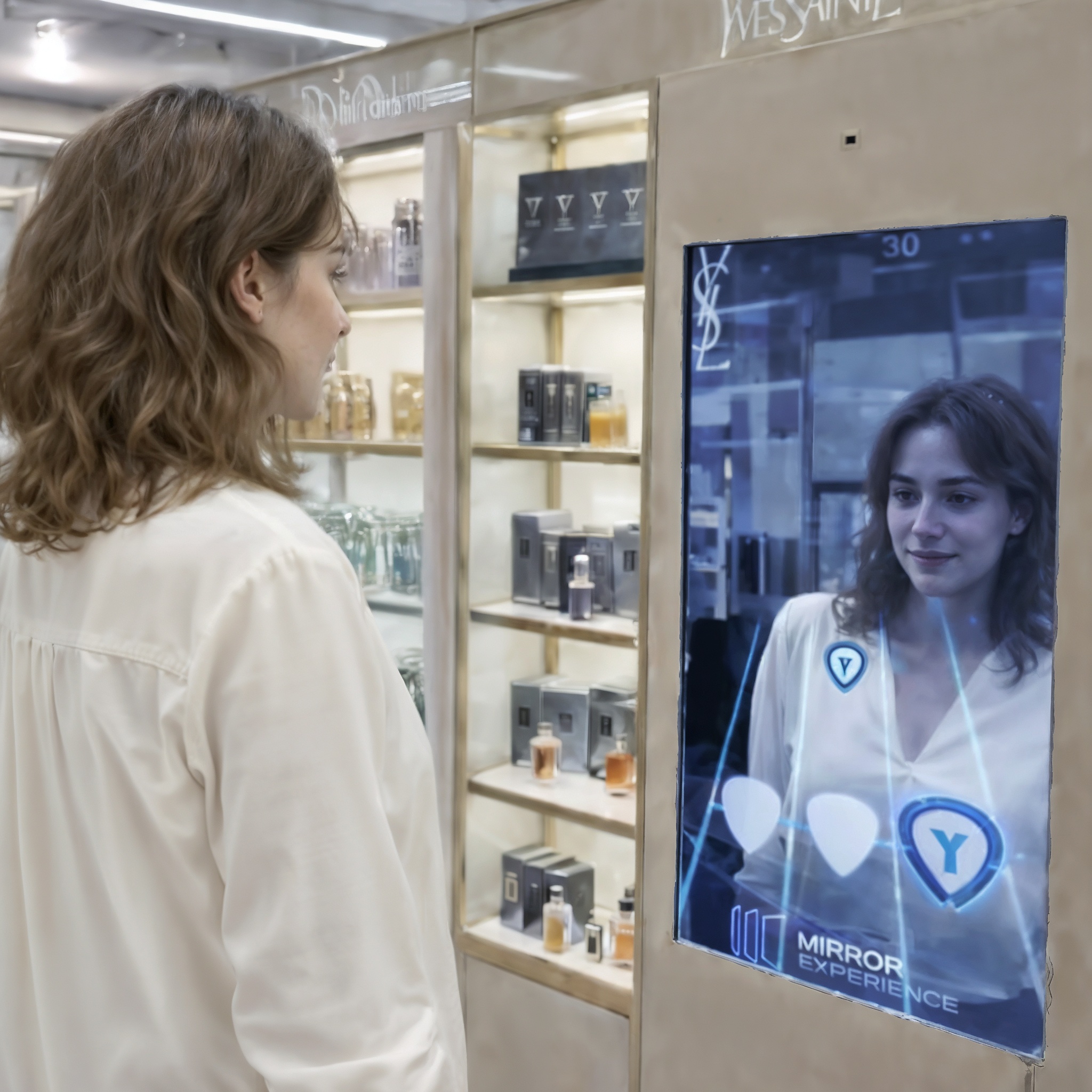
The screen belongs at the entrance or in the waiting area, often replacing one already on the wall, with around 60 cm of clearance so a person can step back. Sessions run 30 seconds to a minute at about 25 frames per second, with body segmentation, hand tracking and background replacement.
Why patients want to see it first
A survey of 300 consumers in May 2026 found 87% said AI visualisation would increase their trust in a provider, and 84% said previewing an expected result would make them more confident about the decision. One in three had regretted a procedure (Perfect Corp, The Modern Aesthetics Consumer, 18 May 2026).
Perfect Corp sells simulation software to clinics, so read the figure as appetite. The direction still matches a consult room: a patient who cannot picture the outcome tends to postpone.
Where a clinic mirror stops and a clinical simulator starts
Clinics already use clinical simulators and should keep them. Crisalix and Galderma’s FACE tool build a 3D model of the face for surgical or injectable planning, measured in millimetres. Our screen does not do that, and we do not sell it as if it did.
| What sits in the room | What the patient sees | What it cannot tell her |
|---|---|---|
| Clinical 3D simulator | A modelled face with measurements | How her own tissue will respond |
| AR overlay on the camera feed | Colour and effects that follow the face | Texture, volume, tension |
| Generative try-on on the live feed | Her look applied as she moves | Any clinical outcome |
A 2026 study in Aesthetic Surgery Journal Open Forum followed 38 rhinoplasty patients and found 3D simulation accuracy correlated with postoperative satisfaction at ρ = 0.66 (Yamamichi et al., 2026). A separate study of 75 patients rated the influence of 3D simulation at 8.4 out of 10 for breast augmentation, with 70.7% saying they would recommend it, yet ranked simulation third among decisive factors at 18.7%, behind patient photos at 30.7% and the conversation with the surgeon at 29.3% (Taylor & Francis, 2026).
The conversation carries the decision, and the screen starts it earlier.
Two weeks in clinic colours, plug and play
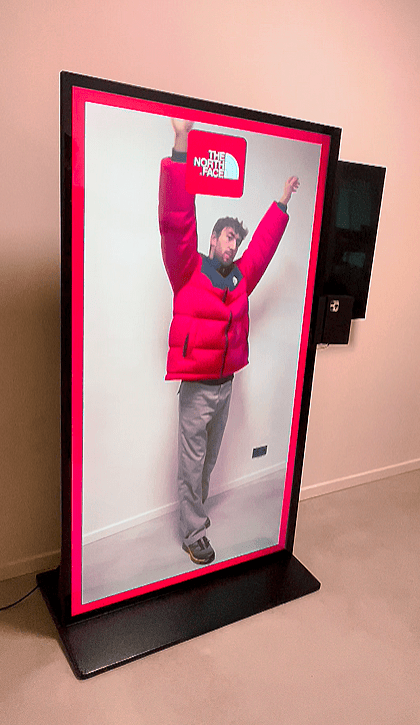
A screen is built and delivered in the clinic’s colours in two weeks, at 55 to 85 inches depending on the wall, and the hardware is plug and play. Installation is direct in Europe, the United States and Asia. Elsewhere it ships with local partners and the software is deployed remotely by our team.
The models are Decart’s LUCY VTON, and we have been an official Decart partner since its first day. We are also an official Snapchat Camera Kit partner, and the only team to have put Decart inside the Snap camera flow in an iOS app. The same build runs on the edge with no cloud dependency, so patient images can stay on the machine and email capture stays opt-in.
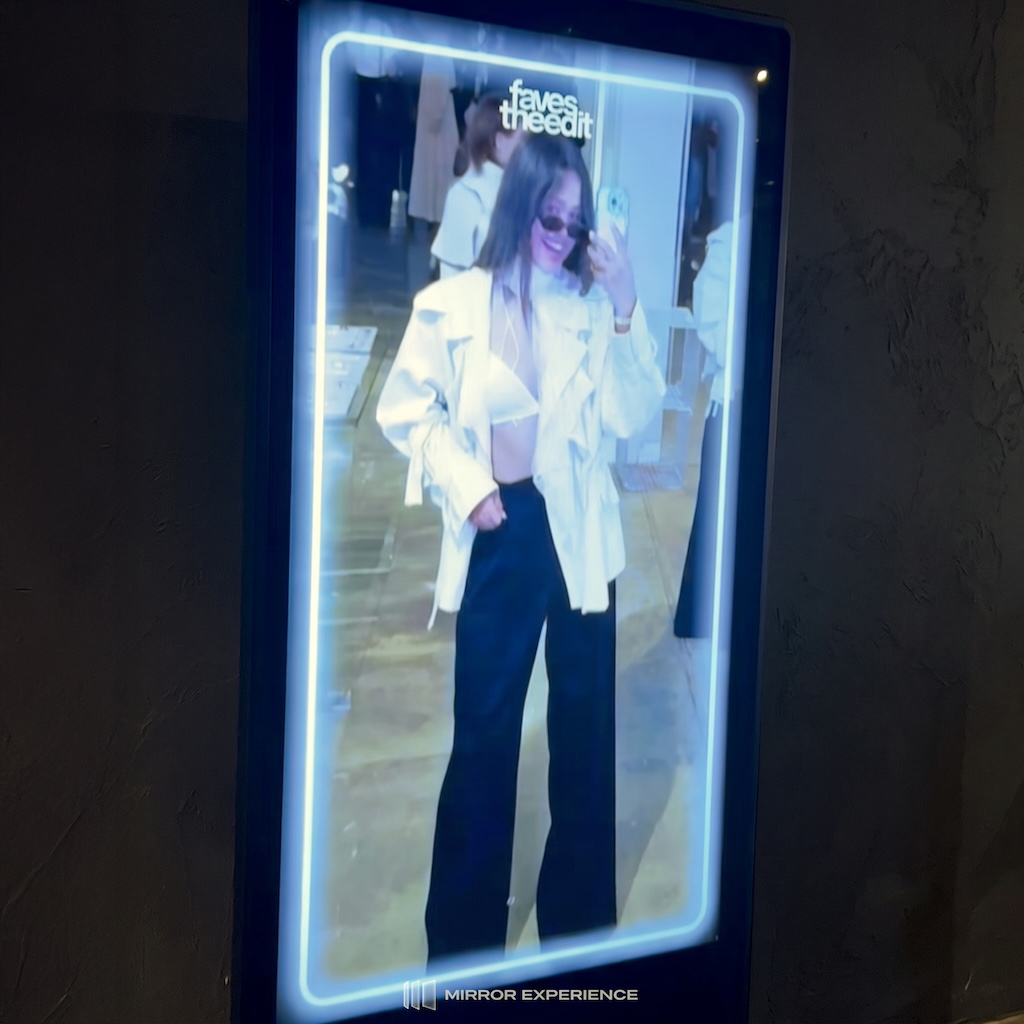
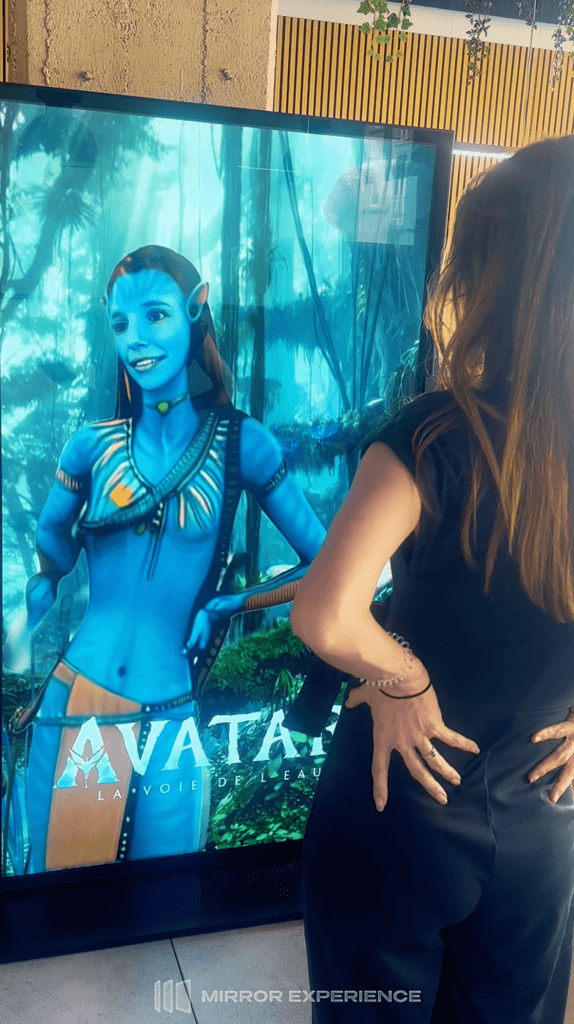
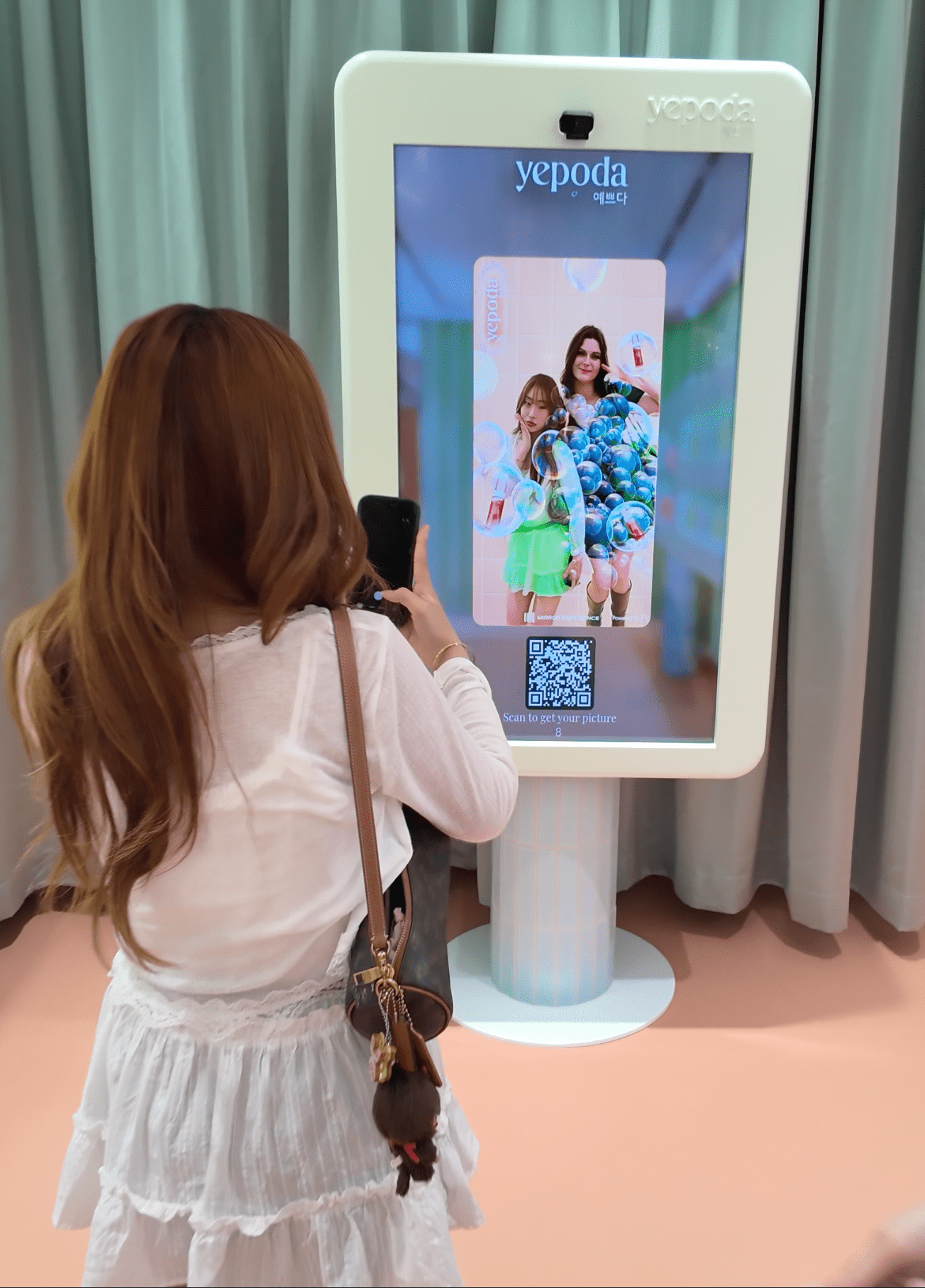
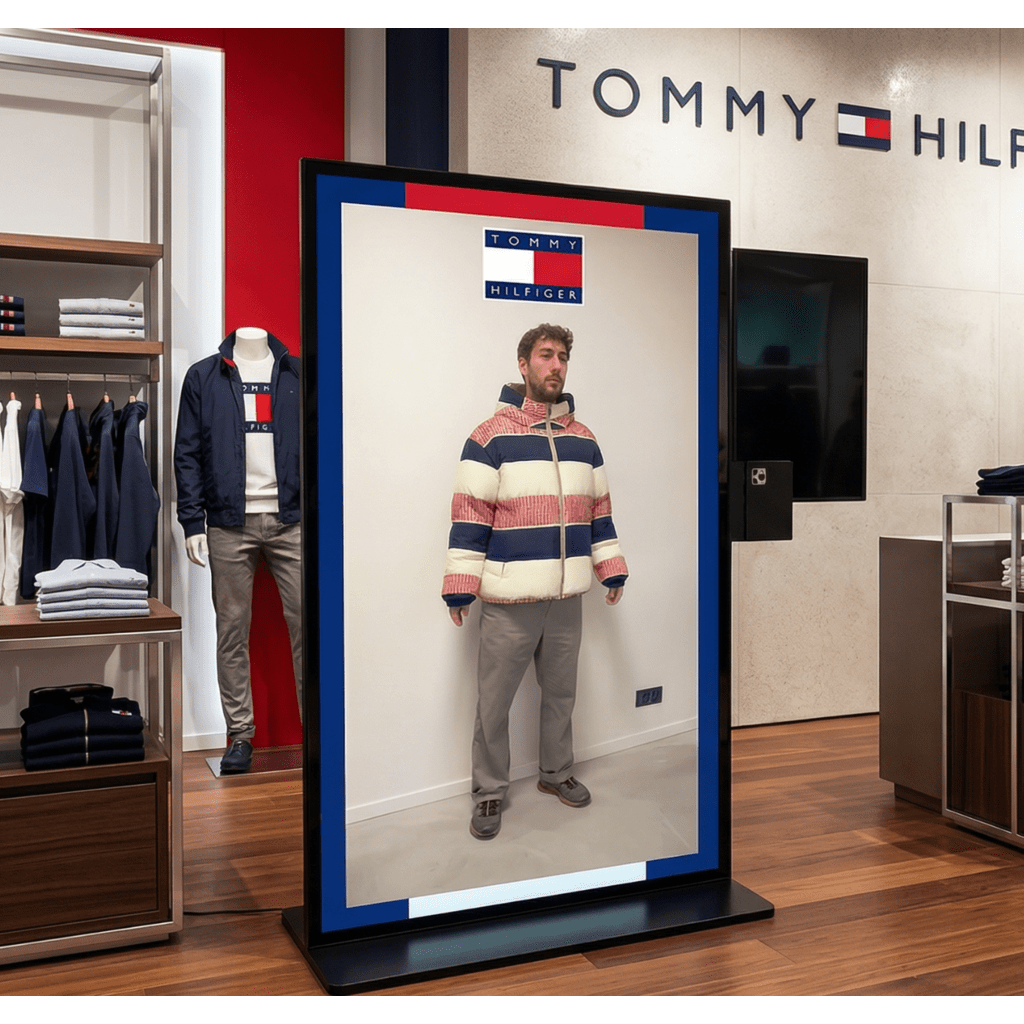
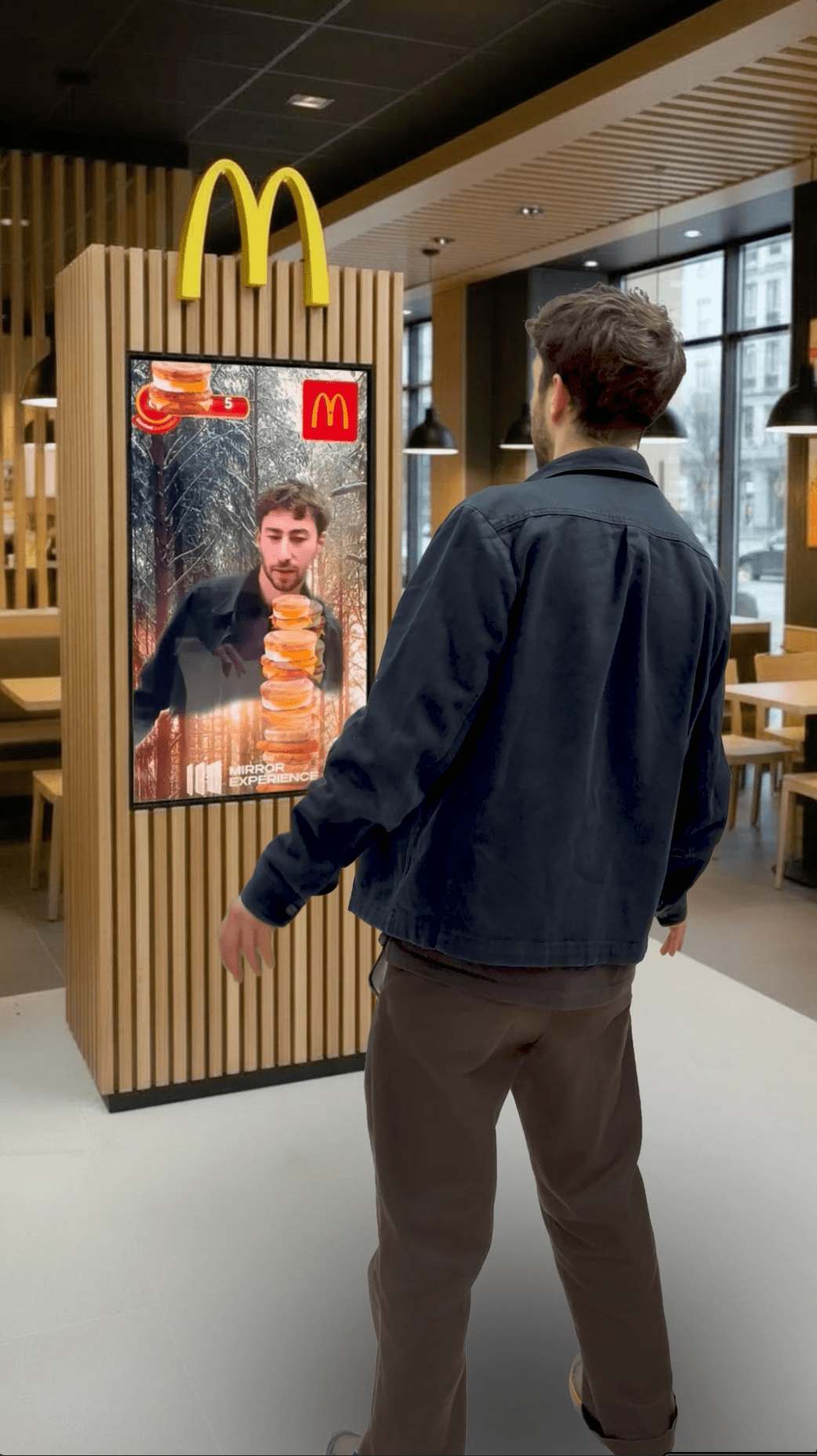
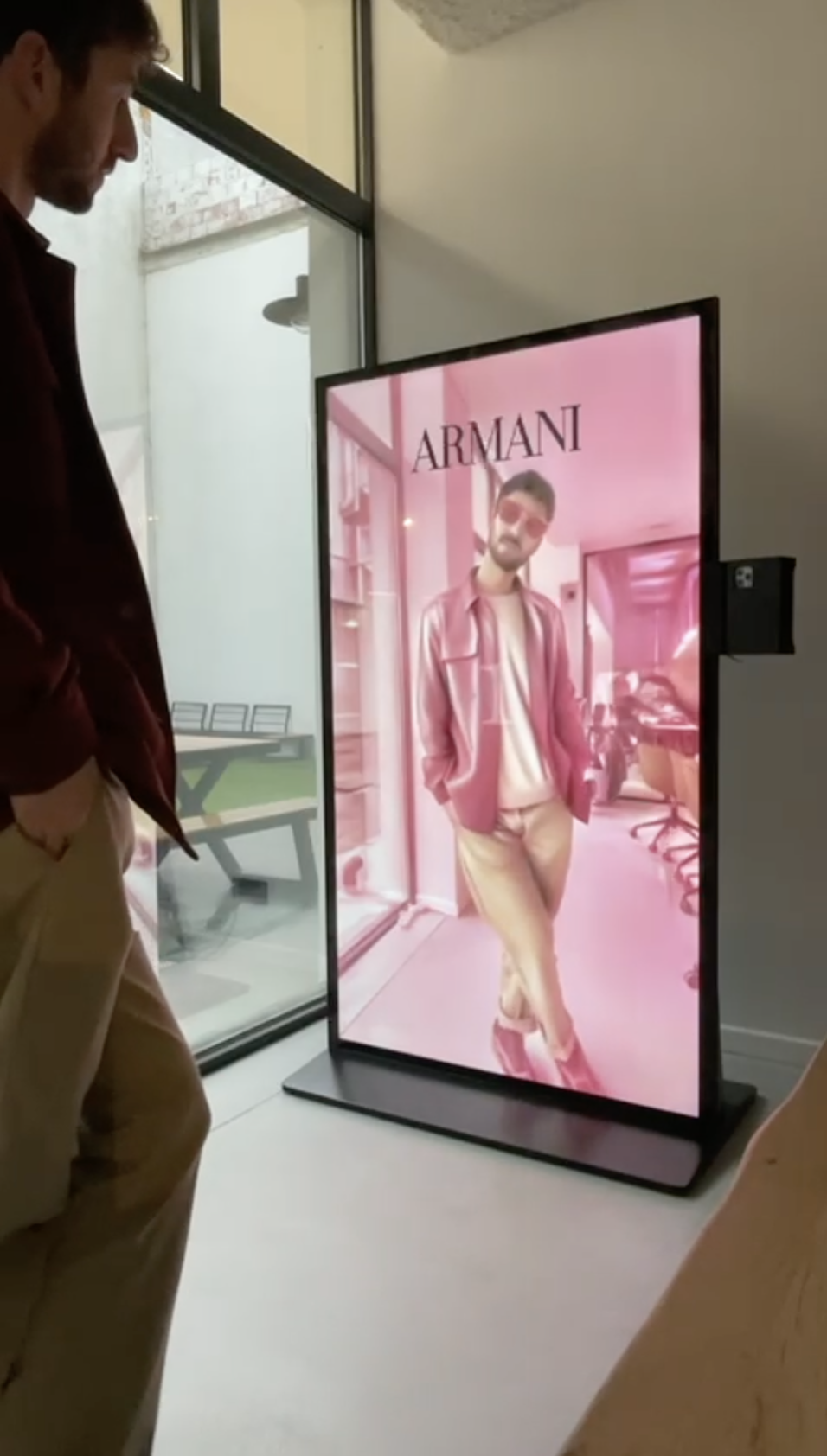
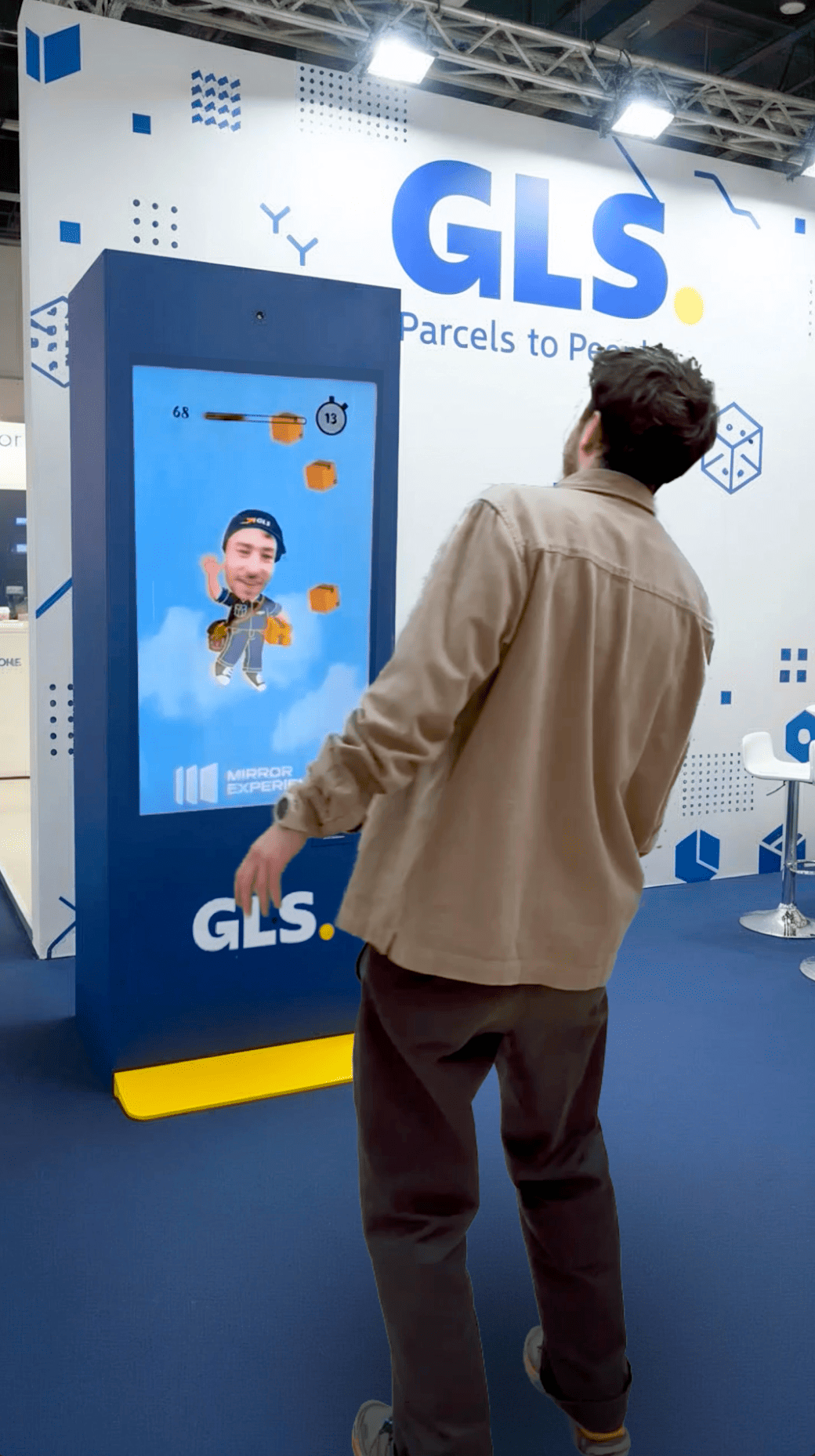
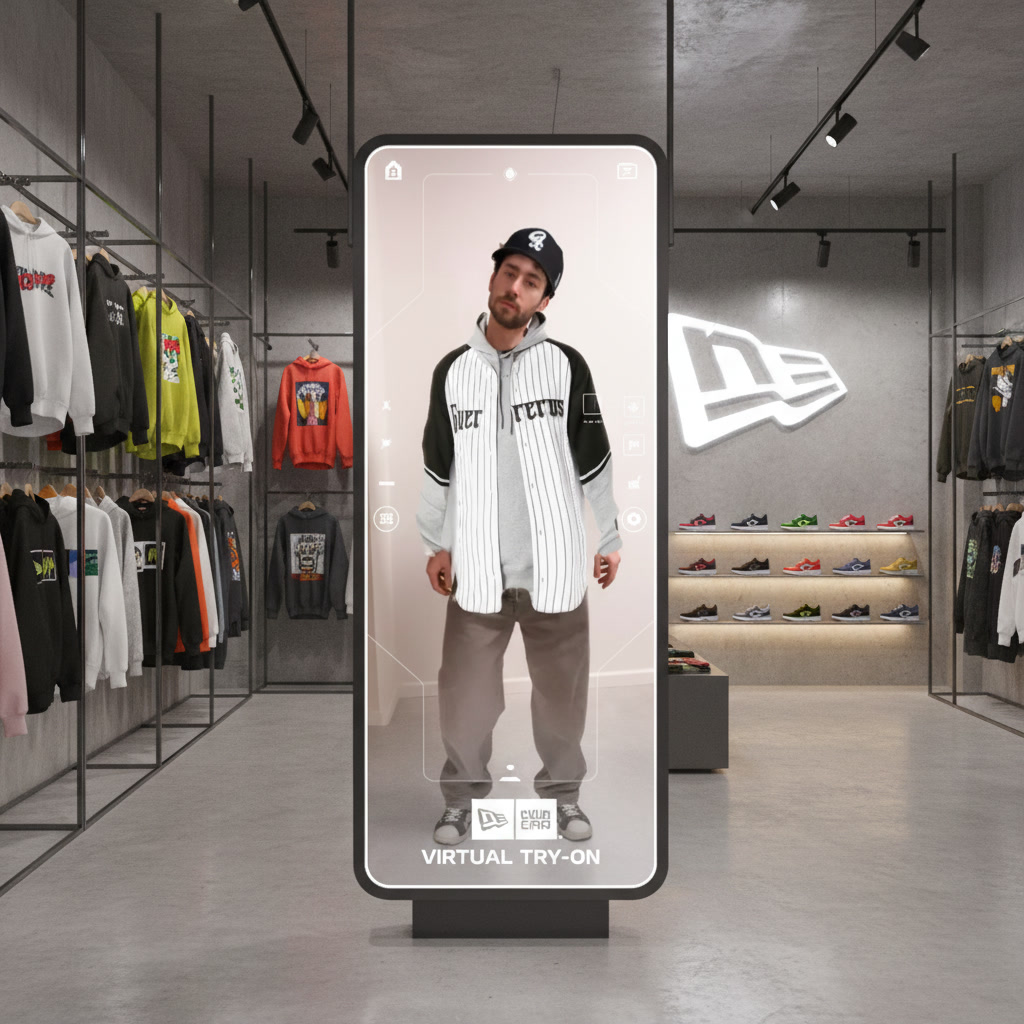
Our screens have run for Sephora, Armani, Yves Saint Laurent, Dolce & Gabbana, Tommy Hilfiger, Nike, New Era, The North Face, McDonald’s, GLS and Yepoda, and we ran 26 pieces on one screen at London Fashion Week. Software starts at 8,000 EUR. Hardware adds 1,000 to 5,000 EUR for screen size and structure, so a working installation lands between 9,000 and 13,000 EUR, and permanent custom builds go beyond. Every project opens with a free pilot on iPad, iPhone or computer.
What a practice can count in the first month
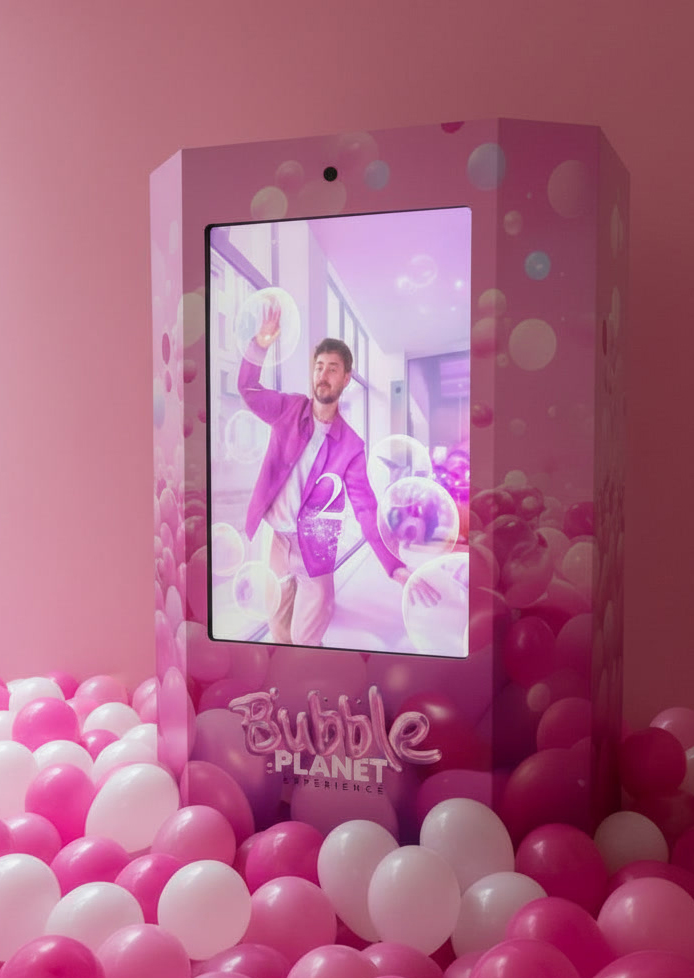
The number worth counting in month one is not revenue, it is contact and content. On event builds we handle up to 500 photos a day, collect close to the same volume of emails on an opt-in, and see around 70% of participants share their result as a story, and a gift lifts that further.
There is no measured conversion figure for the mirror and we will not invent one. A clinic that wants it has to instrument it: sessions, photos, emails, time at the screen, and whether the booking followed.
What it cannot promise
The screen is not a medical device, and nothing it shows is diagnostic. Light is the practical problem, since a treatment room runs cooler than a waiting area, so a colour that looks right at 10am can read wrong at 6pm. Ask for a calibration pass at your busiest hour.
Deeper skin tones remain where visual try-on fails most often across the industry, ours included. Ask for validation on the tones your patients actually have, and test before a busy season rather than during one.
Consent comes with it. A patient who walks up to a screen has not agreed to a database, so keep the capture opt-in, keep images local where the build allows it, and put the choice in front of her before the camera runs.
Questions clinics ask before a pilot
Does the mirror simulate injectable or surgical results?
No. Predicting a filler or surgical outcome needs a clinical 3D simulator run by a trained clinician, and we say so.
Where does it go in a clinic?
At the entrance or in the waiting area, often replacing a screen already on the wall, with around 60 cm of clearance.
What does it cost?
Software starts at 8,000 EUR. Hardware adds 1,000 to 5,000 EUR for screen size and structure, so a working installation lands between 9,000 and 13,000 EUR.
Can patient images stay inside the clinic?
Yes. The models can run locally with no cloud dependency, and the setup can run with no data collection.
Test it in your own clinic
Send the treatment area you want to explain, the space you have, and the hour your waiting room is busiest. We will come back with the screen size that fits and a pilot you can run on site at no cost. Start at mirror-experience.com. The hardware lives on the AR mirror page, and the colour side sits in virtual makeup try-on.