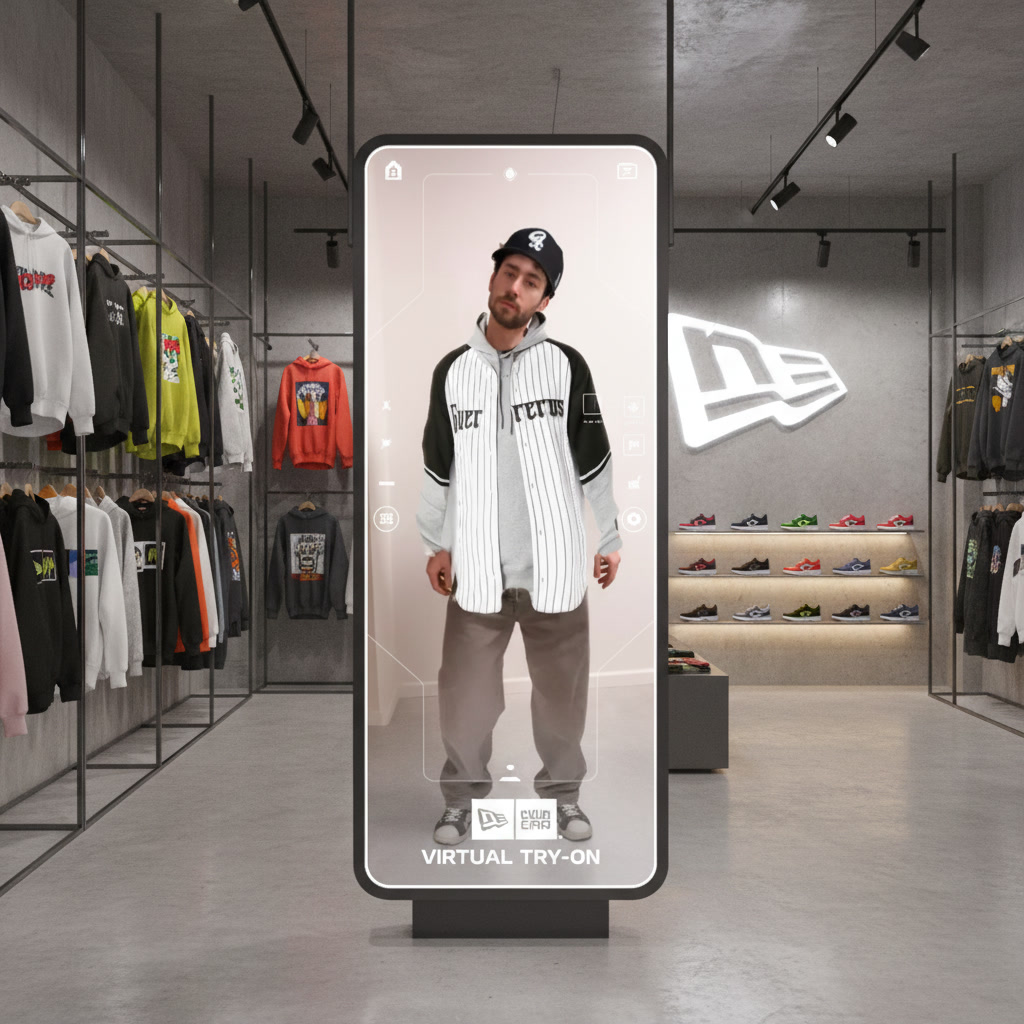
Virtual Dressing Room
What is a virtual dressing room?
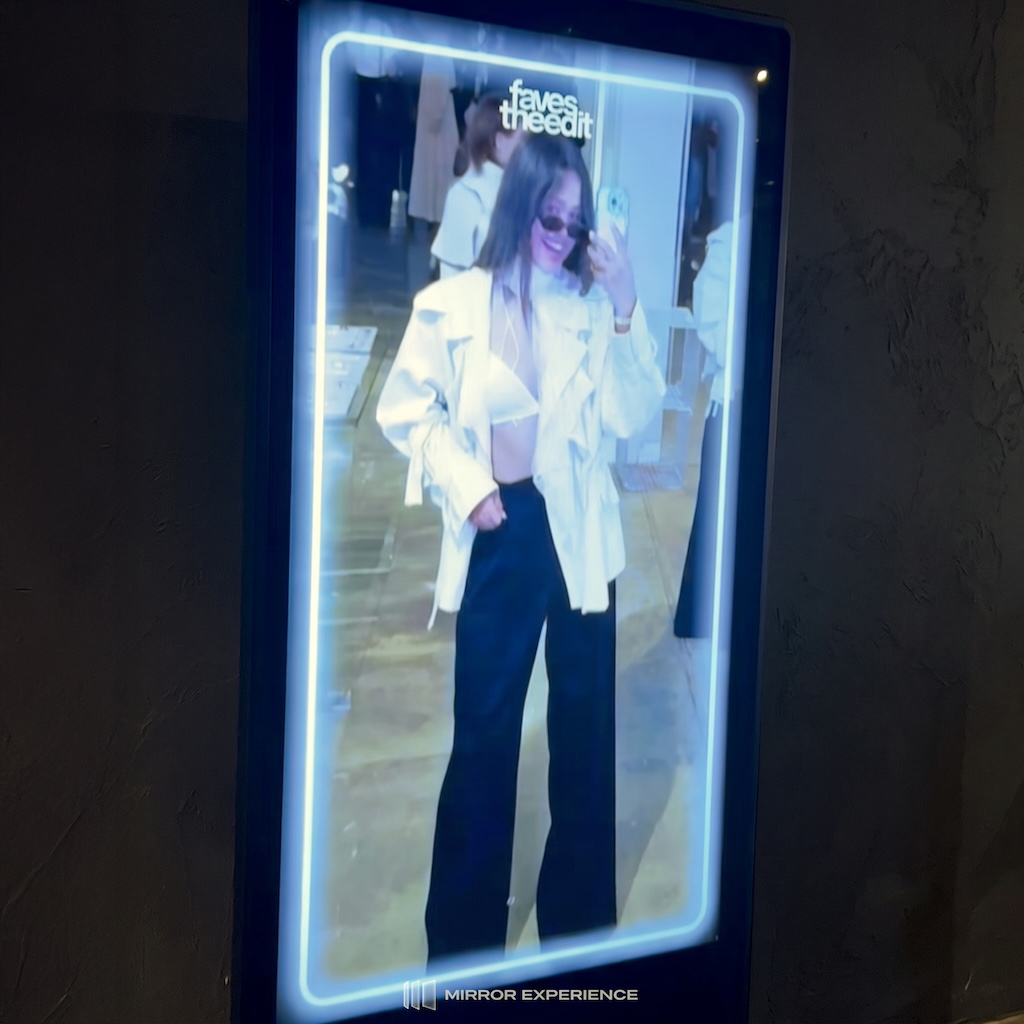
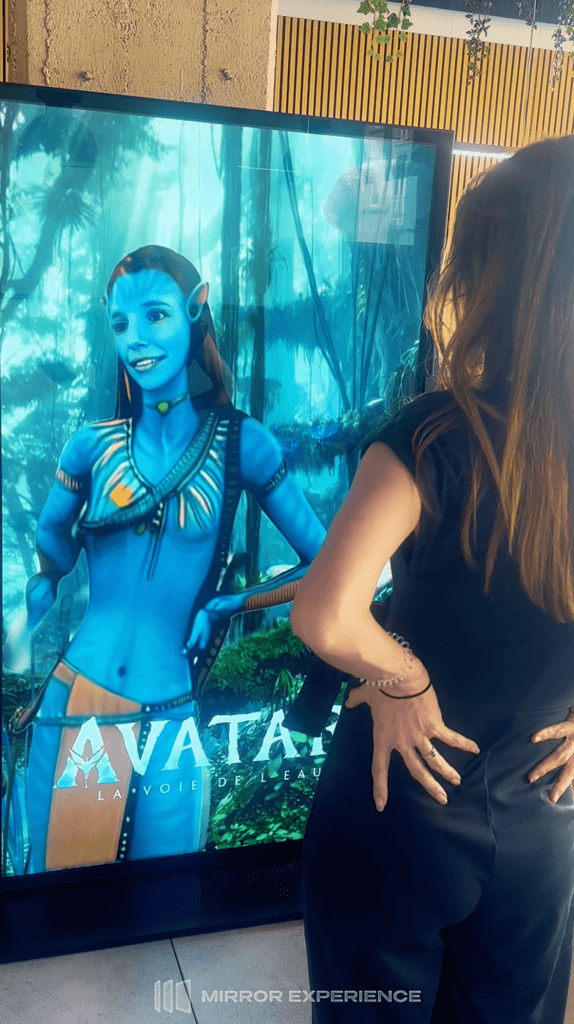
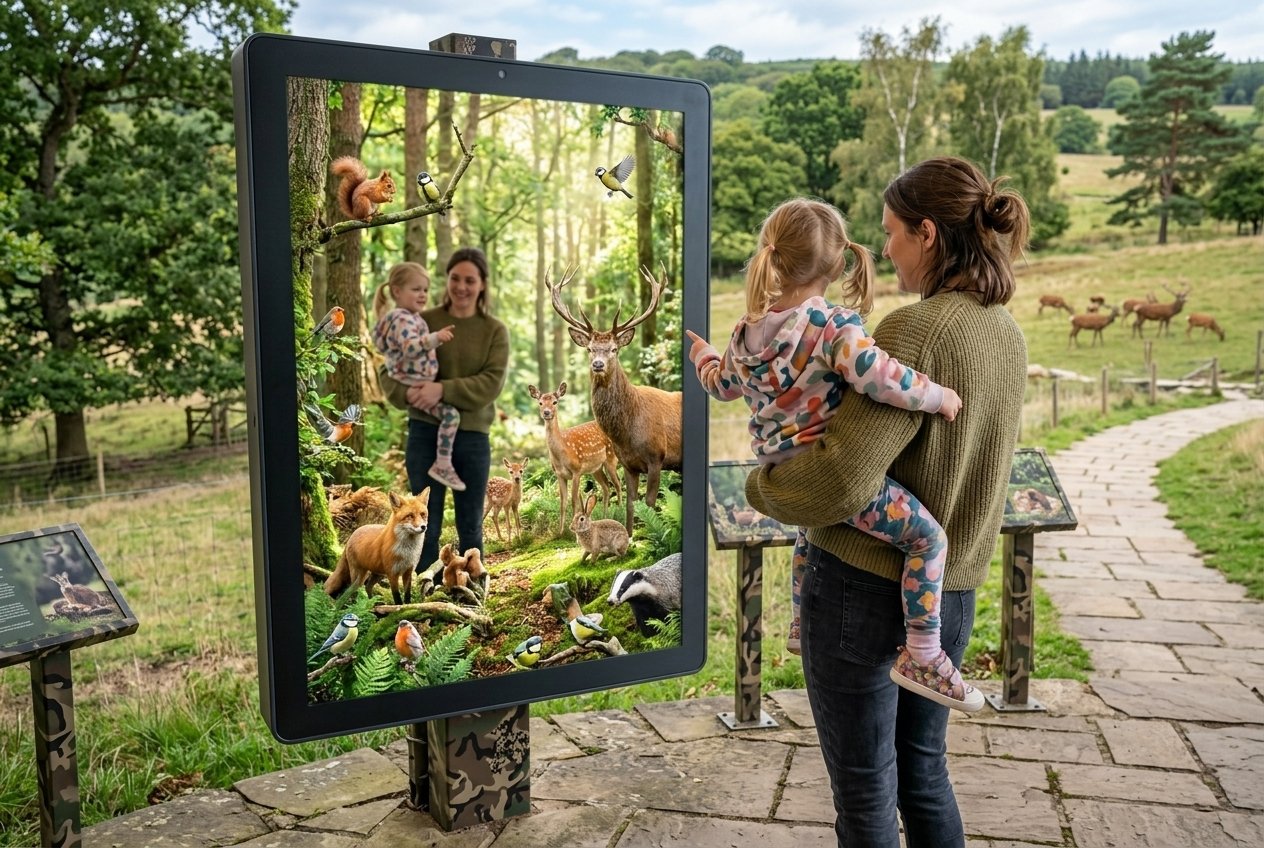
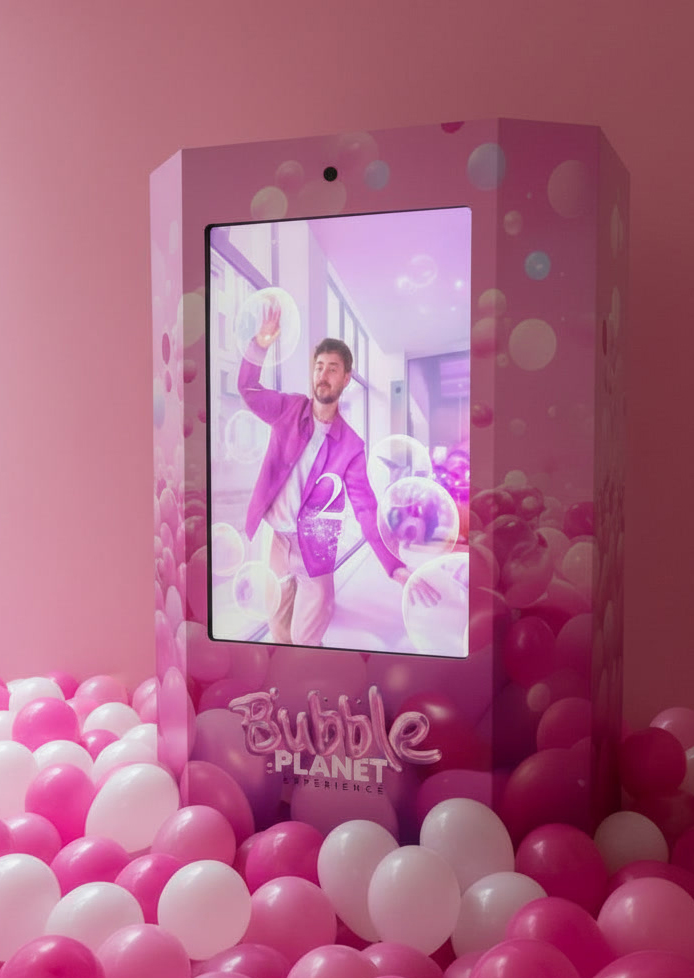
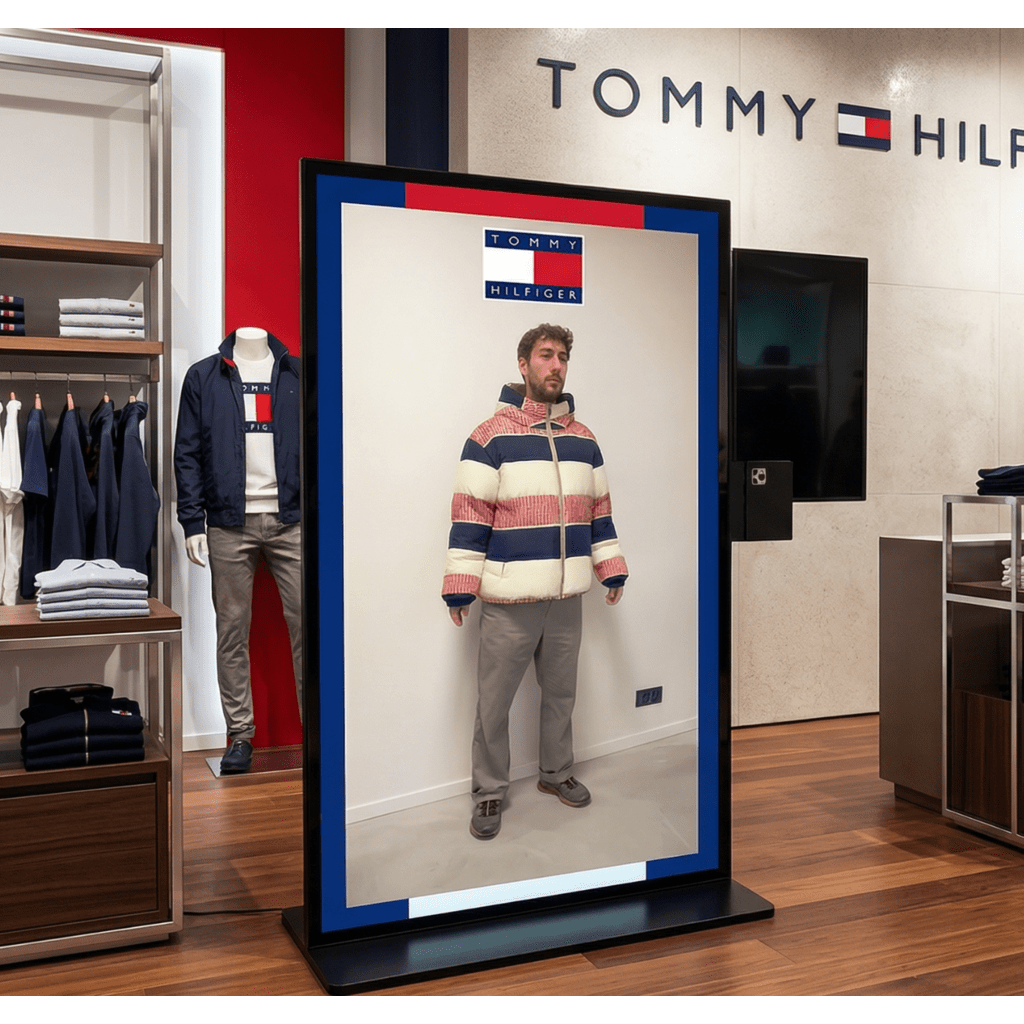
A virtual dressing room is a screen that puts a garment on a shopper without the shopper having to undress. They stand in front of it, choose a piece, and see themselves wearing it. The vocabulary around it varies a lot: magic mirror, VR mirror, interactive mirror, fitting room mirror, virtual try-on screen. It is the same product with the same job, so do not let the naming decide your brief.
What matters is what the shopper experiences. A screen that shows people a version of themselves they like, in a few seconds, changes how long they stay in the store and how many pieces they consider. That is the whole point.
Does it replace the fitting room?
No, and we tell clients this before they buy. A virtual dressing room works as an additional element: something at the entrance, at the end of a wall, or where a screen already hangs. Many shops simply replace an old display with the mirror, which costs nothing in layout because the space already exists.
Removing physical cabins to install a screen is a different decision, and it usually comes from a budget meeting rather than from shoppers. The mirror reduces pressure on cabins by letting people filter styles before they queue. It does not remove the need to touch the fabric for the piece someone is about to buy.
Real time video, not a generated picture
This is where the category splits, and it is the only technical difference that a shopper feels immediately.
Most systems work one of two ways. Some overlay a 3D garment on a tracked body, which looks acceptable in a still frame and loses its credibility as soon as the person moves. Others generate an image: the shopper picks an outfit, waits, and receives a photo of themselves wearing it.
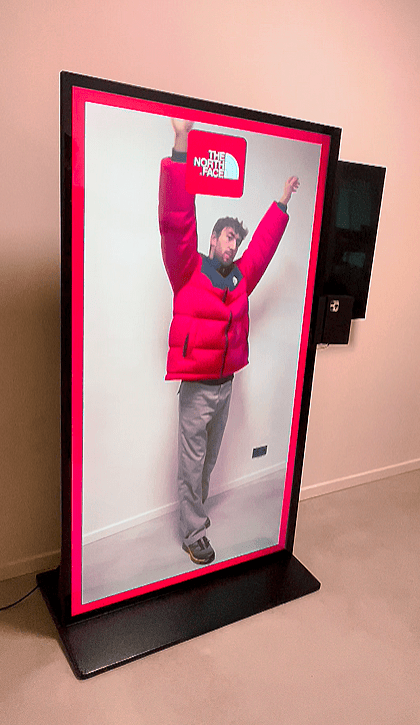
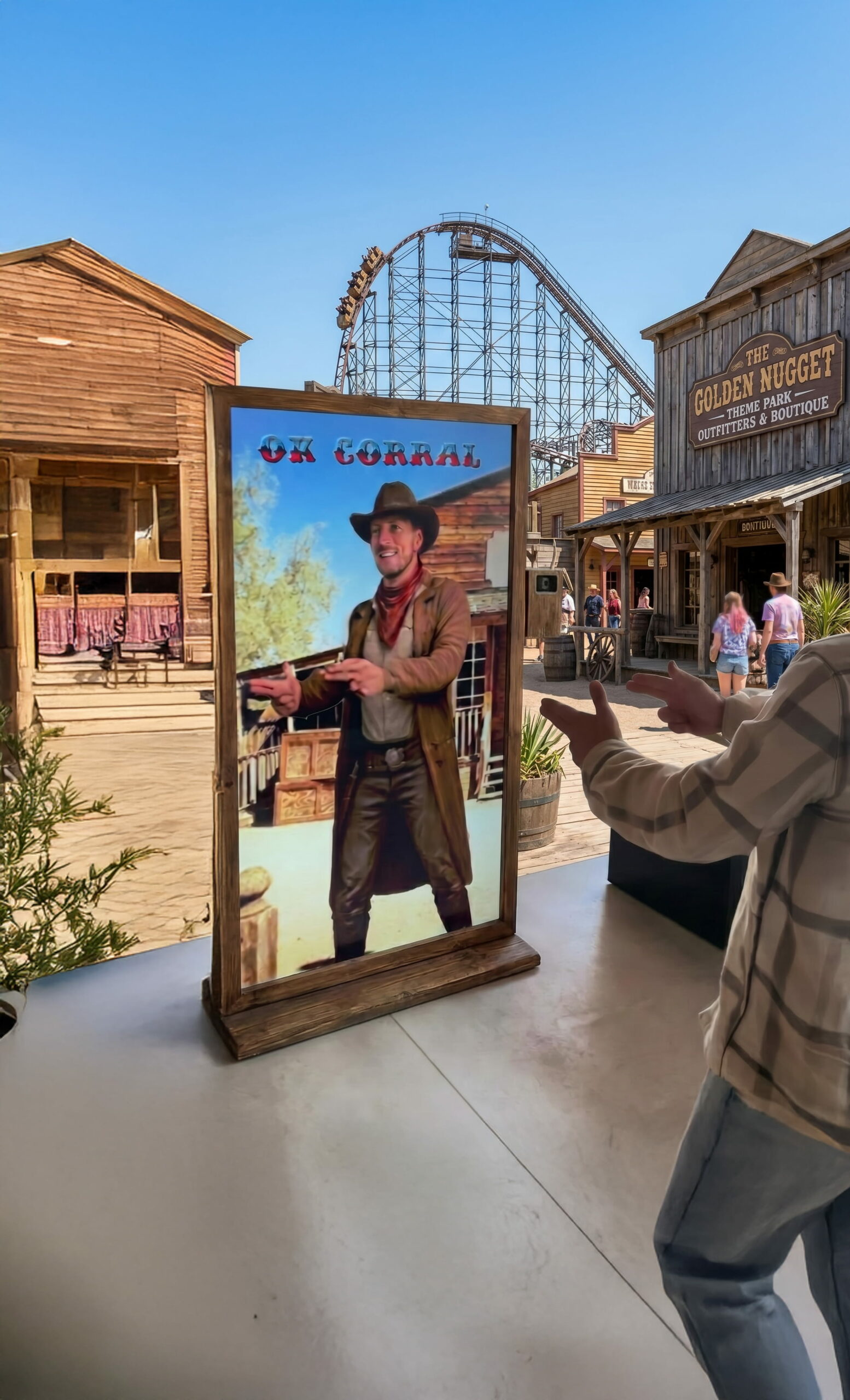
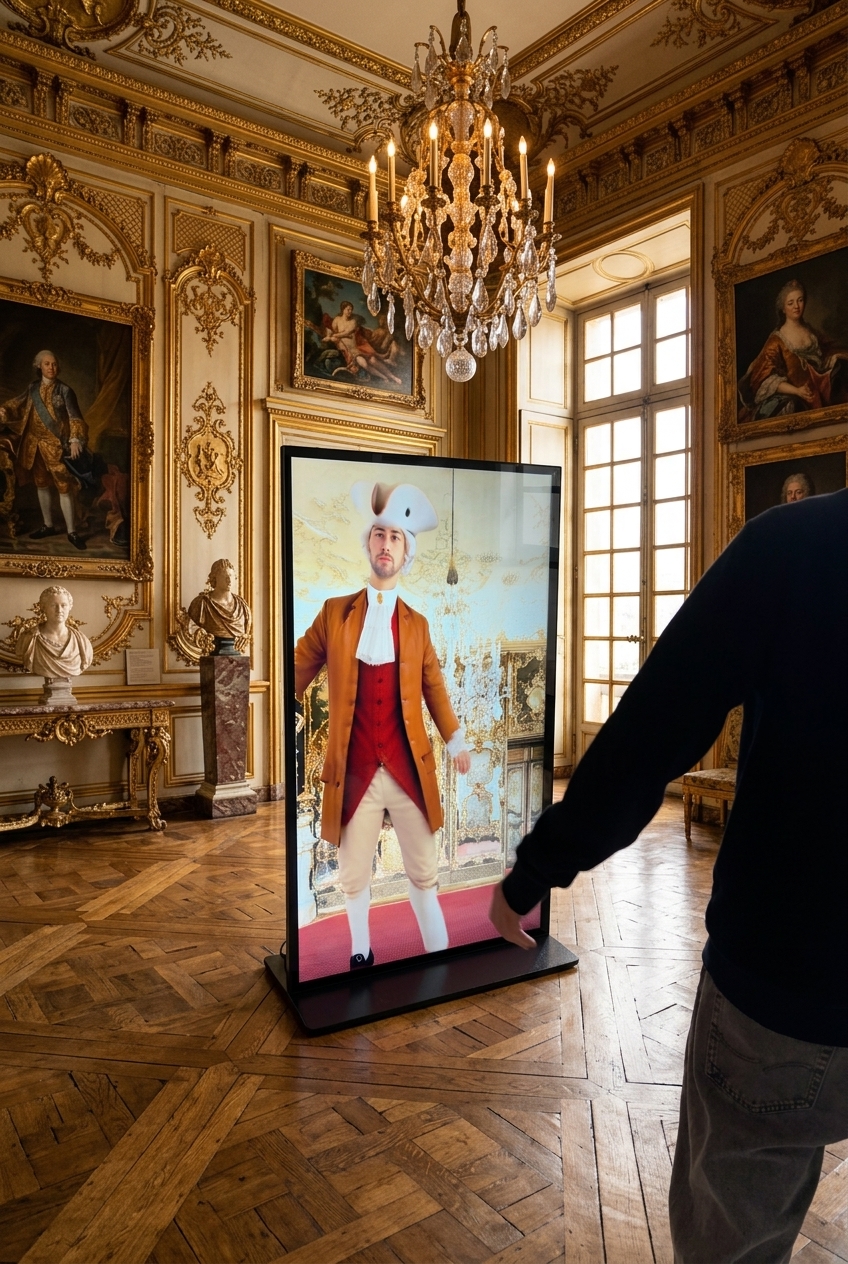
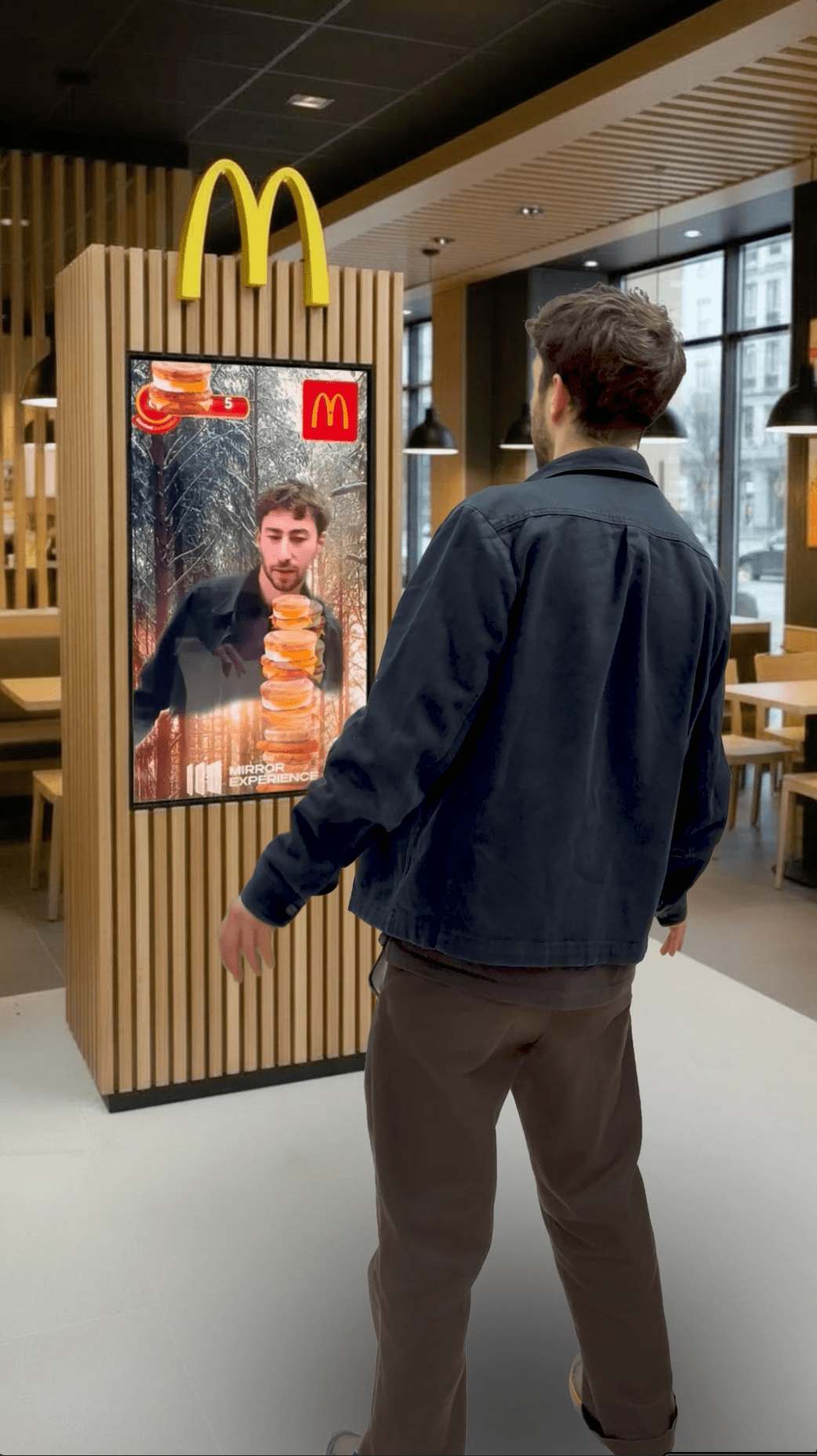
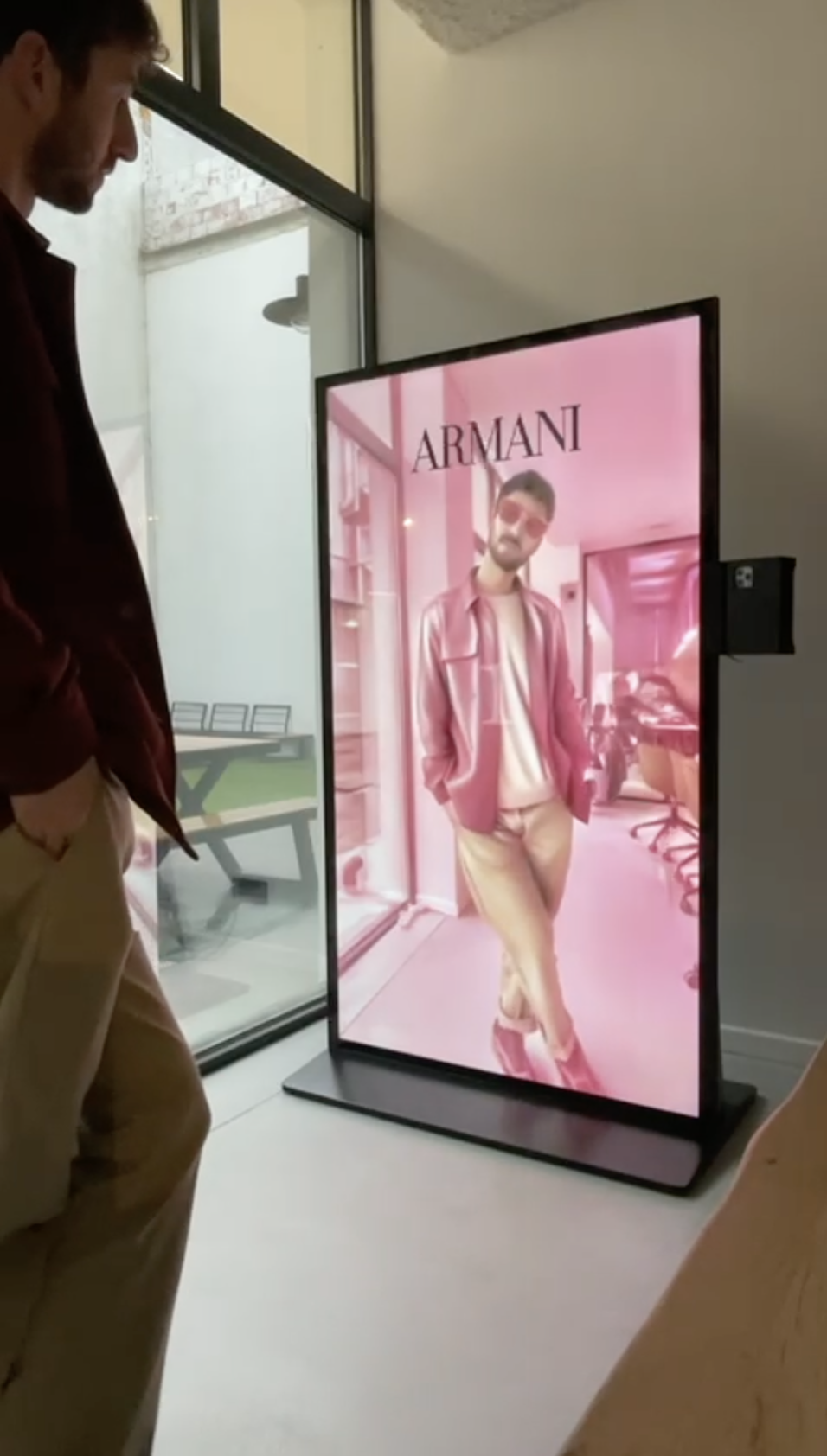
Our mirror renders the garment on the live video feed. The shopper moves, the clothing moves with them. Fabric folds, catches the light and reacts to the way they stand. It is a video, not a generated image, and it never asks anyone to wait.
That detail decides whether an installation works. A mirror that stalls breaks the one thing people expect from a mirror, which is an immediate reflection. We are one of very few teams delivering a genuinely real-time interactive mirror, and it is the single point we insist on when a client compares offers.
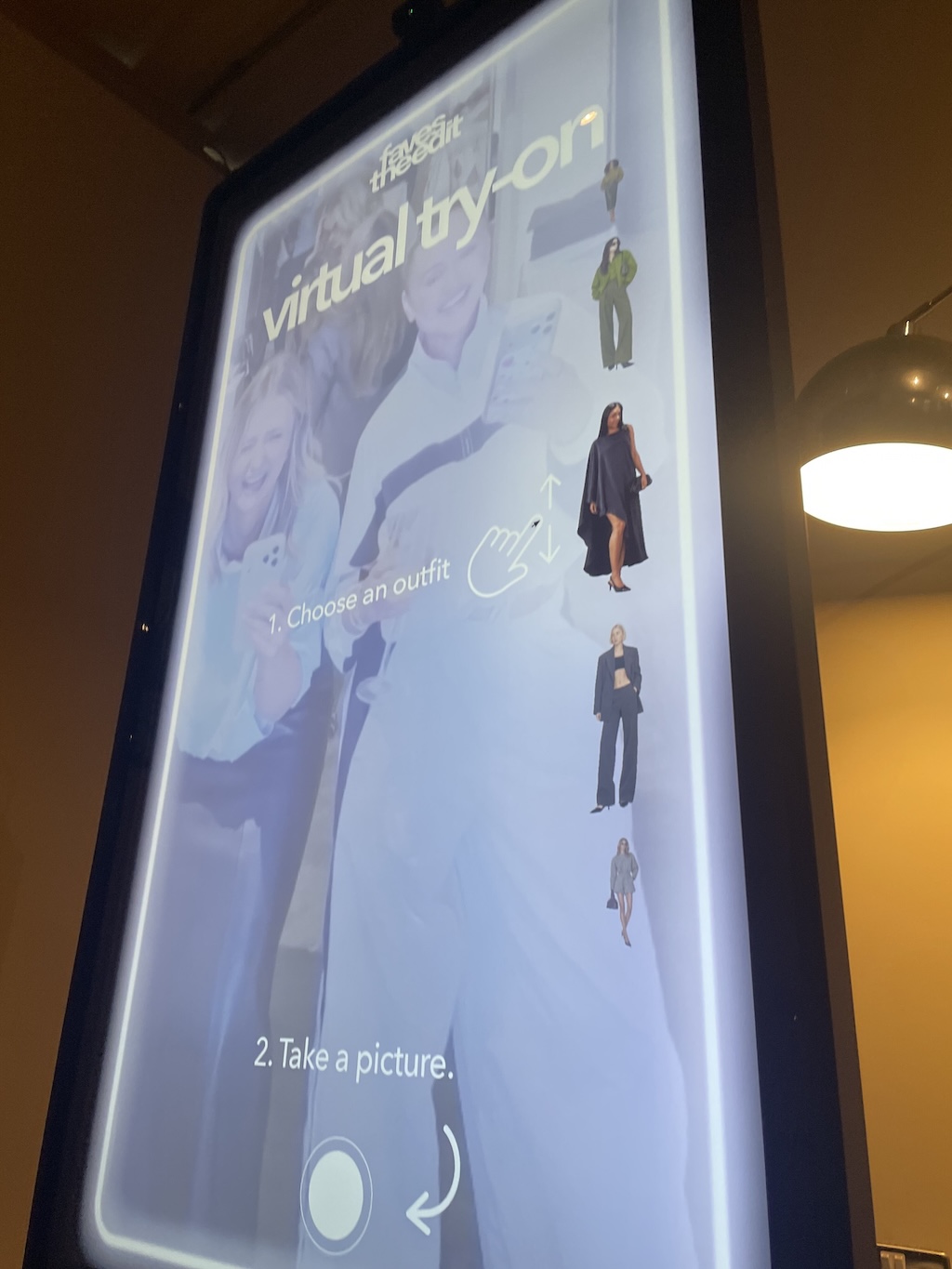
What happens in a 30 second session
A session runs about thirty seconds. The visitor walks up, the screen picks them up, and they start switching pieces right away.
- Full outfits: top, bottom and accessories in the same session, with the ability to swap one element and keep the rest.
- Accessories: the catalogue grows with every deployment, which matters for bags, eyewear and jewellery.
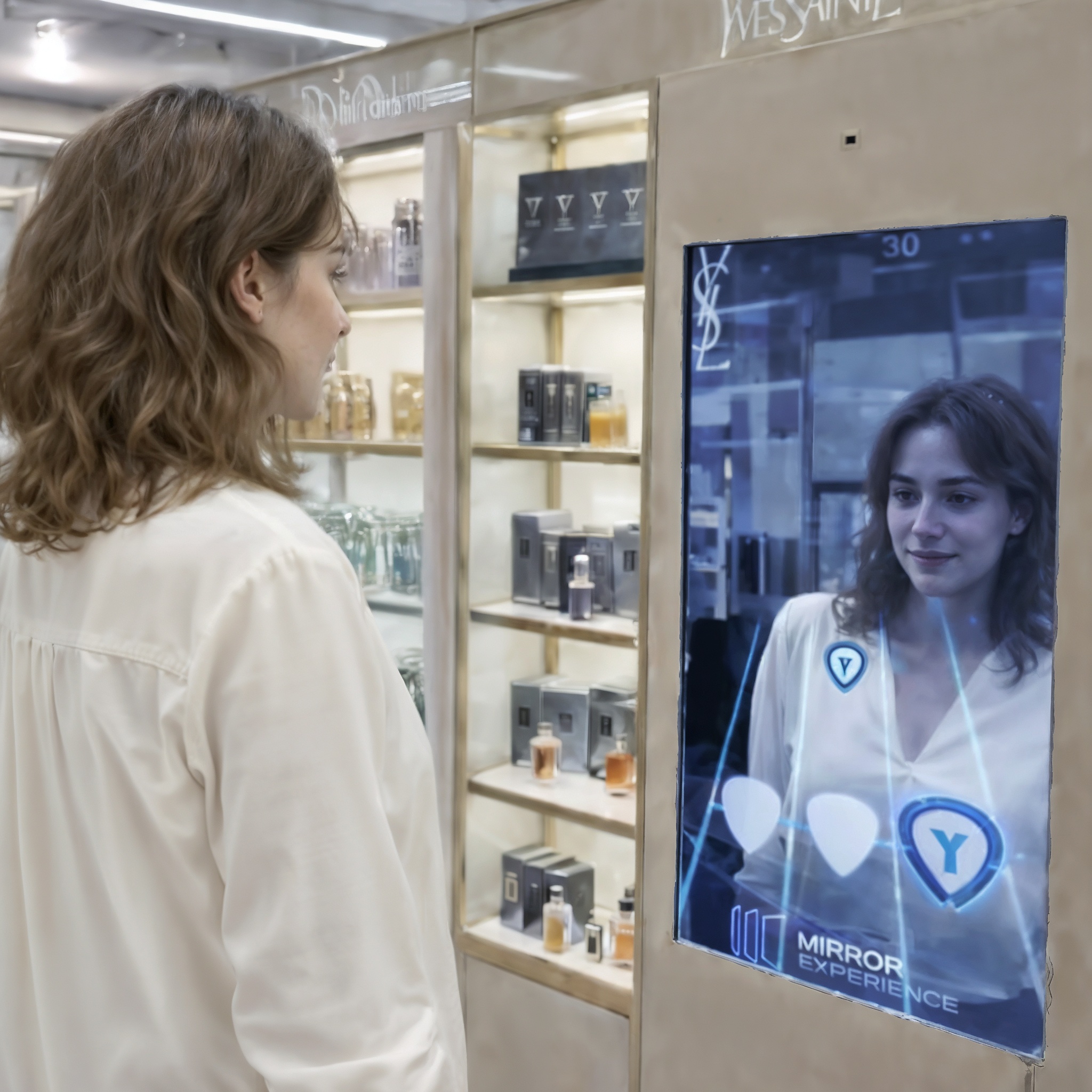
- Makeup: handled on a smaller screen framed on the face, so the advice stays useful instead of becoming a novelty.
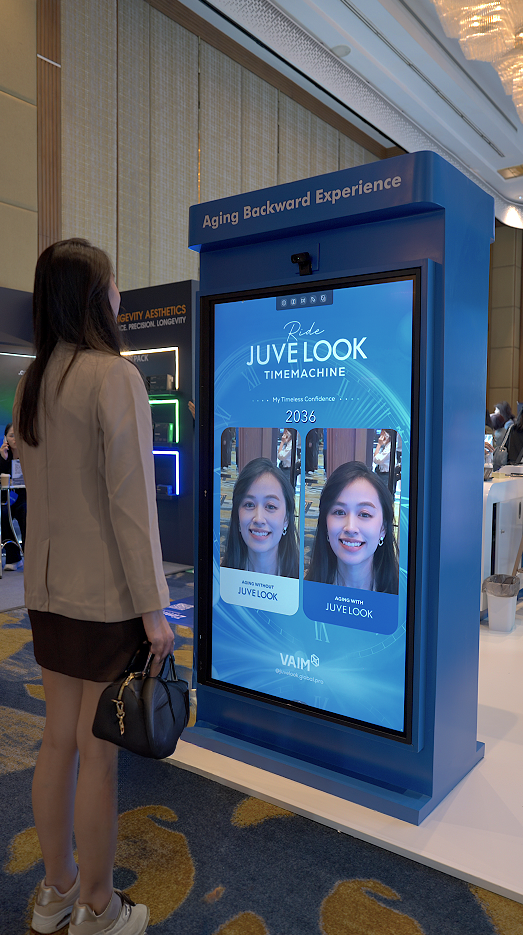
- Screen formats: from 55 to 85 inches, depending on the distance shoppers stand at and what you want them to see.
Because the try-on is live, the queue keeps moving. One visitor steps aside and the next one starts, with no render to wait for and no operator in the middle.
After the try-on: photo, QR code, product page
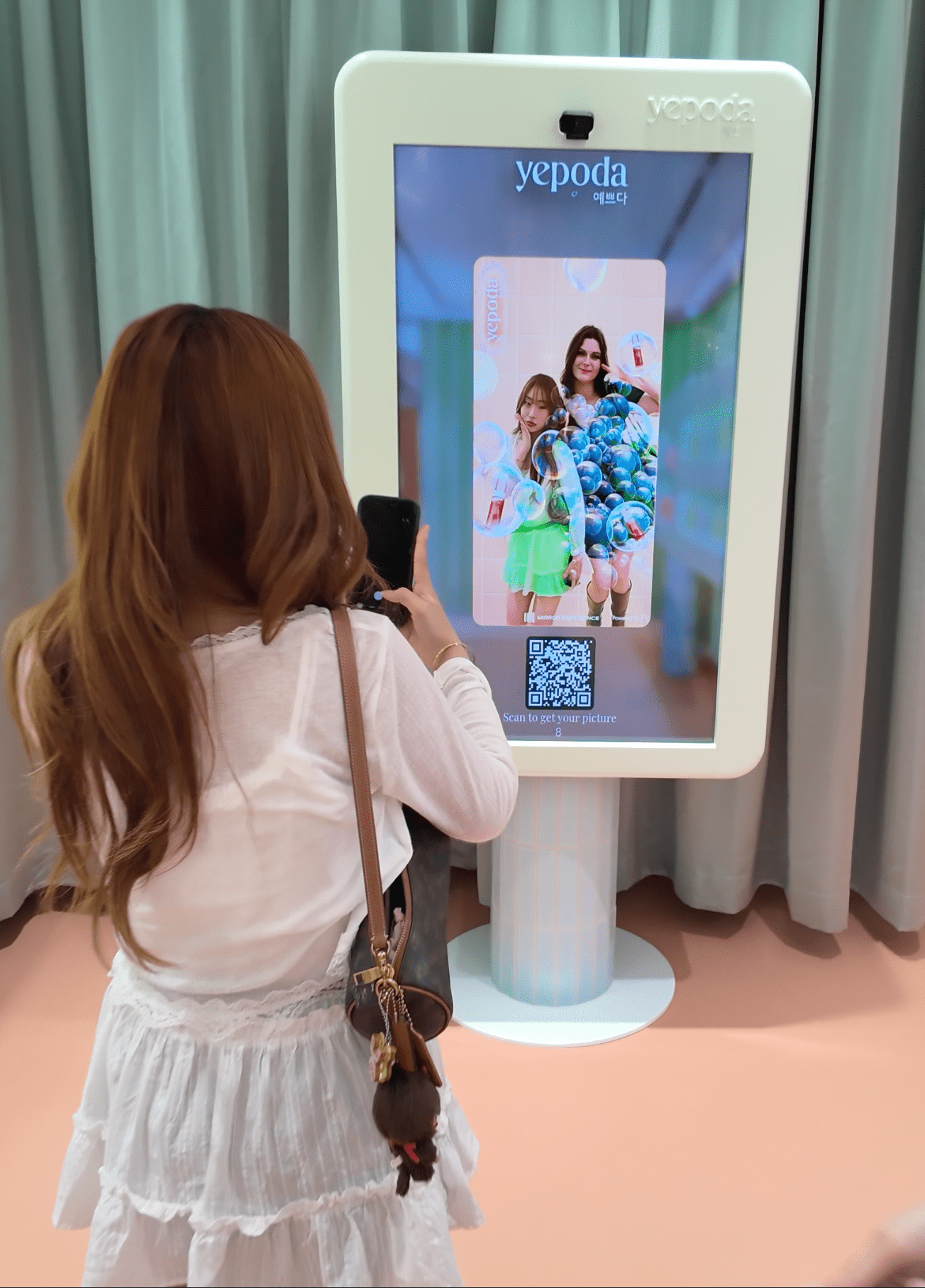
The visit does not end at the screen. The shopper can take a photo, then scan a QR code with their phone. That code opens three doors at once: they can leave their email to join the newsletter, they get the direct link to the product they were wearing, and they see whether it is available in the store they are standing in.
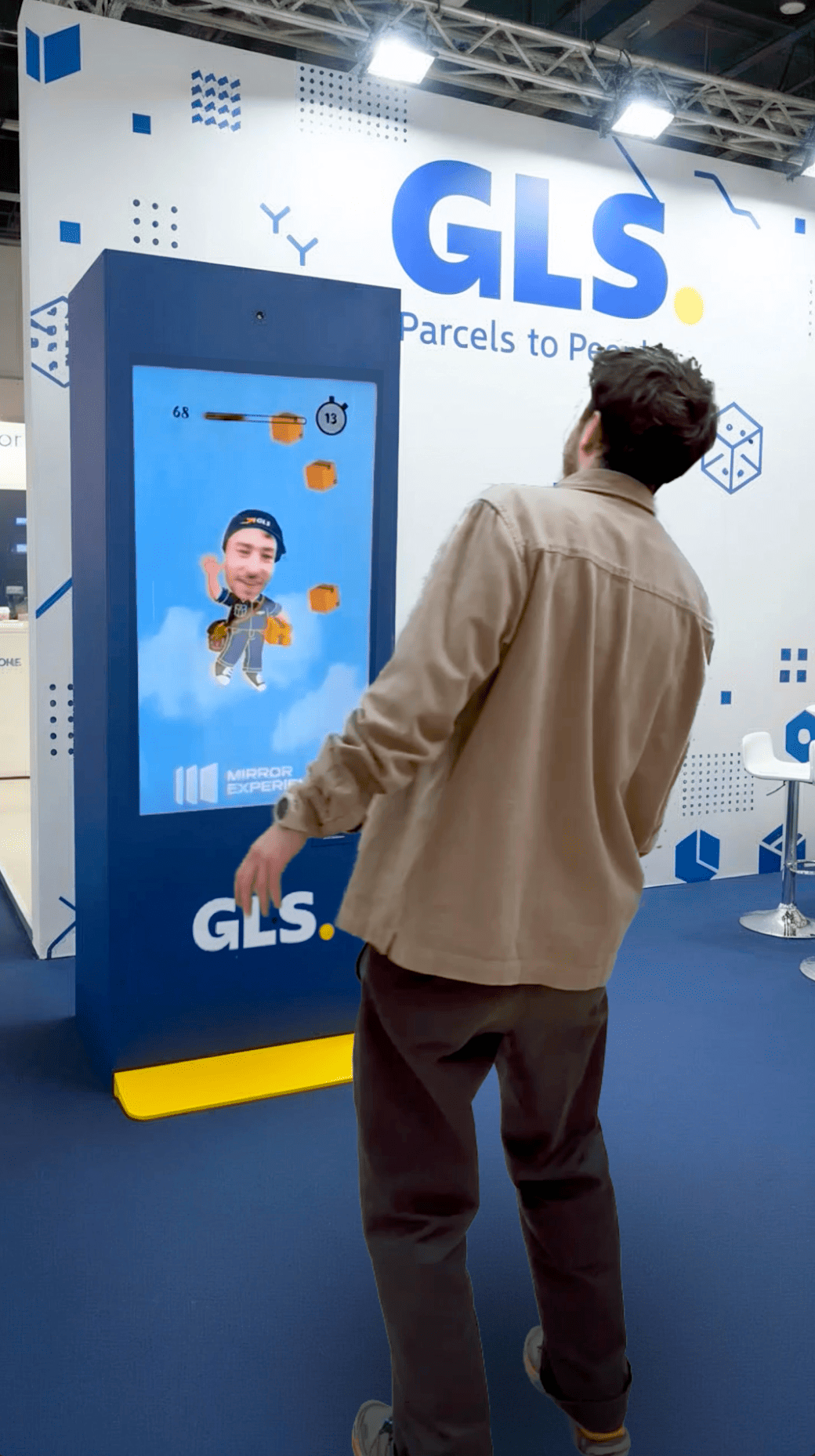
No app to download, no account to create. This is also how the store captures contacts that used to walk out with nothing. At live events we handle around 500 photos a day on average, with peaks up to 2,000, and roughly 70 percent of visitors share their result.
Connecting to your stock, CRM and sales team
The mirror can plug into your API, your product database or your CRM. Stock levels, sizes, colours and product details stay in sync, so what the shopper sees on screen matches what is on the rail behind them.
It can also reach the sales team. When someone asks for another size or a colour that is not on display, the request lands with an associate through the app instead of disappearing. That small loop is often the difference between a try-on and a sale.
Processing can run locally on the installation. Images stay on site, and the setup can be reviewed with your legal team before launch.
What the brand learns
Every session produces more than a photo. The brand gets the number of people who used the mirror, how long they spent, whether they took a photo, and which garments were selected most often. Cross-referenced with sales, that answers a question merchandising teams argue about for weeks: was this piece rejected because of the price, or because it never looked convincing on a body?
We do not publish conversion numbers we have not measured. What we can report precisely is engagement, sharing and contact capture, and those are already measured on every deployment.
What it costs
Pricing is public. An event format starts at 8,000 EUR. The hardware adds between 1,000 and 5,000 EUR on top, depending on the screen size and the structure. The 8,000 EUR figure covers the software layer. The screen, camera hardware, transport and installation are quoted per project, because the format changes with every store. A permanent installation with a 75 inch vertical screen starts around 20,000 EUR. Both include the screen, the camera system, the software and a set of branded effects.
A screen can be built and delivered in your brand colours in two weeks, and we ship and install worldwide, with the team on site for events. If you already work with a booth designer or a retail design studio, we fit into their plan rather than replacing them. A free pilot comes before any commitment.
Questions we get asked
Do shoppers need an app or a headset?
Neither. They walk up, the experience starts, and the photo reaches them by QR code.
Is it AR or AI?
Both, and the combination is the point. Real-time generative models render the garment while AR handles segmentation, hand tracking, backgrounds and effects.
Can it show our own catalogue and our own branding?
Yes. The garments are your pieces, the interface follows your guidelines, and the screen is built in your colours.
What if a shopper does not want to be filmed?
The experience is opt-in by design and the installation can run with local processing only. We can also frame the session so no image is stored.
Can we test it before buying?
That is what the free pilot is for. We bring a working mirror to your store or event so your team sees real usage rather than a demo reel.

See it in your store
If you are weighing a virtual dressing room for a store, a pop-up or a collection launch, the fastest way to settle the question is a free demo at your venue. Send the location, the dates and the pieces you want shoppers to try, and we will tell you which screen format fits and how quickly it can be installed. Reach the team through mirror-experience.com or at hello@mirror-experience.com.