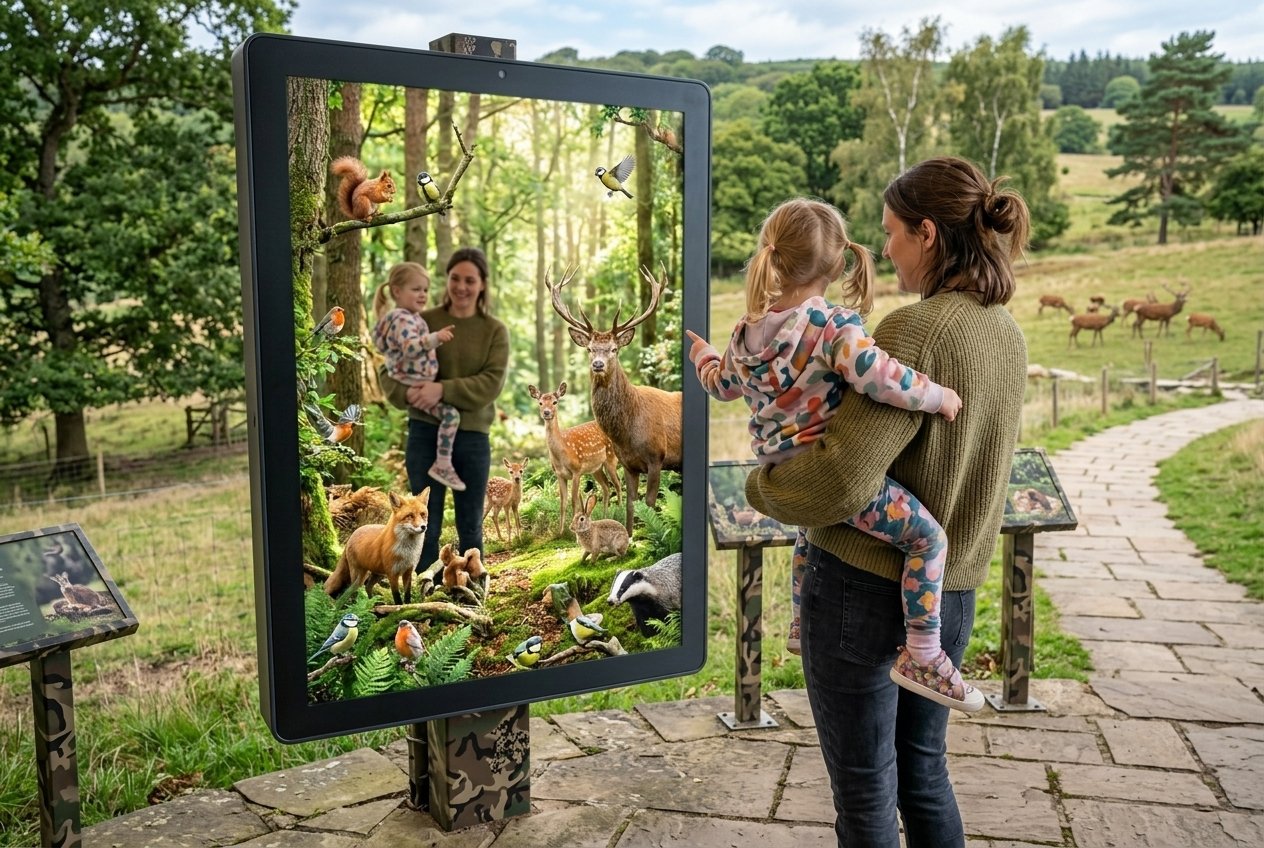
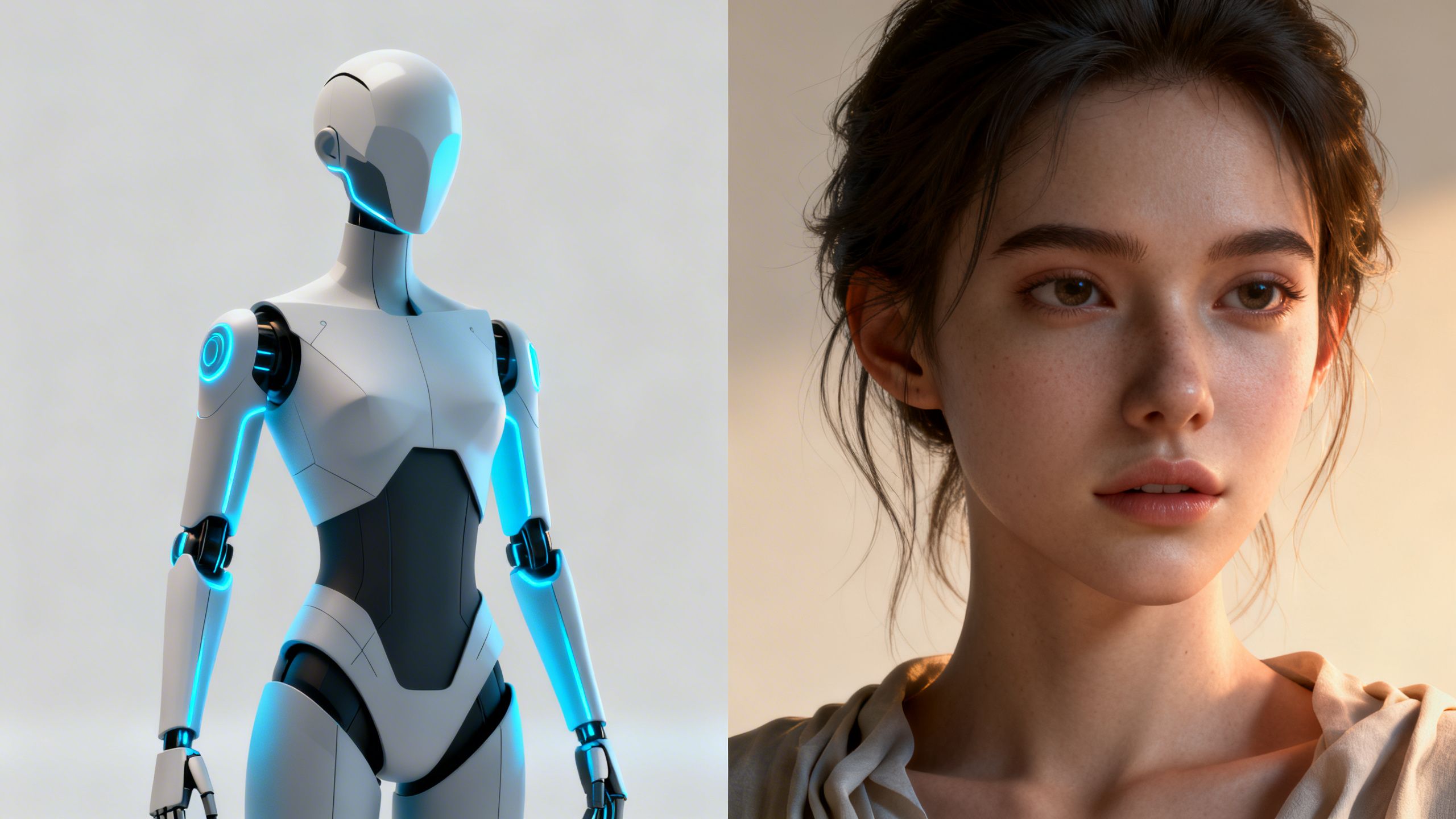
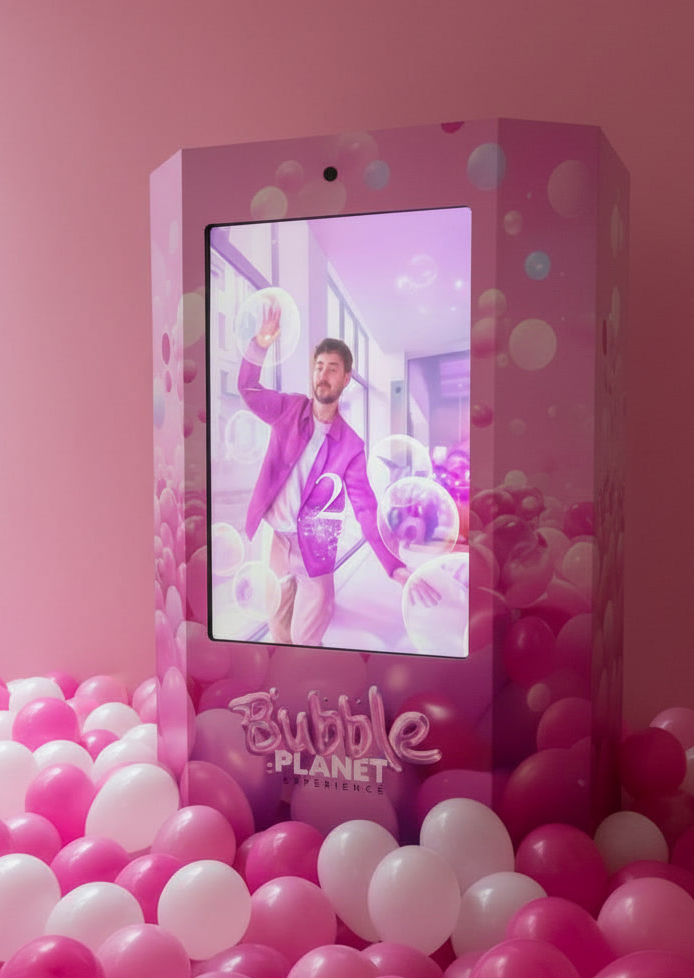
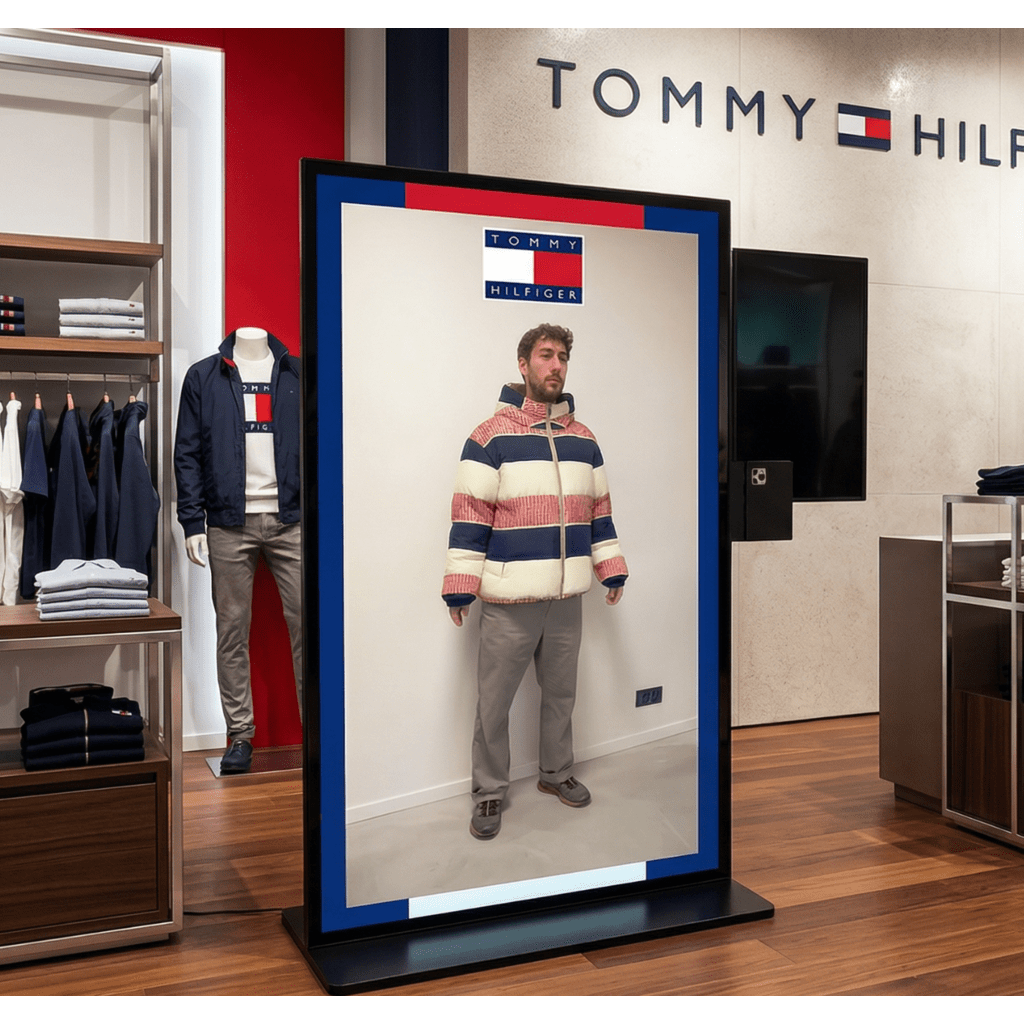
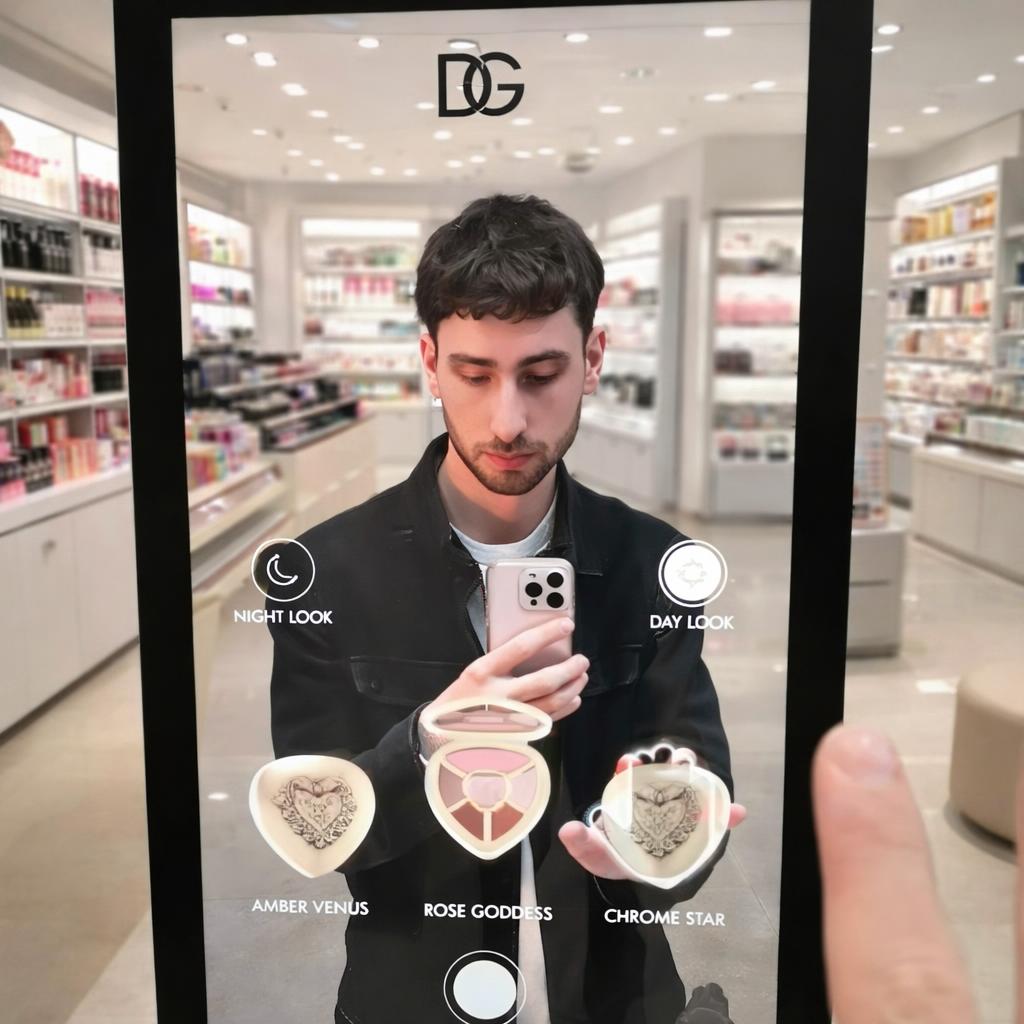
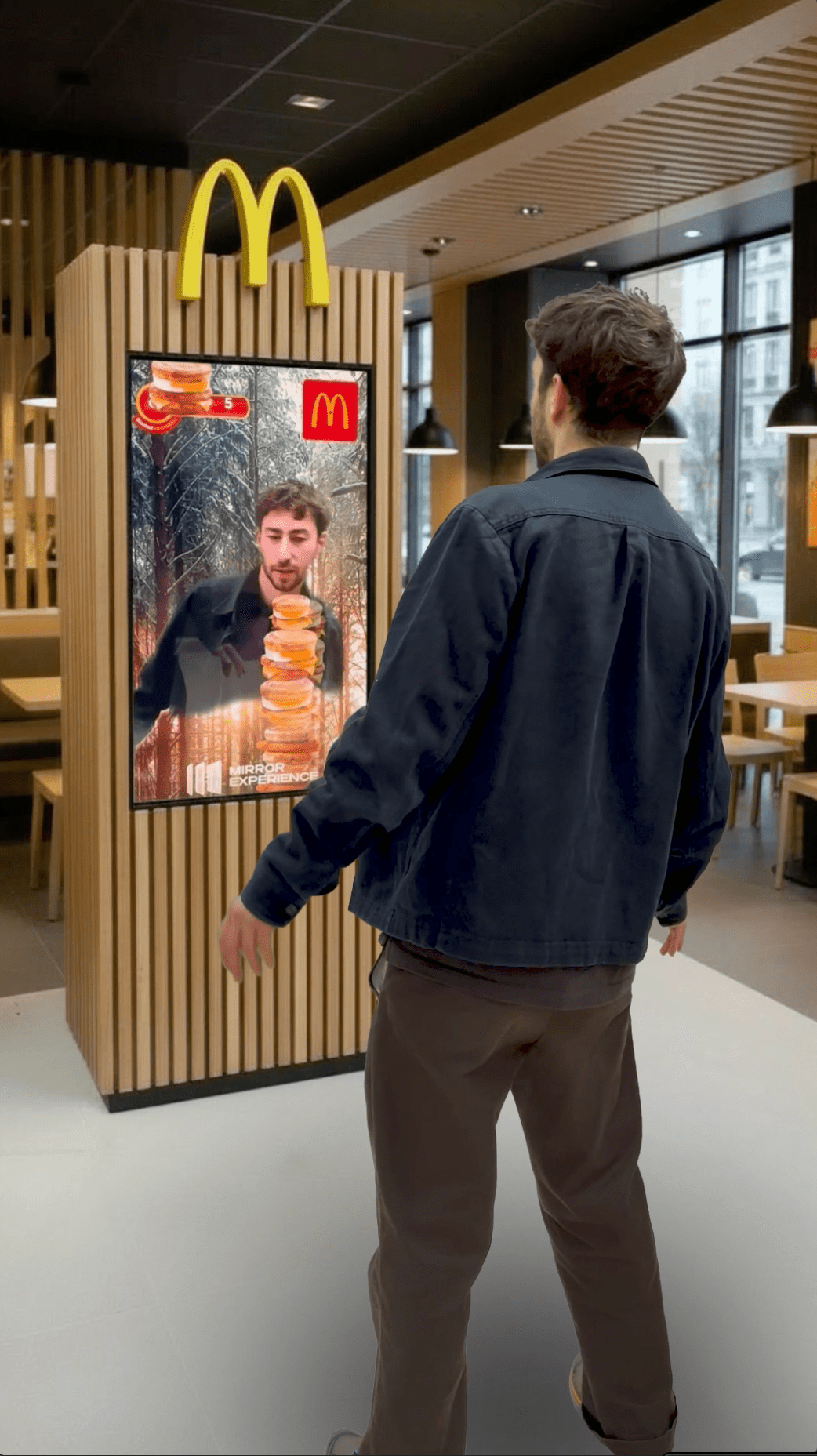
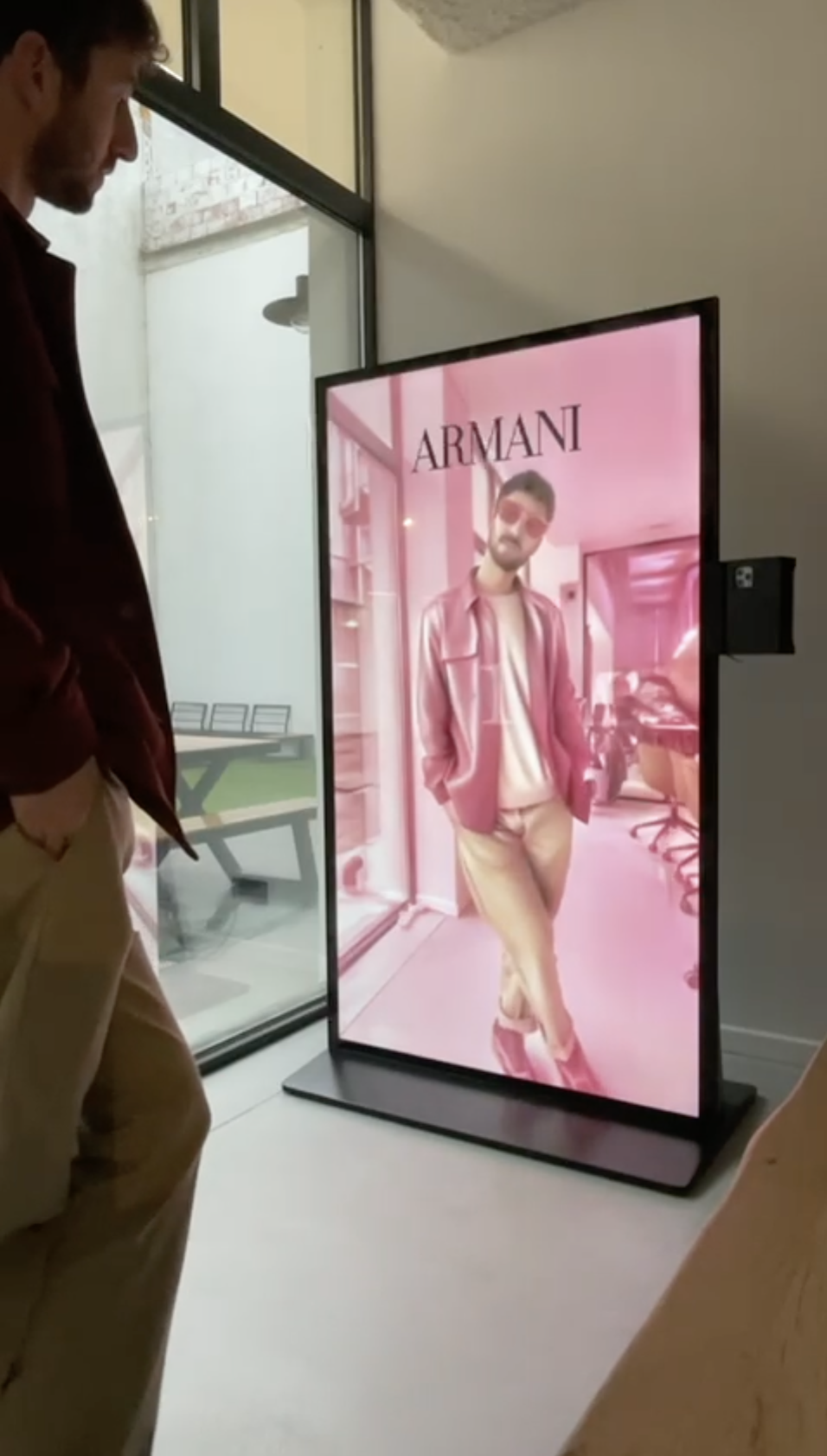
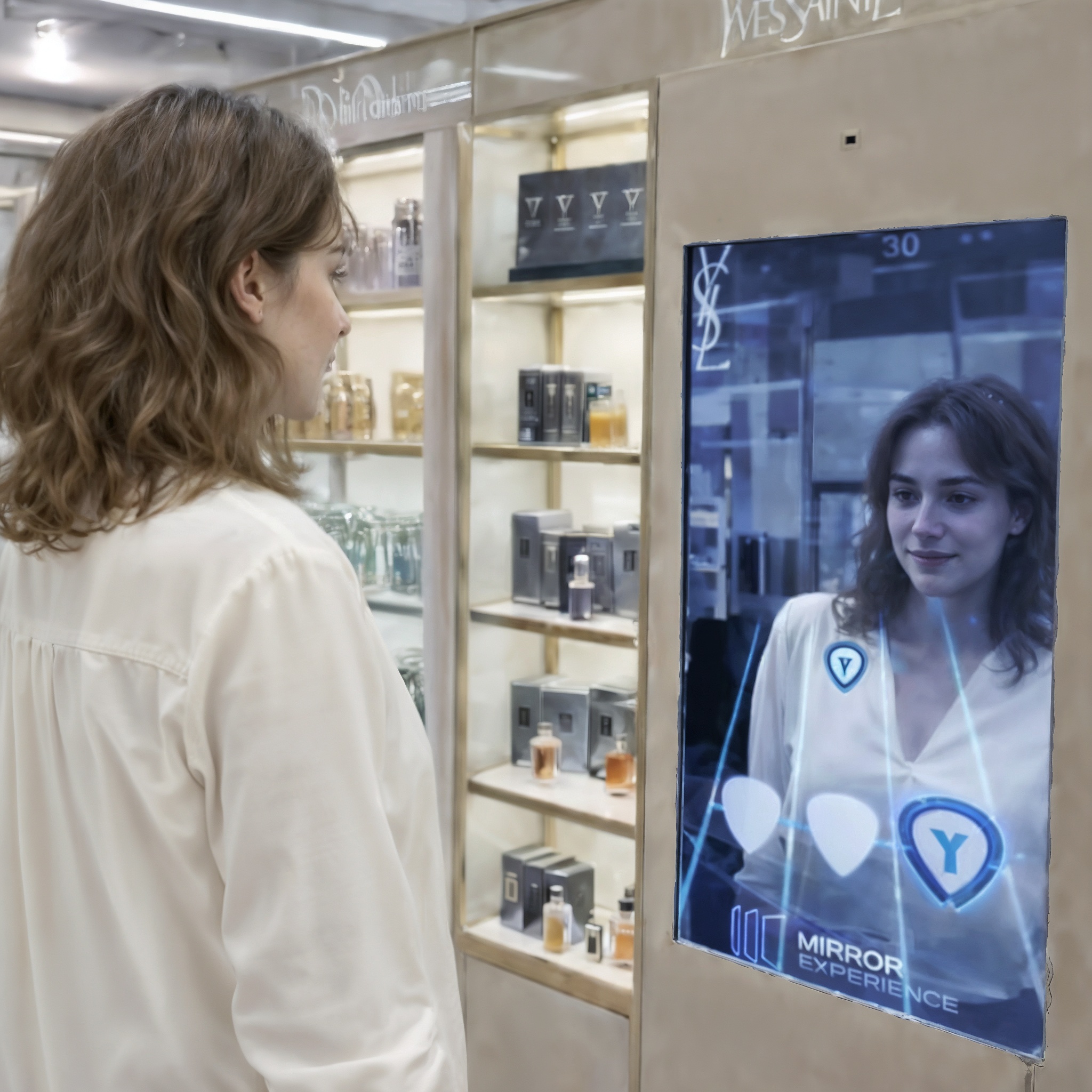
For your brand or venue, with our Interactive Mirror.
Mirror Experience is an agency creating the best AR Mirror solutions for brands, museums and touristic places, combining custom software and hardware. Based in Europe, our solutions are easily deployed worldwide.
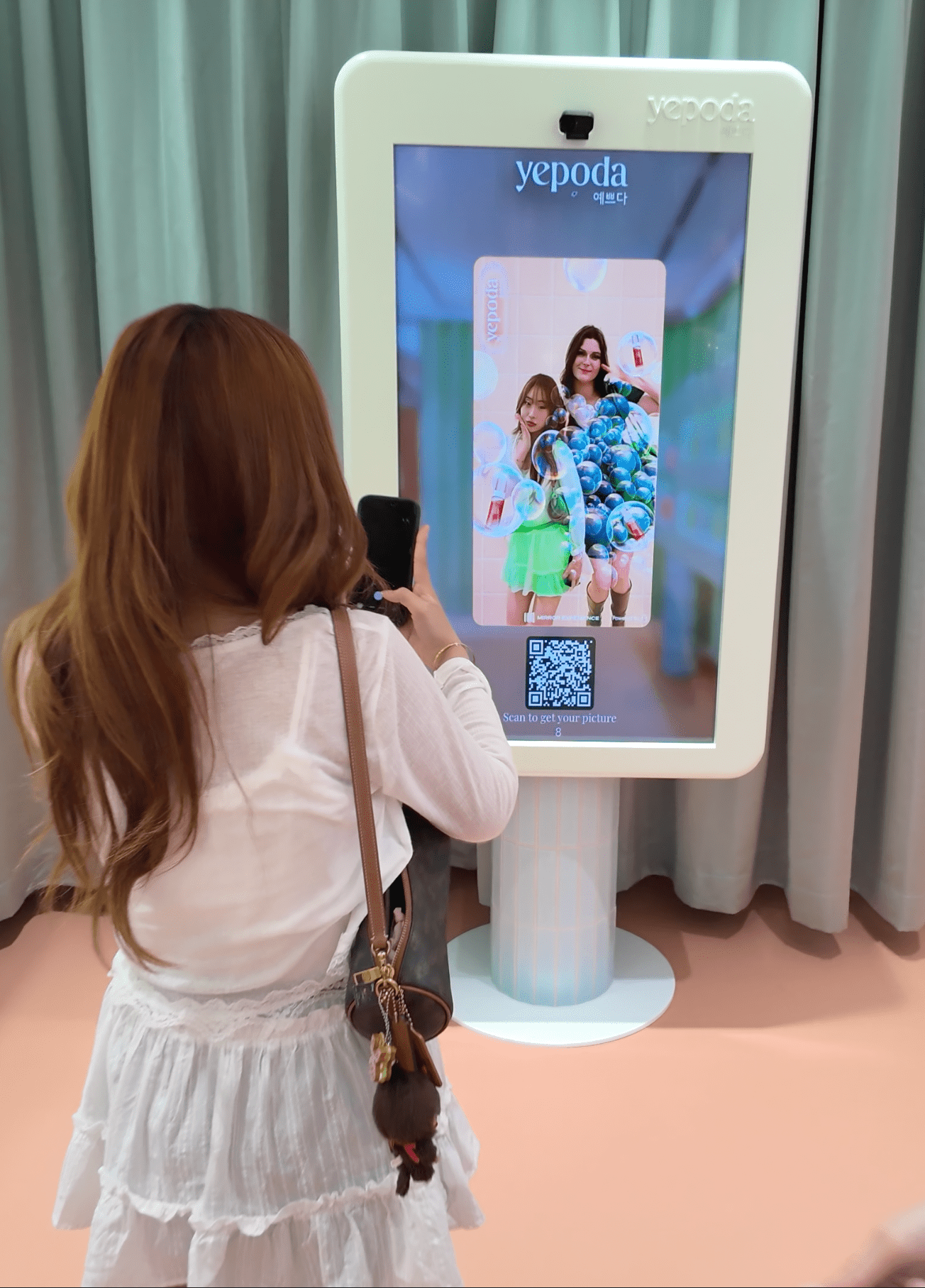
AR Mirrors, also called AI Mirrors, Smart Mirrors, Magic Mirrors or AI Photobooths are interactive booths that engage users through the camera. We focus on Instagram shareable moment to increase your online bookings with monthly contest and giveaways.
We can deliver fully offline experiences with no internet dependency and zero user data collection.
Each AR Mirror case is splitted in two part, software and hardware. We are always doing the AR software, but for hardware it depends. If the installation is light and easily deployable, we will manage it. For more complex fixed installation that imply custom constructions we work together with Bweez in France and Mirror.it in Italy.
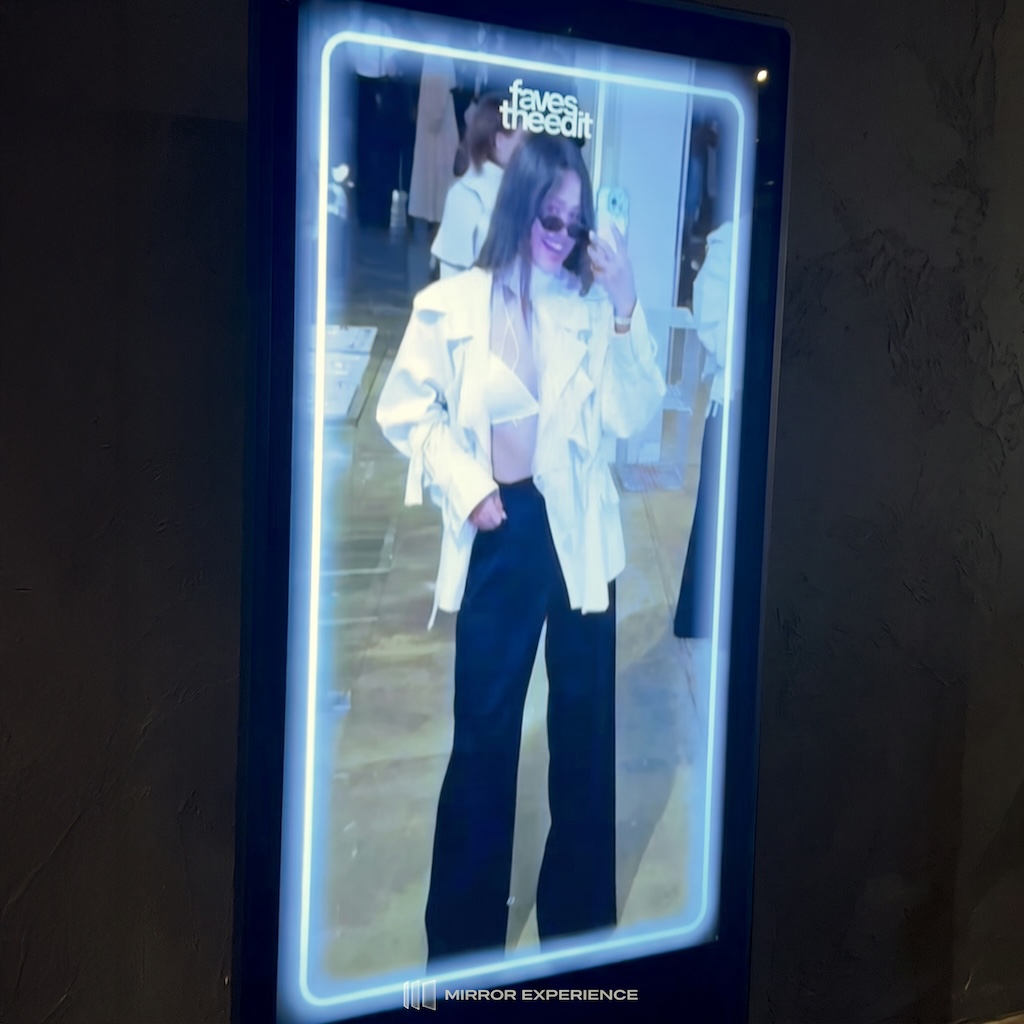
Fashion Week London AI VTO Mirror by Mirror Experience
From interactive screens to immersive rooms and augmented reality and AI filters.
AR Mirror for events, booths and pop-ups
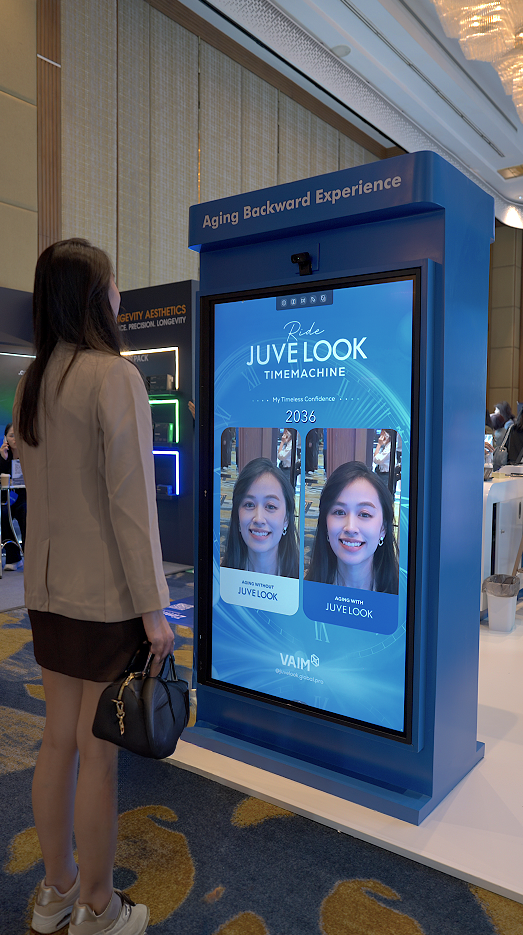
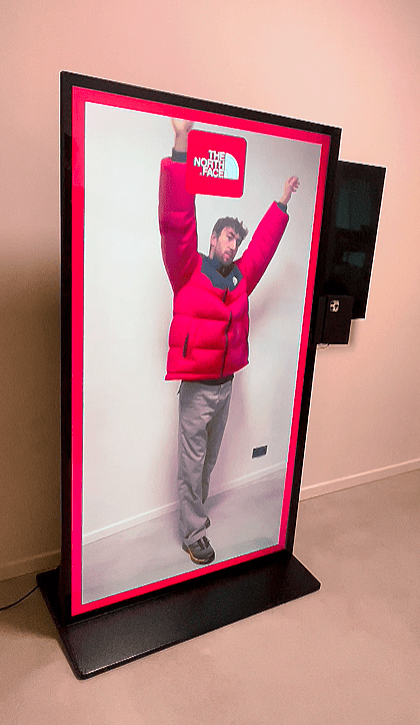
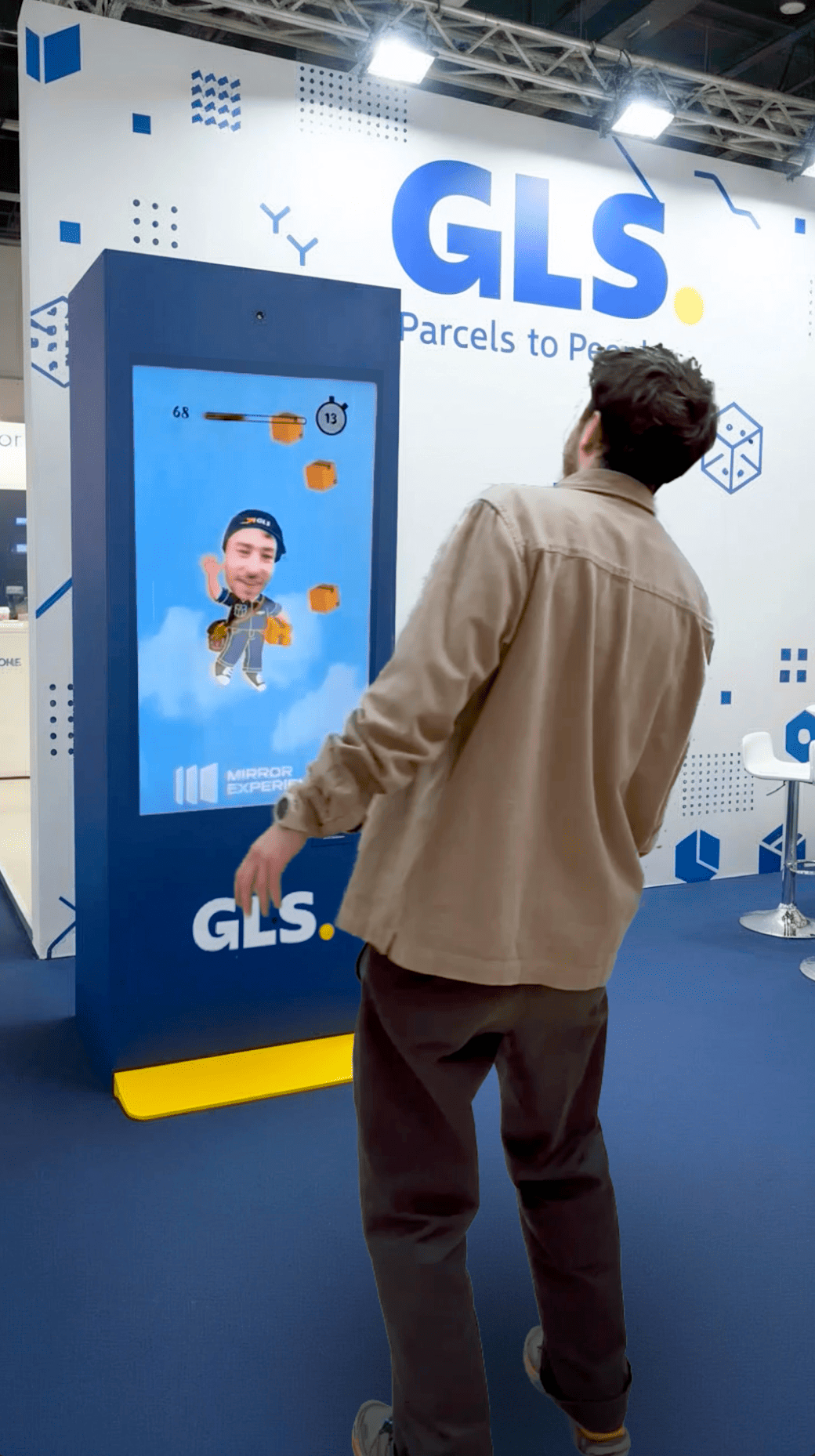
Transform any TV or kiosk into an interactive AR Mirror for your event. Our plug-and-play AR Box simply clips onto any screen and connects via HDMI, no complex setup required.
We can ship the kit directly to you or we can also handle the installation on-site.
Compatible with TVs, vertical kiosks, iPads, our AR Mirror rental starts at $900/day and can also have custom branding and decoration.
Get the best immersive augmented reality experiences for your guests with photo sharing on Social Media and photo printing available.
AR Mirror for permanent spaces
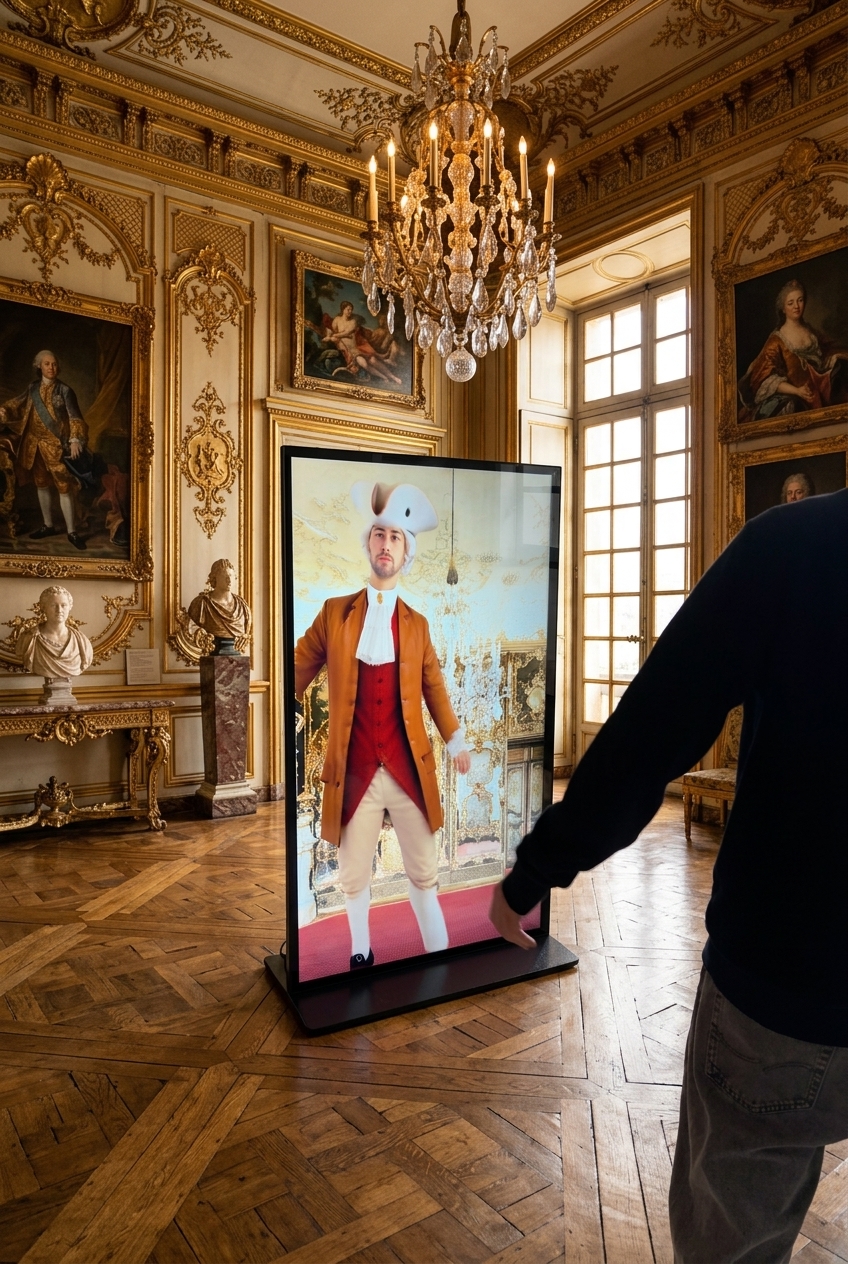
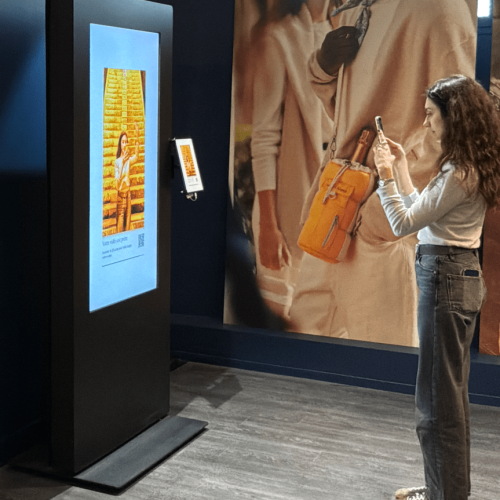
Designed for retail spaces, museums, attractions, showrooms, and brand experiences, our permanent AR Mirror solution is built for seamless architectural integration.
We work in close partnership with official builders, designers, and integrators to ensure flawless installation into walls, booths, and custom structures.
We provide full technical guidelines, and once installed, our team completes the setup using our Mac Mini system and professional webcam solution.
Compatible with TVs, LED displays, touchscreens, and custom builds, the AR Mirror delivers immersive augmented reality experiences with photo capture, social sharing, and long-term interactive engagement.
Interactive and immersive rooms
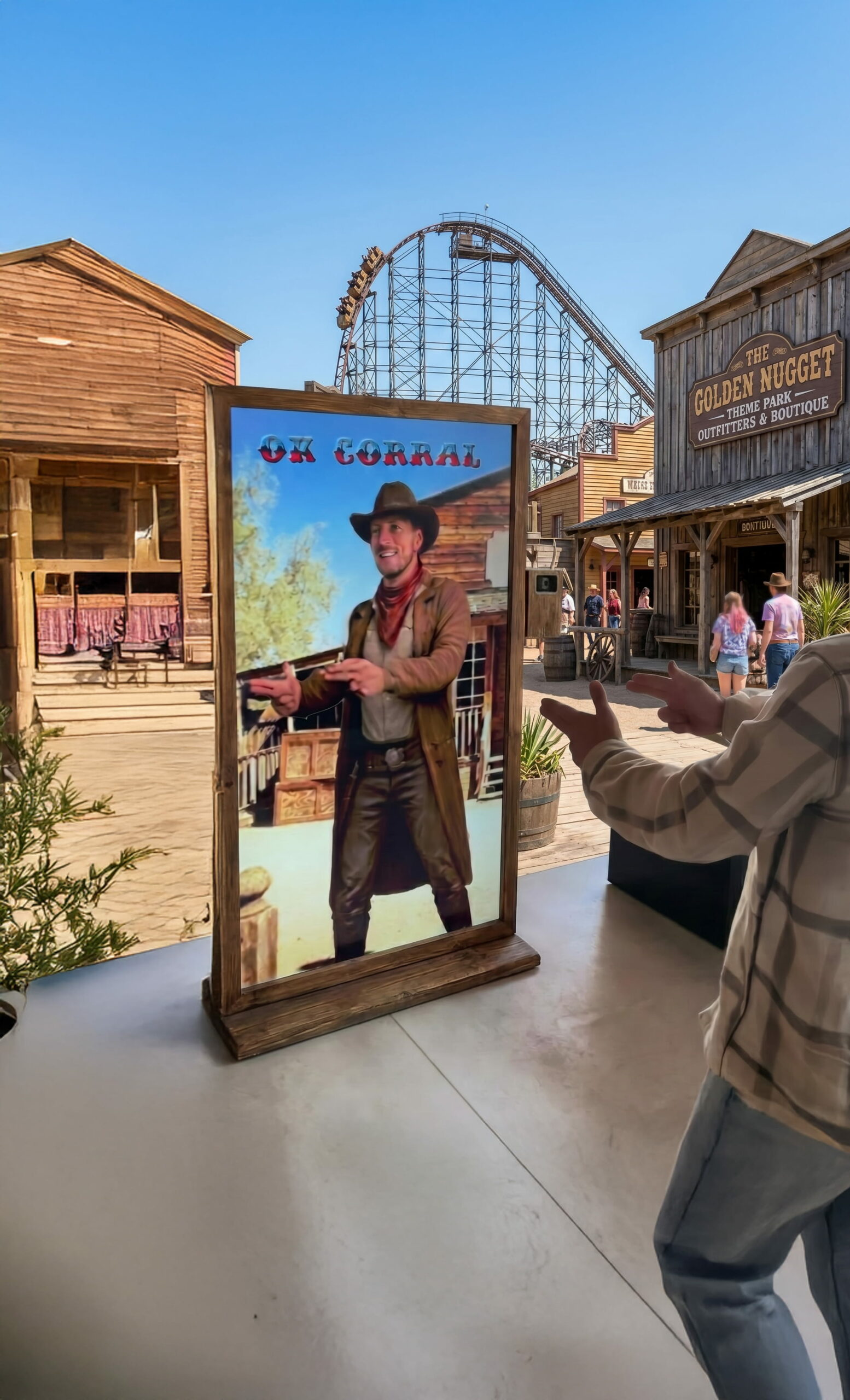
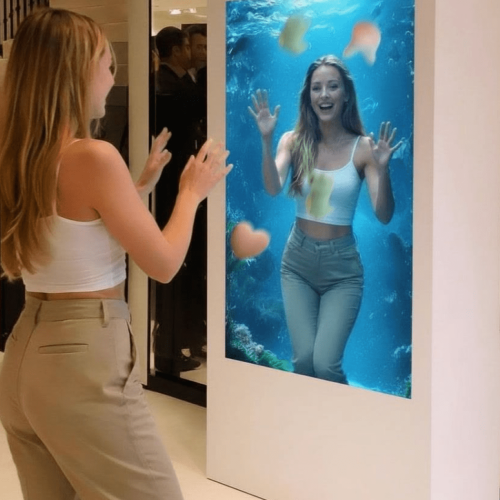
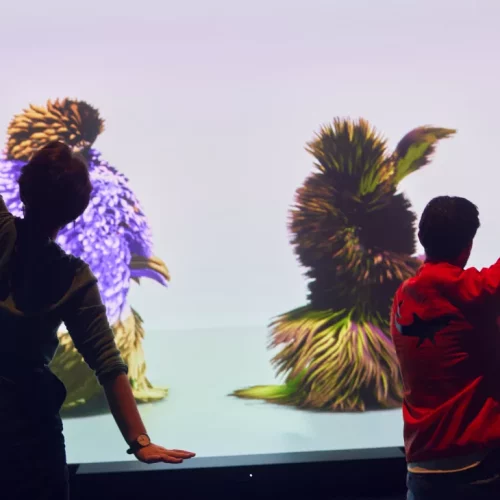
Designed for immersive rooms, museums, attractions, showrooms, and experiential spaces, our Interactive Wall solution transforms any surface into a living artwork that reacts in real time to human movement.
Unlike traditional looping content, the Interactive Wall creates an ever-evolving experience where families and visitors become part of the artwork itself, delivering playful, immersive, and unique interactions every time.
Using advanced body tracking technology, the wall captures visitors’ positions and movements to generate dynamic avatars, particles, and abstract visuals fully customized to the colors, theme, and atmosphere of the venue.
How it works
We keep it simple: a friendly team dedicated to creating and rolling out AR experiences quickly.
1
Your custom demo, for free!
We start by creating a fully custom proof of concept (POC) tailored to each client, allowing you to experience the full solution before any commitment or payment.
2
We Build It in 2–3 Weeks
Once you’re happy with the concept, we’ll create the full AR/AI experience in just a couple of weeks. You will get test link along the way.
3
Install & Go Live
We can handle the installation for you, or you can do it yourself, our solutions are ridiculously easy to setup. Then see your audience play, try, and share!
Our approach
After 7 years creating AR filters for global brands—from makeup with Sephora, Clarins and Gucci, to games with McDonald’s and Haribo and fashion with Nike, New Era, and Printemps—we realized we wanted AR to feel more human, more shared, and more real.
Latest technologies
Whether it’s Augmented Reality, Artificial Intelligence, or Machine Learning, we constantly test new technologies to ensure only the best make it into our pipeline, so we can deliver the most advanced solutions available today.
Social Media impact
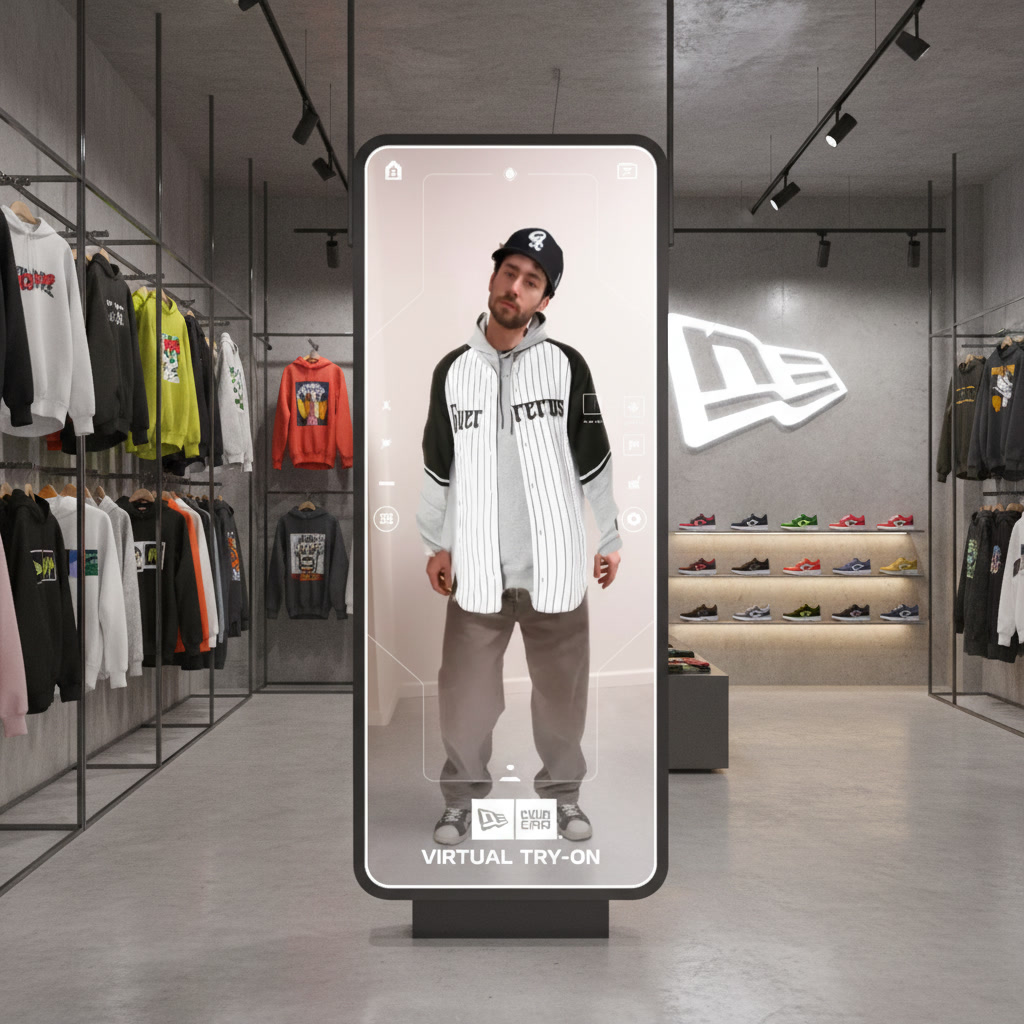
Our AR mirrors bring digital experiences into the real world with fun virtual try-ons and interactive moments. Guests can capture photos and videos and share them on social media, giving your brand more organic exposure.
7+ Years in AR filters
We have 7 years of experience creating custom AR filters on Instagram, Snapchat, and TikTok, including Nike, Gucci, Dior and many more.
Now, we’re expanding this expertise to physical spaces with our AR mirrors.
FAQ
Lorem ipsum dolor sit amet, consectetur adipiscing elit. Ut elit tellus, luctus nec ullamcorper mattis, pulvinar dapibus leo.
What is an AR Mirror
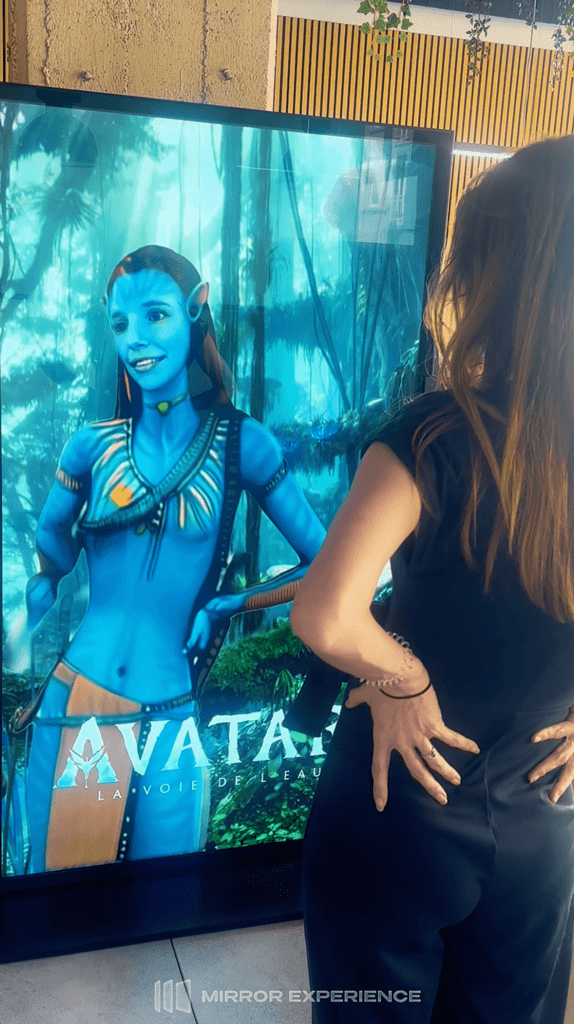
An AR mirror, also called an augmented reality mirror or smart mirror, is an interactive display that uses camera technology and augmented reality software to overlay digital content onto a user’s real-time reflection. Users can play games, pose with virtual character, virtually try on products, accessories, makeup, or clothing without physical contact.
What is an AR Mirror Studio
AR Mirror Studio is a global agency specializing in the design, development, and delivery of augmented reality mirror solutions for businesses worldwide. We create custom AR mirror experiences that blend physical and digital interactions for retail, events, beauty, fashion, and entertainment industries.
What industries use AR mirrors?
AR mirrors are used across multiple industries including retail fashion and apparel, beauty and cosmetics stores, jewelry boutiques, eyewear shops, trade shows and exhibitions, museums and galleries, fitness centers, automotive showrooms, and hospitality venues.
How does an AR mirror work?
AR mirrors use a combination of high-resolution cameras, depth sensors in some cases, the Mirror Experience app, and display screens to capture the user’s image in real-time, detect body positions and facial features, overlay virtual products or effects, and allow users to interact through gestures or touchscreen controls.
What services does Mirror Experience provide?
We’ve been creating social media AR filters for 7 years now. Our specialty? Making AR experiences that people love—fun games, product try-ons, and all kinds of interactive filters. But we go beyond just the software. We’ve spent 6 months developing easy hardware solutions too. Whether it’s an iPad or a big screen, our systems work anywhere in the world. Setup is super simple: just plug it in and it starts automatically. No hassle, no complicated installation—it just works.
Do you deliver AR mirrors internationally?
Yes. We can either go on site to install it, or we can send you a ready to go setup that you can just plug n play. We will arrange delivering in and out if it’s for an event. Our main goal is to have the simplest setup ever. No hassle, just plug n play.
How long does it take to build a custom AR mirror?
It can be ready on two weeks for simple experience. For more complex gamification or Virtual Try-On experience it can take up to one month.
Can AR mirrors integrate with existing systems?
We have build or own app to have an all in one solution. It can be used as a photobooth to get photo offline with a QR (yes we found a way), to print, to share on social media, etc. But if you want to merge or system with your existing one we can always make API calls.
What size AR mirrors are available?
We advice either use a 12,9 inch iPad pro with our custom stand and light for close experience (make-Up, lipstick try-on, selfie, …). For larger experience with full body tracking we recommend using 55 inch display. We also have 75 inch displays but these are more difficult to deliver quickly.
How much does an AR mirror cost?
You have different option, either a monthly subscription starting at 300 if it’s fixed photobooth installation, or a one-time payment. Pricing depends on screen size, hardware specifications, software features, customization level, and quantity ordered. Standard solutions start around $5,000-$10,000, while fully customized enterprise systems can range from $15,000-$50,000 or more. Contact us for a detailed quote.
What kind of maintenance do AR mirrors require?
Even if the AR Mirror or the Photobooth is made to be useable offline, once it’s online we can access it remotely and update evrything. We can even update the effects for special occasion like Christmas, Halloween, Valentines, etc
Can customers share their AR mirror experiences?
Of course, it is one of he main feature. You can take a photo or video and get it with QR scan, even if the AR Mirror or the photobooth has no internet connexion, we have build a special tech for that. We also have build a solution that unlocks a gift code for the user after they shared the photo or the video on Instagram or TikTok. That is a huge opportunity for your business to increase organic presence on Social Media, and so, attract more people and followers.
What data and analytics do AR mirrors provide?
Offline and Online. At Mirror Experience, we have experienced that offline solution is often an easier and more versatile solution. Unlike others screens installation service that relies on clouds and user data collection, we believe in a full offline solution. Only the user’s phone is online, the AR Mirror stays offline. However, while being offline, the AR Mirror can still store the amount of specific product selected by the customers. So at the end, you can have insights and visual statistics on what product was the most chosen. how many people tried it etc. While no user photo or video is store on the cloud.
Do AR mirrors require an internet connection?
At Mirror Experience, we believe in the offline solution. While we can still collect basic data offline such as the amount of the customers that used it or the most chosen product that people choose, the AR Mirror can work fully offline without any internet connexion. We have build solution where only the customer’s phone use internet if Social Media sharing is an option. Otherwise user can get his photo or video by scanning a QR code, using no cloud nor internet connexion (we have build a custom tech for it).
Are AR mirrors touch screens or touchless?
We have developped both solutions. We recommend usng touchscreens for closer experience and touchless for full body experience. The way touchless works is by raising your hand and aligning your palm over a virtuel button.
How do I get started to have my AR Mirror ?
We first make a free POC for your AR Mirror idea. Once you are convinced by the tech, we will go deeper on the development and we will present you different hardware solution to find the one that fits your needs 😊.