AR Mirror for Retail
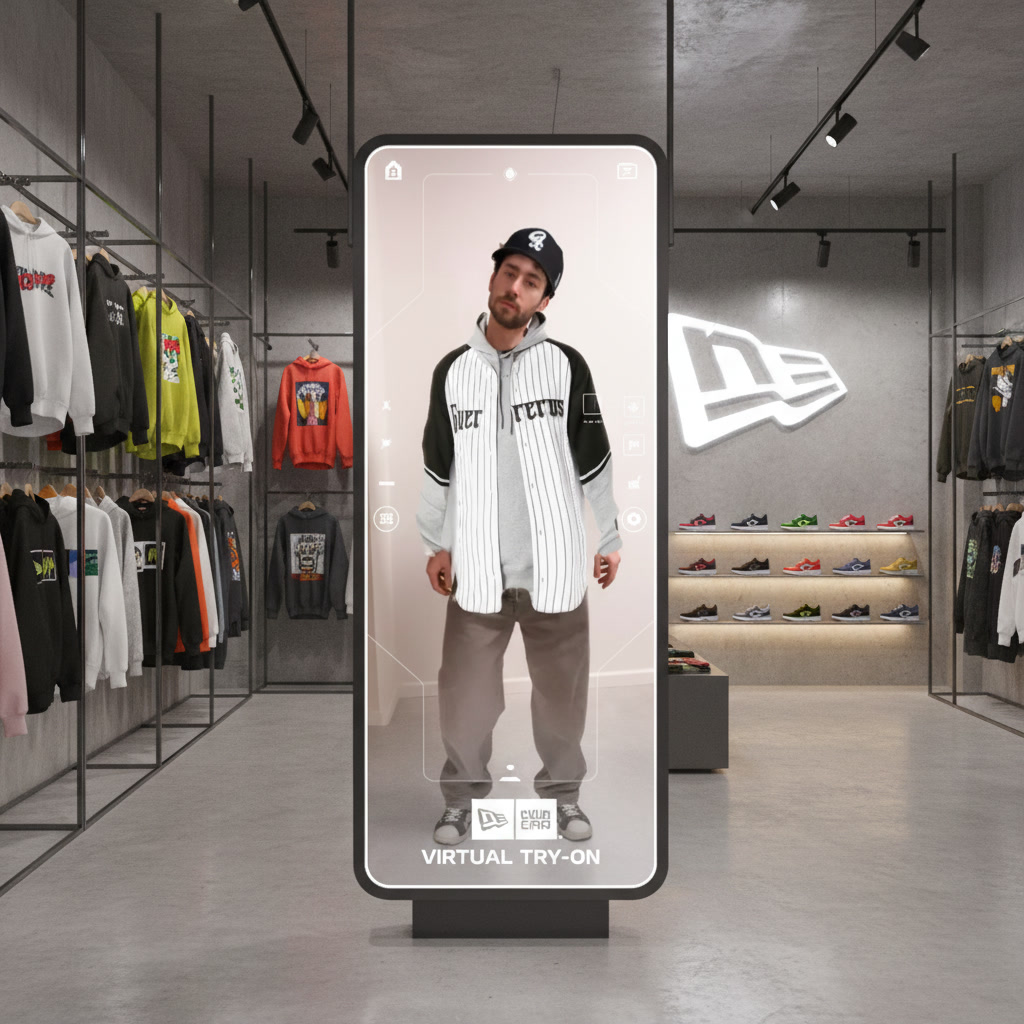
Virtual try-on has moved from novelty to revenue driver. Retailers that implement virtual try-on solutions report an average 30% increase in sales conversion, and about 30% fewer returns (Onix Systems via Sensape, 2025). Other studies put the conversion lift from virtual product trials at 34% (Business Research Insights, 2025). An AR mirror brings that same dynamic into the physical store: shoppers try, play, and buy without a fitting room.
Key takeaways
- Virtual try-on lifts conversion by 30 to 34% and cuts returns by around 30%.
- The AR in retail market is projected at 12 billion USD for 2026, and AR virtual try-on alone is growing 29% per year.
- An AR mirror turns a fitting room moment into a shareable experience, which multiplies the reach of each visit.
Why retailers install AR mirrors
The numbers explain the rush. L’Oréal reported a 50% sales increase after implementing AR virtual try-on, and Ulta saw a 700% surge in engagement with the same technology (Market.us AR statistics, 2026). Nearly 50% of consumers say AR-based shopping experiences encourage them to spend more, and 100 million people already use AR to shop online and in stores. A mirror in the store gives the brand a physical version of that same behavior, with an audience that is already standing in front of it.
What an in-store AR mirror does
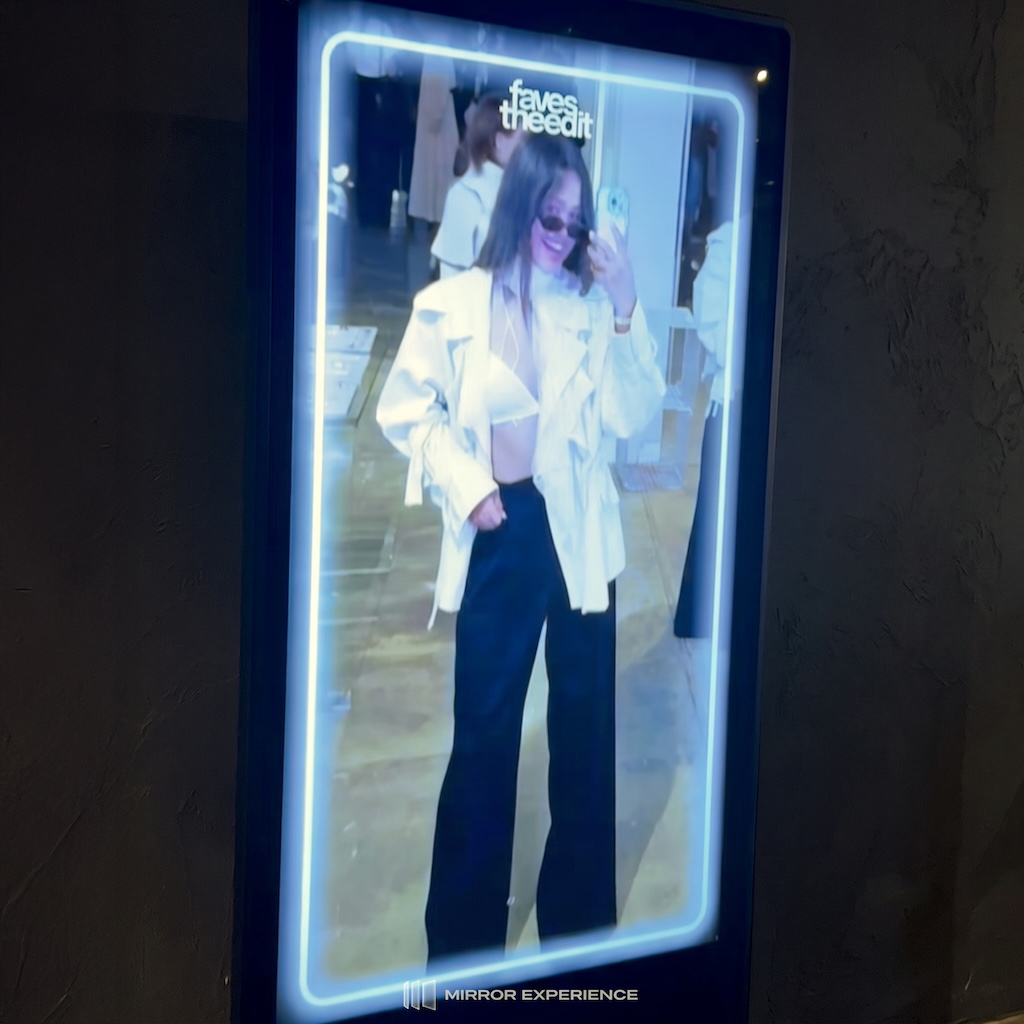
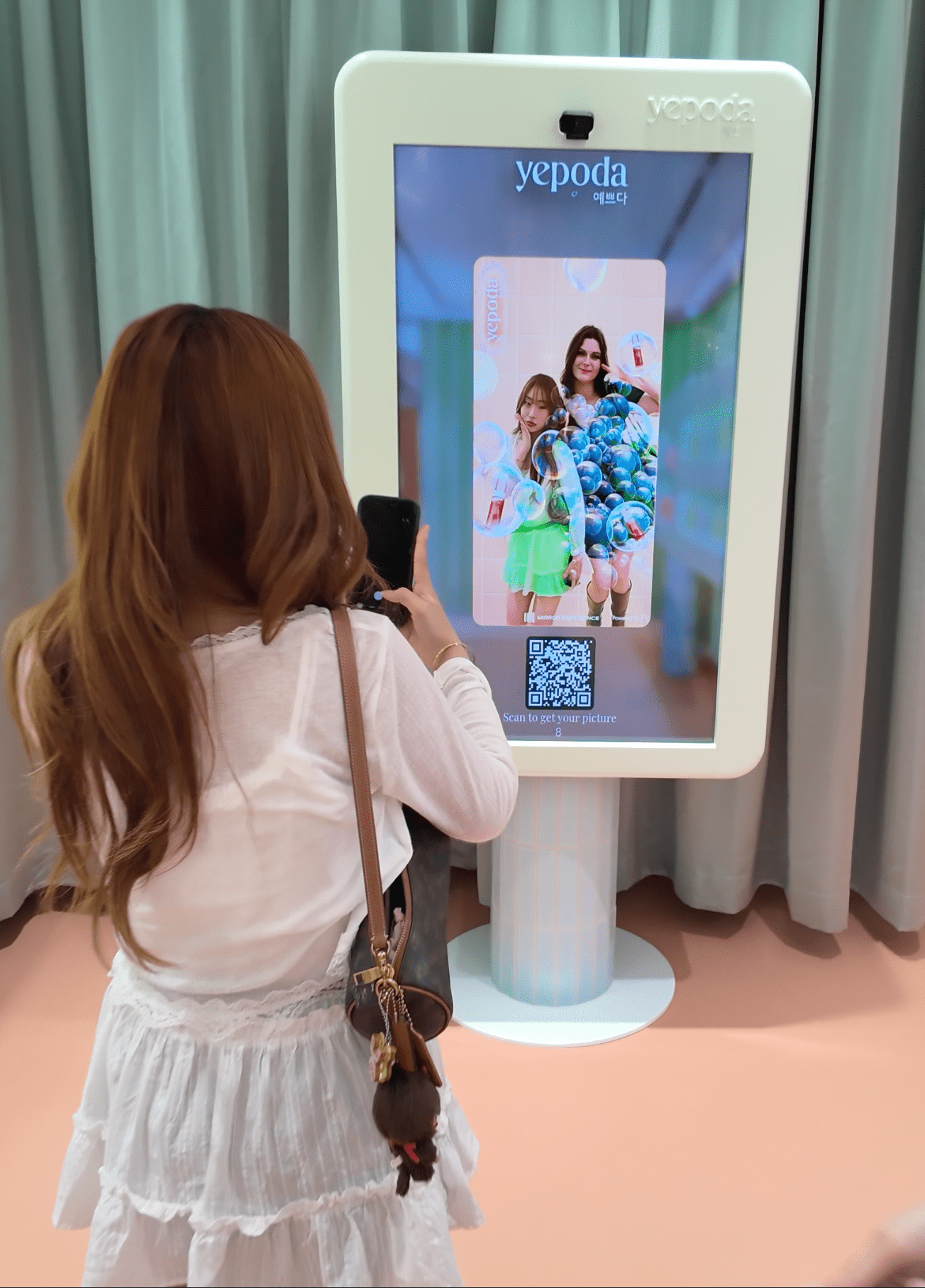
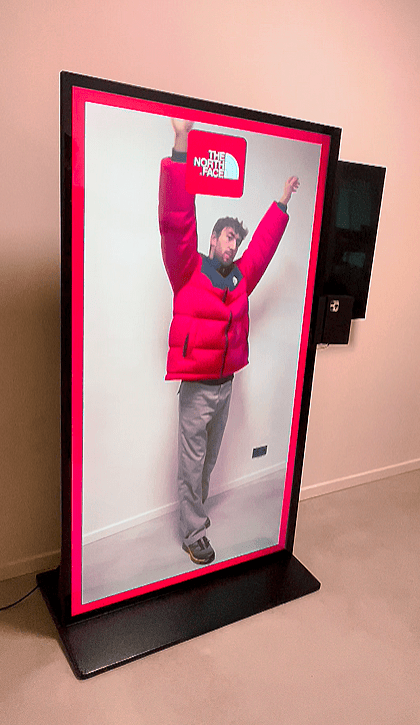
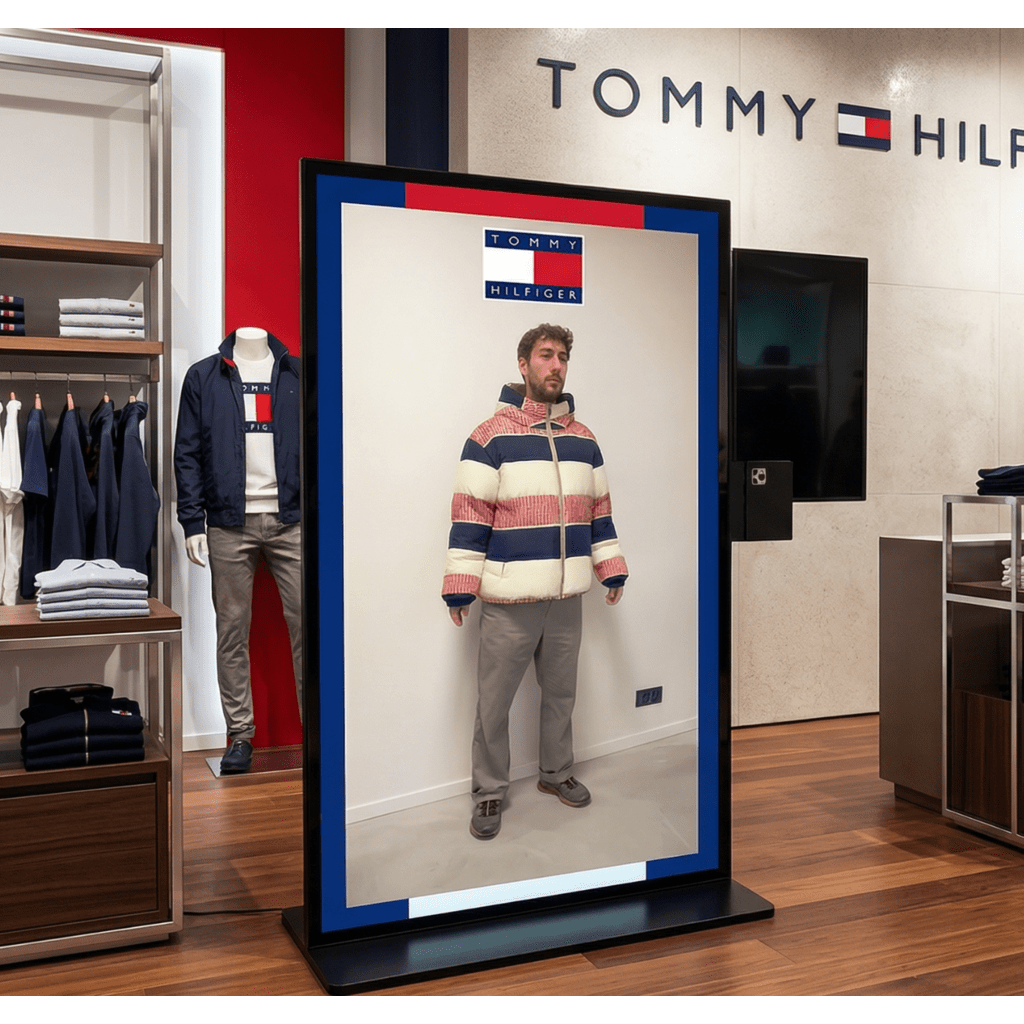
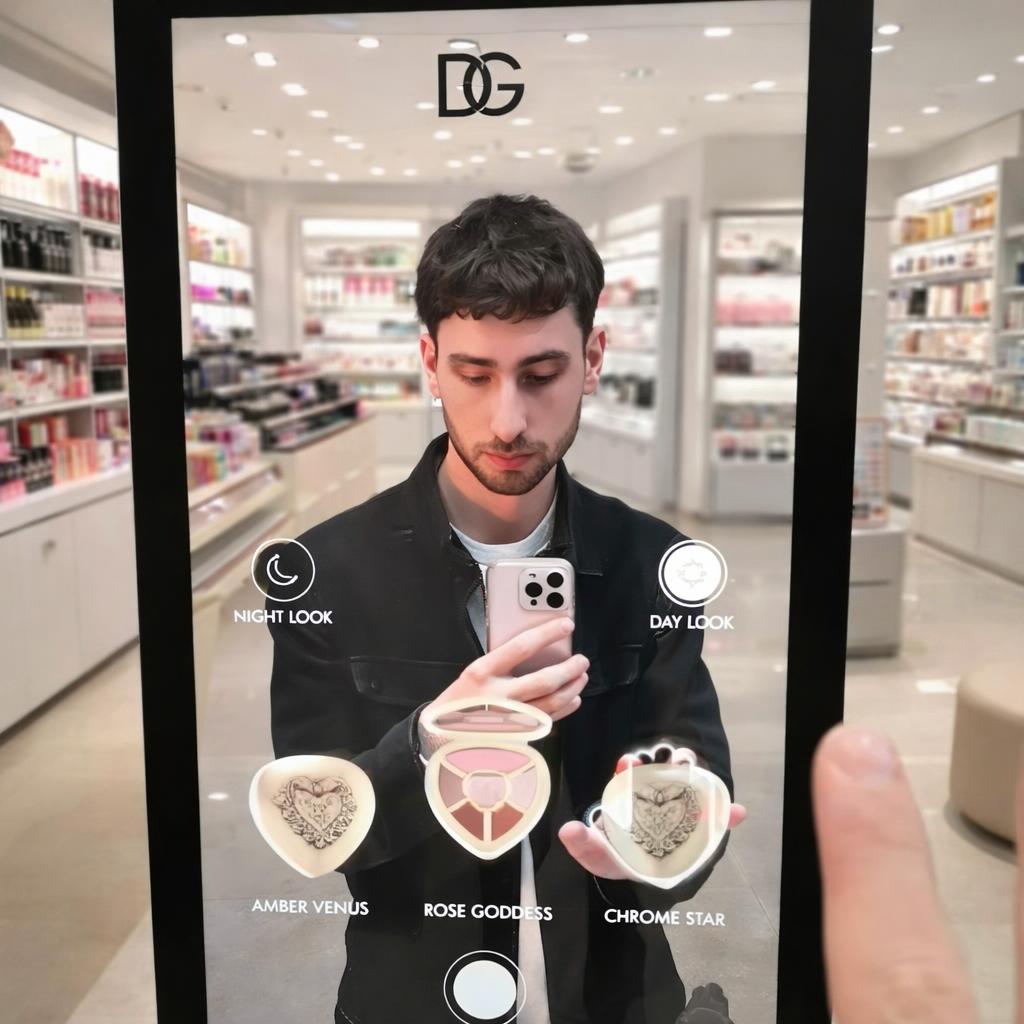
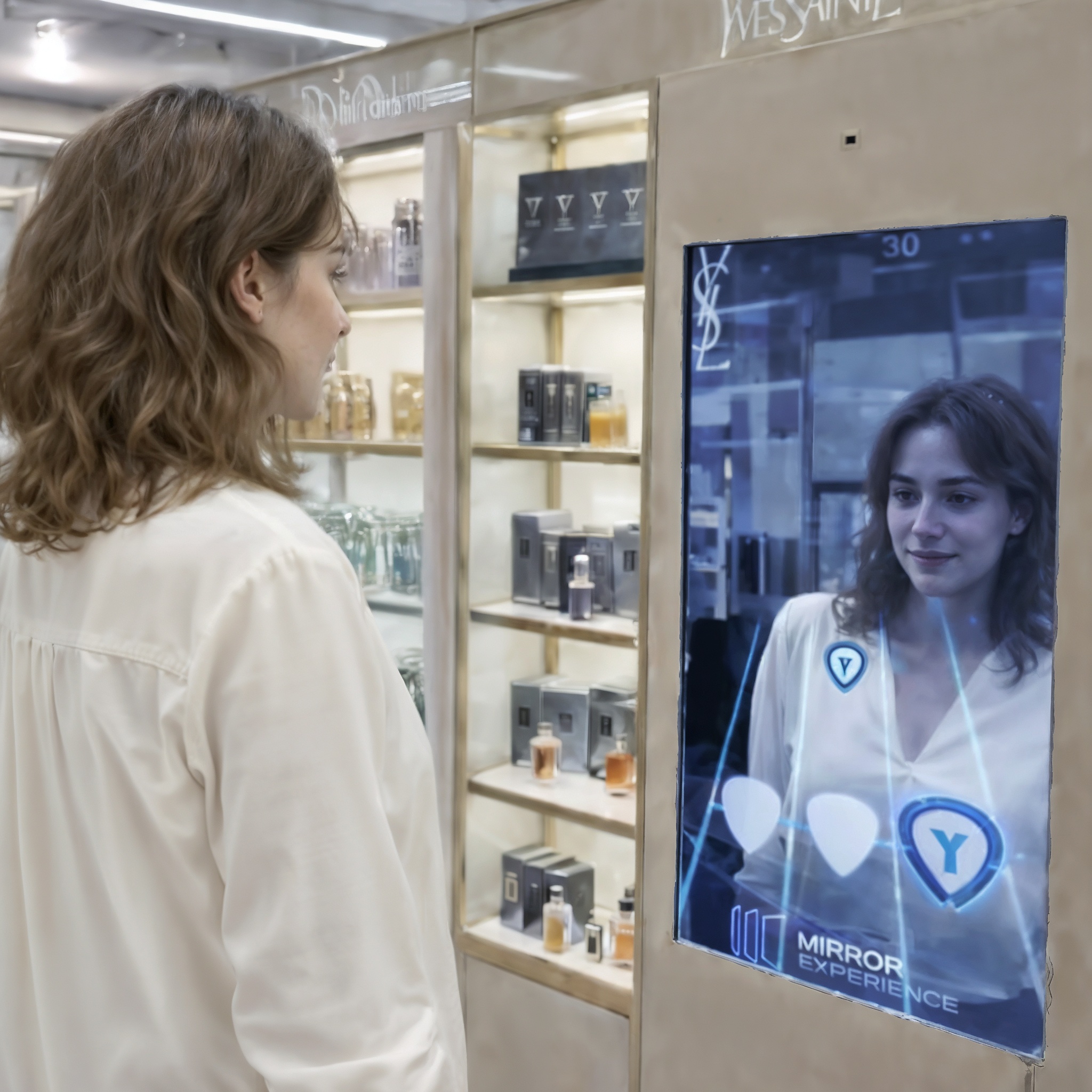
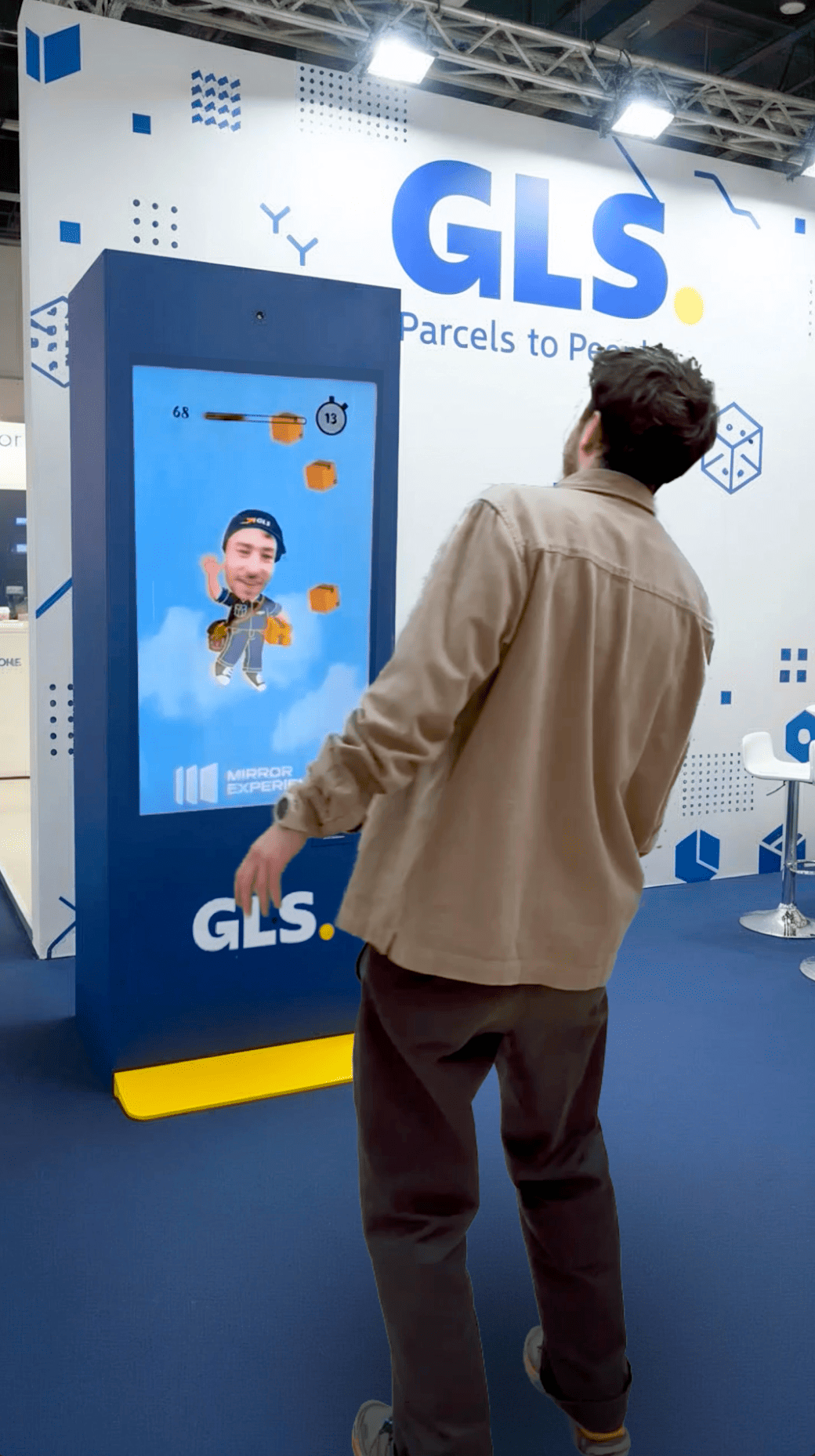
The shopper steps in front of the mirror. The system tracks their body and overlays clothes, accessories or make-up in real time, at 25 frames per second. They can change color, size and style without entering a fitting room, then capture a photo or video by QR code. The retailer gets the email opt-in, and the visitor gets a souvenir of the brand. For fashion, accessories, eyewear and beauty, this is the closest thing to a virtual fitting room that works in a physical store.
From fitting room to social reach
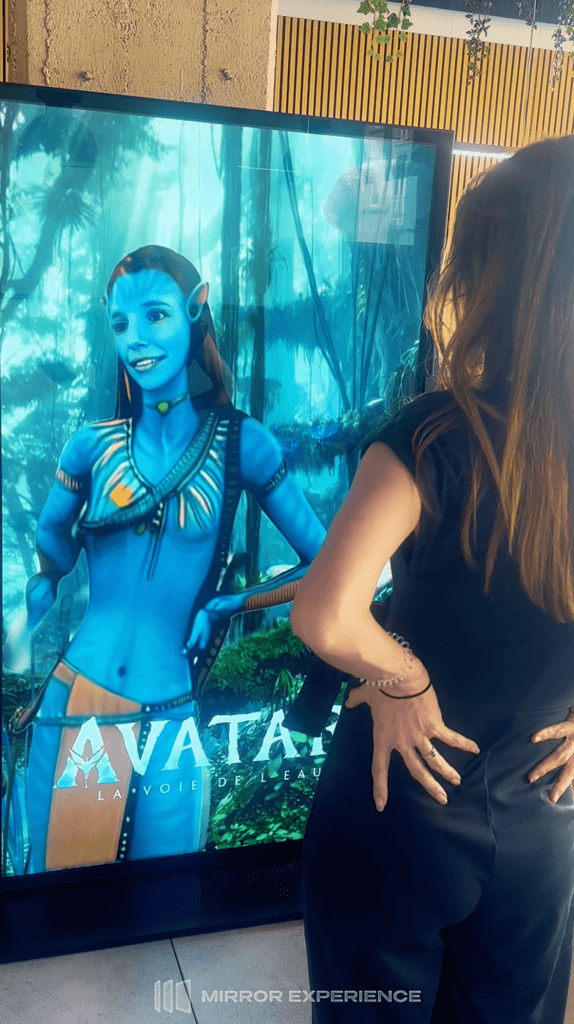
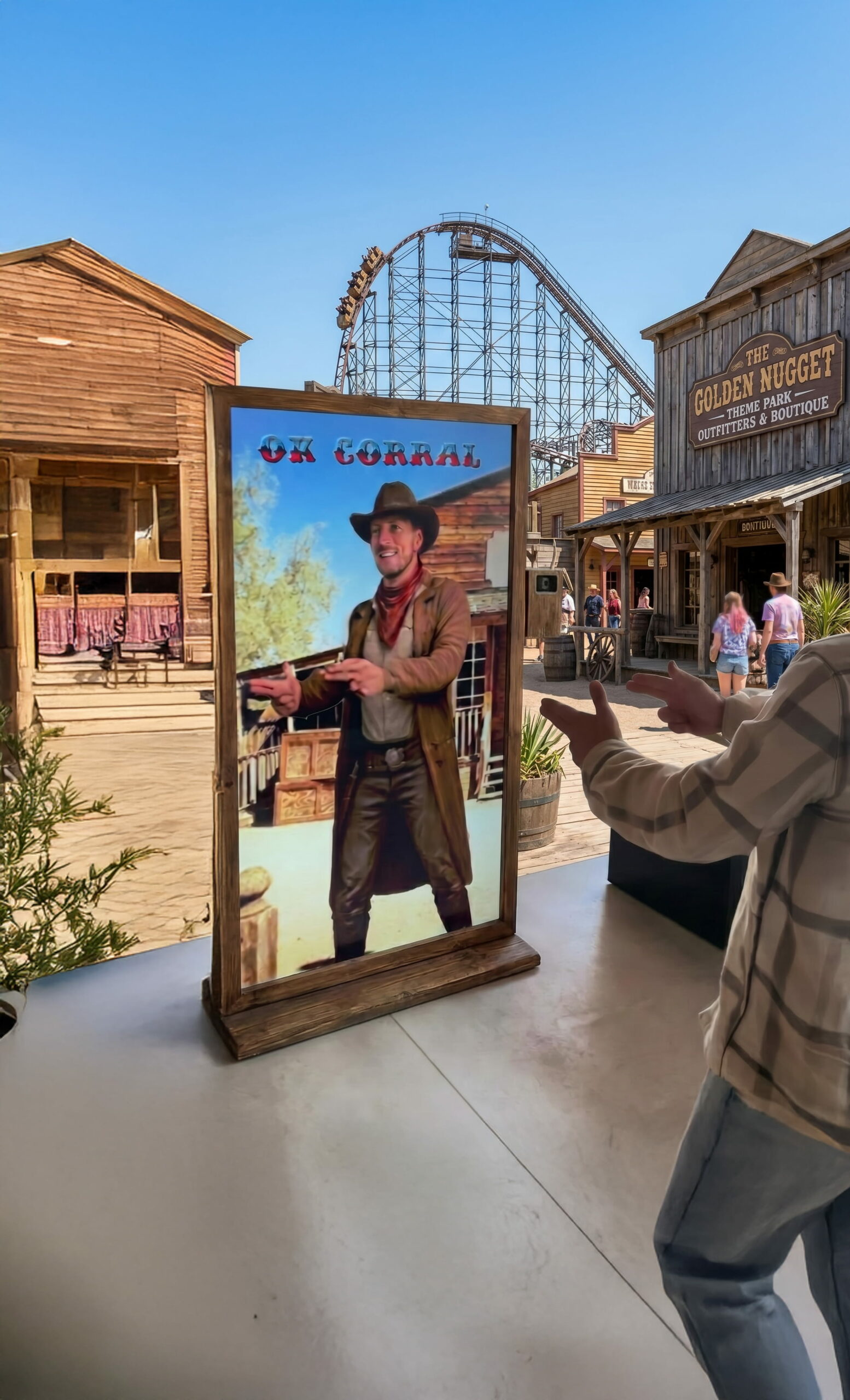
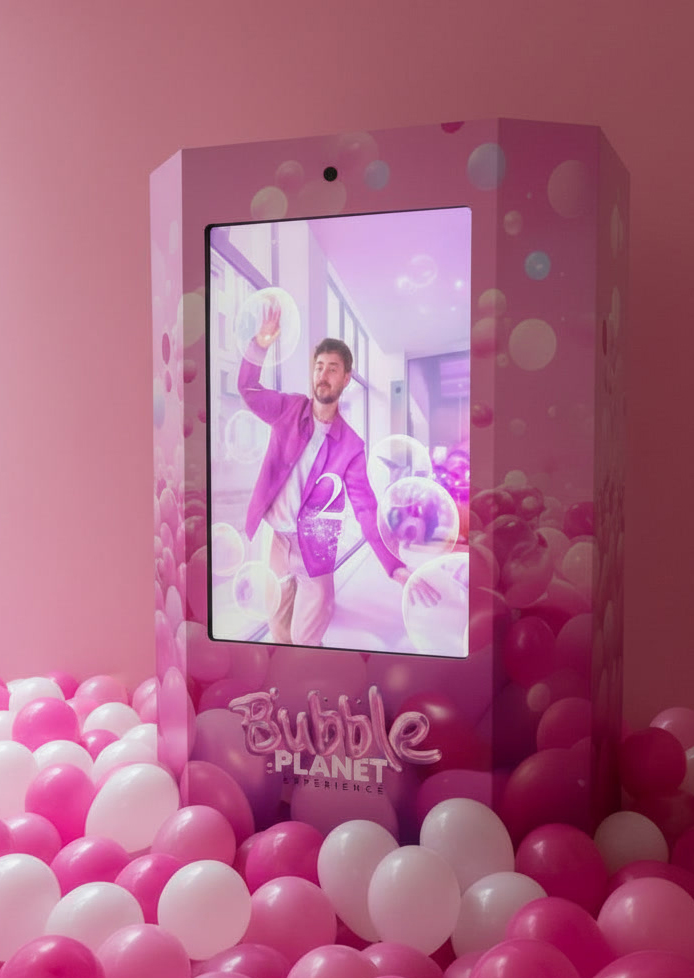
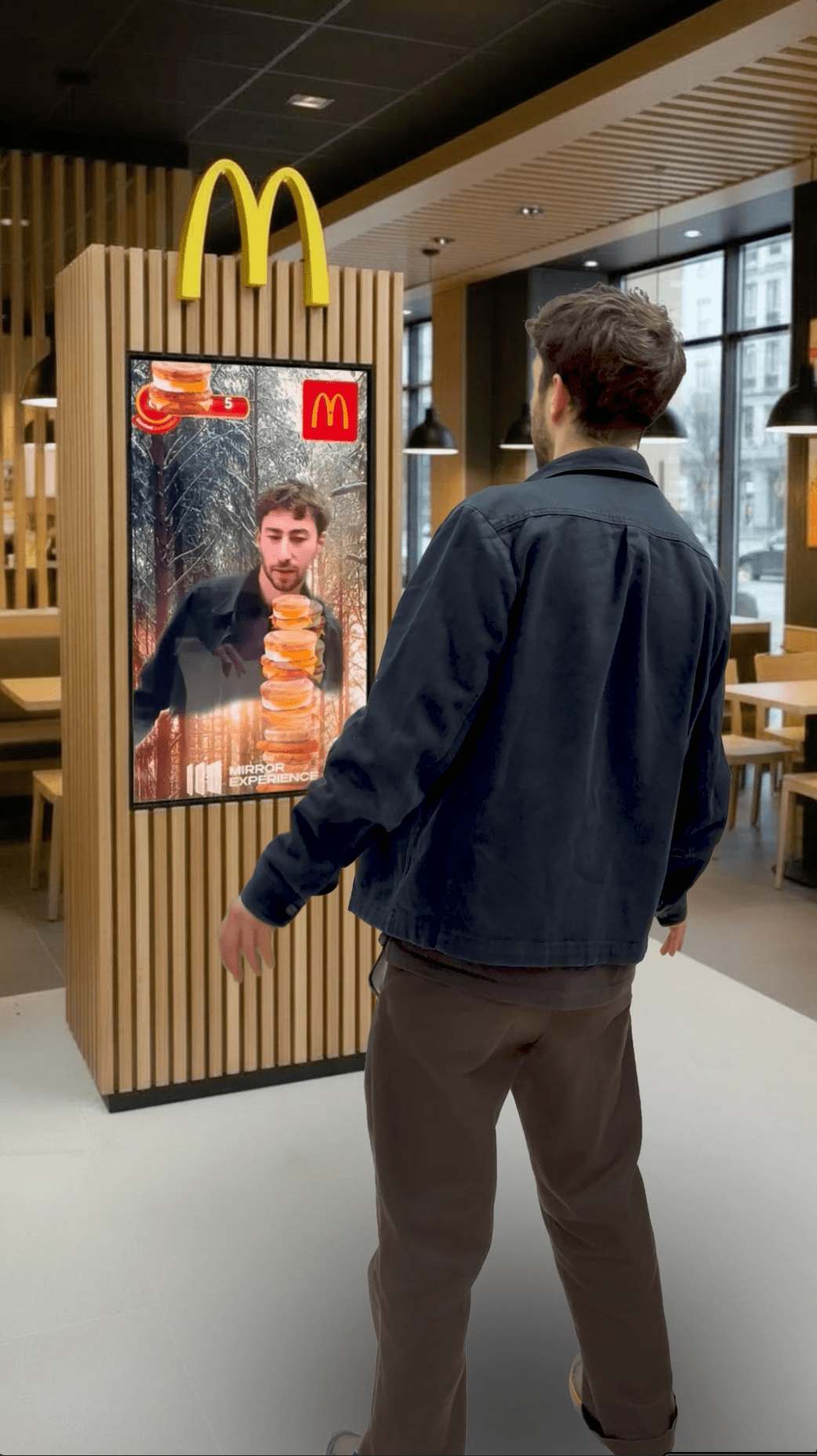
A fitting room is private. An AR mirror is public, and that changes the economics. Visitors who try a product in front of a mirror share the result on social media, which gives the brand organic reach for every interaction. When the mirror is themed around a product launch or a collection, the activation becomes its own campaign. Mirror Experience has built these activations for global brands in fashion and retail, from flagship store installations to event pop-ups.
The market behind the mirror
The AR in retail market is projected to hit 12 billion USD in 2026, and the virtual try-on platform segment is growing at a double-digit pace, with the US market alone expected to pass 2 billion USD by 2027 (Future Market Insights, 2025). Retailers who test the technology now are building the capability before it becomes table stakes.
Veelgestelde vragen
How much does an AR mirror cost for retail?
An event mirror starts around 8,000 EUR. The hardware adds between 1,000 and 5,000 EUR on top, depending on the screen size and the structure. The 8,000 EUR figure covers the software layer. The screen, camera hardware, transport and installation are quoted per project, because the format changes with every store. A permanent in-store installation with a 75-inch screen costs around 20,000 EUR, including custom product content. The pilot is free.
Can it try on our actual products?
Yes. Products are digitized from your catalog, and the mirror can switch colors, sizes and styles in real time.
Does it capture customer data?
Yes, with consent. The mirror can collect email opt-ins and usage metrics, which feed directly into CRM and marketing tools.
How long does deployment take?
About three weeks for a standard installation, including content creation.
Plug and play: no IT project required
A common fear with interactive technology is the project itself. A Mirror Experience deployment is not a software development program. We ship a ready unit, install it on site, and hand over a working system: no custom code, no development phase, no dependency on an internal technical team. Most installations go live in two to four weeks, and a free pilot lets you test the experience on your own content before committing.
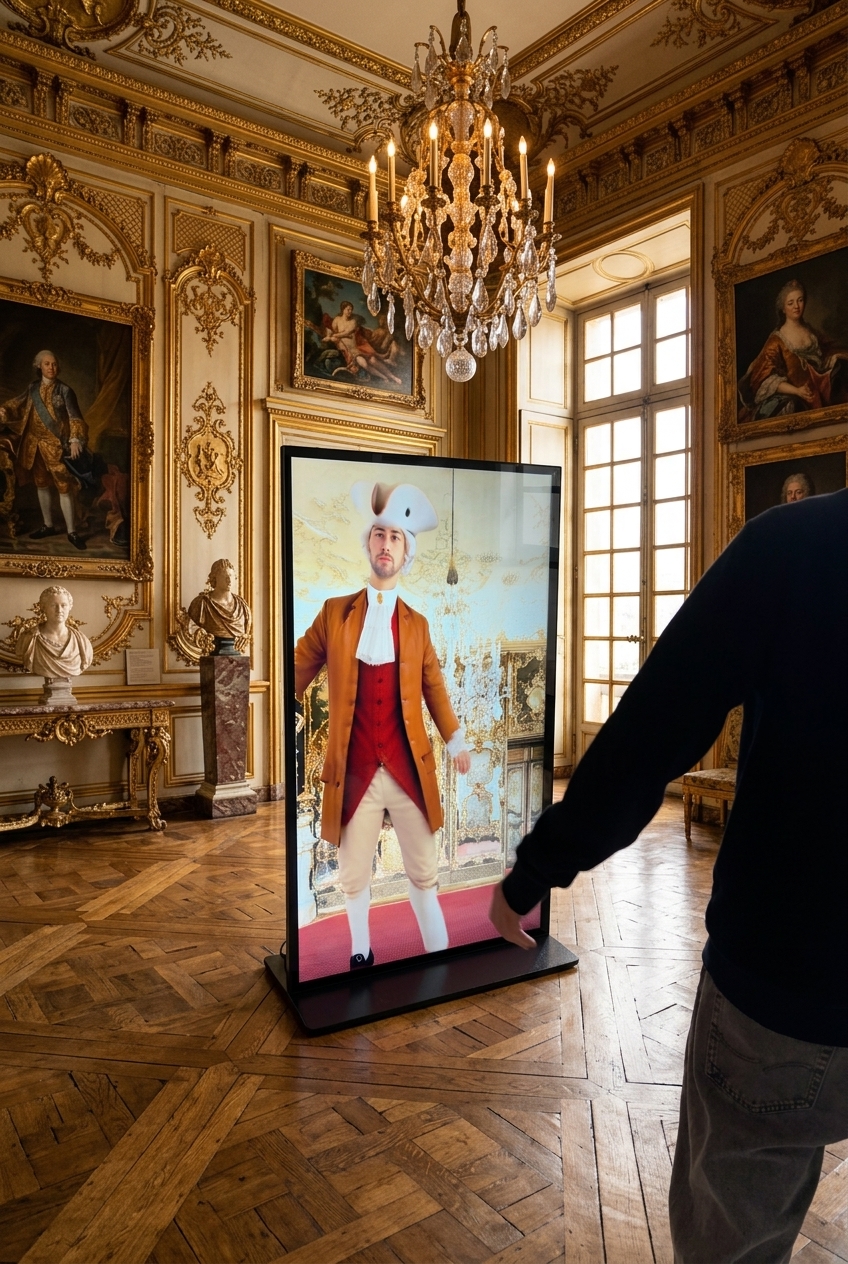
The system runs on our industrial AR Box driving professional-grade screens, or connects to displays you already own. If your team can use a tablet, your team can run this mirror. Content updates are handled remotely, so changing a collection, a costume or a seasonal campaign never requires a technician on site.
Photo booth, social sharing and lead capture included
The mirror is not only a display. It captures the visit, sends the photo or video to the visitor by QR code, prints a souvenir copy when needed, and collects opt-in contact details so your team can follow up. Visitors share their result on Instagram or TikTok, which turns a single installation into organic reach well beyond the room. Every interaction feeds a dashboard you can read without a data analyst.
Classic AR mirror or real-time AI: what actually changes
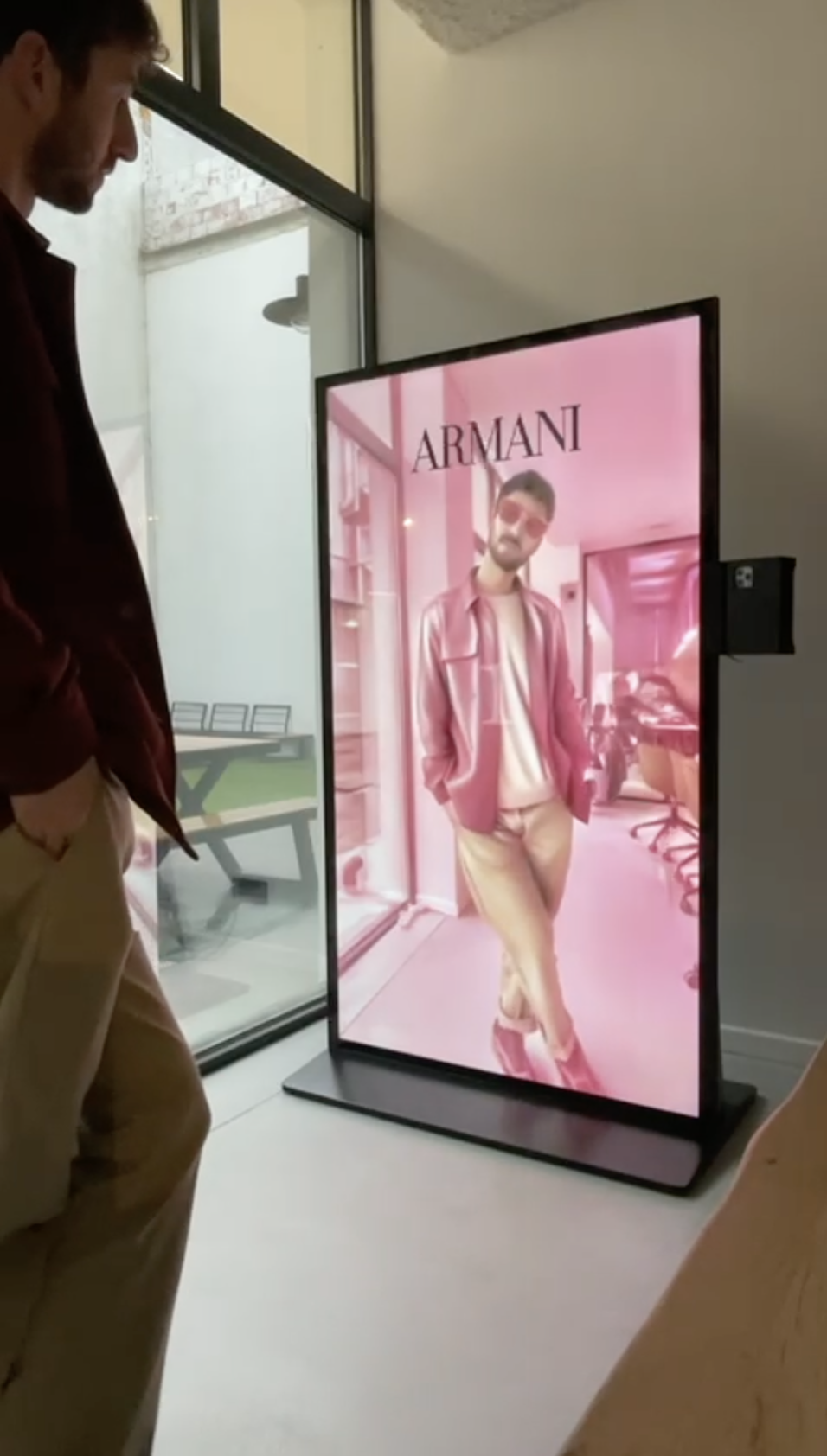
First-generation AR mirrors overlay a flat image on a live camera feed. They are fast, but fabric never behaves like fabric: draping, folds and lighting stay untouched, which is exactly why the result can look digital. Mirror Experience runs generative AI on the live video itself, so the garment reacts to movement, light and body shape in real time, at 25 frames per second, on a true mirror experience rather than a delayed render.
See your products on the mirror
Mirror Experience offers a free pilot so you can test the mirror with your own products and your own customers. Contact us for a demo, a quote, or examples of brand activations already running in Europe, the US and Asia.