
Museums and exhibitions are no longer competing only with each other. They are competing with every screen, theme park, and social feed fighting for your audience’s attention. The spaces that win repeat visits and organic buzz in 2026 share one trait: they respond to the people inside them. Static projection loops and pre-recorded audio tours still have a place, but the most effective immersive rooms for museums and exhibitions now use body tracking, real-time visuals, and interactive layers that make every visitor part of the experience.
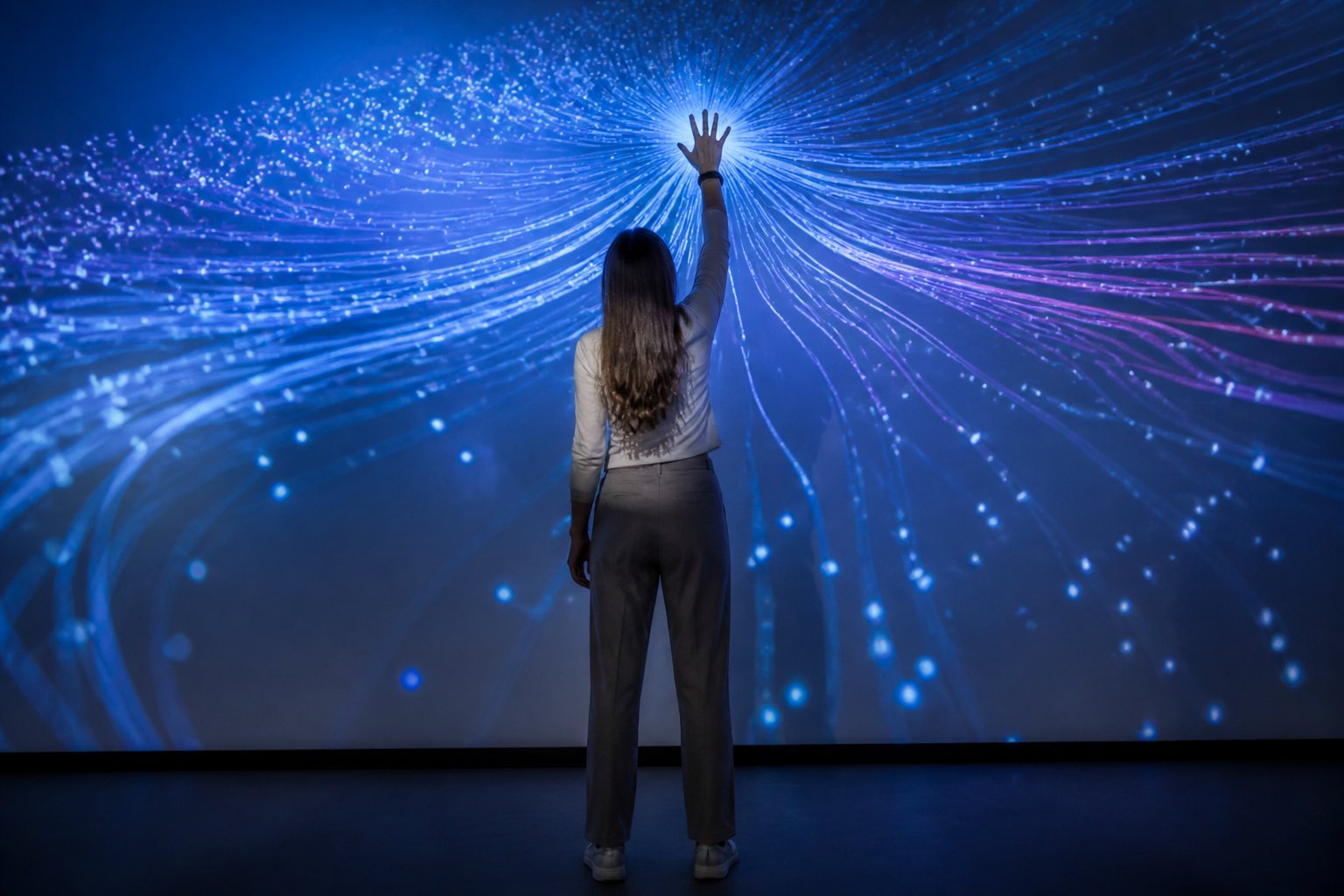
The installations that drive the highest dwell time, shareability, and return visits are the ones where the room reacts to you, not the ones where you simply stand and watch. That shift from passive spectacle to active participation is reshaping how curators, designers, and venue operators plan new galleries and touring shows. Choosing the right mix of projection, sensors, augmented reality, and spatial design determines whether your immersive room becomes a signature attraction or an expensive screensaver.
AR Experience, with seven years of building AR filters and AR Mirror installations for brands and venues, has been applying that same pose-reactive, camera-based technology to immersive rooms and interactive walls. Their approach, turning real-time body tracking into visitor-led visual worlds, reflects where the industry is heading. If you are evaluating immersive technology for a museum, exhibition, or attraction, exploring what AR Experience offers at the concept stage costs nothing and can sharpen your brief before you commit budget.
This guide breaks down what actually works when you design, build, and deploy immersive rooms, from visitor expectations and core technologies to practical decisions about permanent versus touring formats.
What Visitors Expect From A Modern Immersive Space
Your visitors arrive with habits shaped by interactive apps, social media filters, and gaming. They expect to do something inside an immersive room, not just admire it. Passive projection, no matter how beautiful, now reads as a backdrop rather than a destination. The installations earning five-star reviews and millions of social impressions share three qualities: responsiveness, participation, and playfulness.
Why Passive Projection Alone Is No Longer Enough
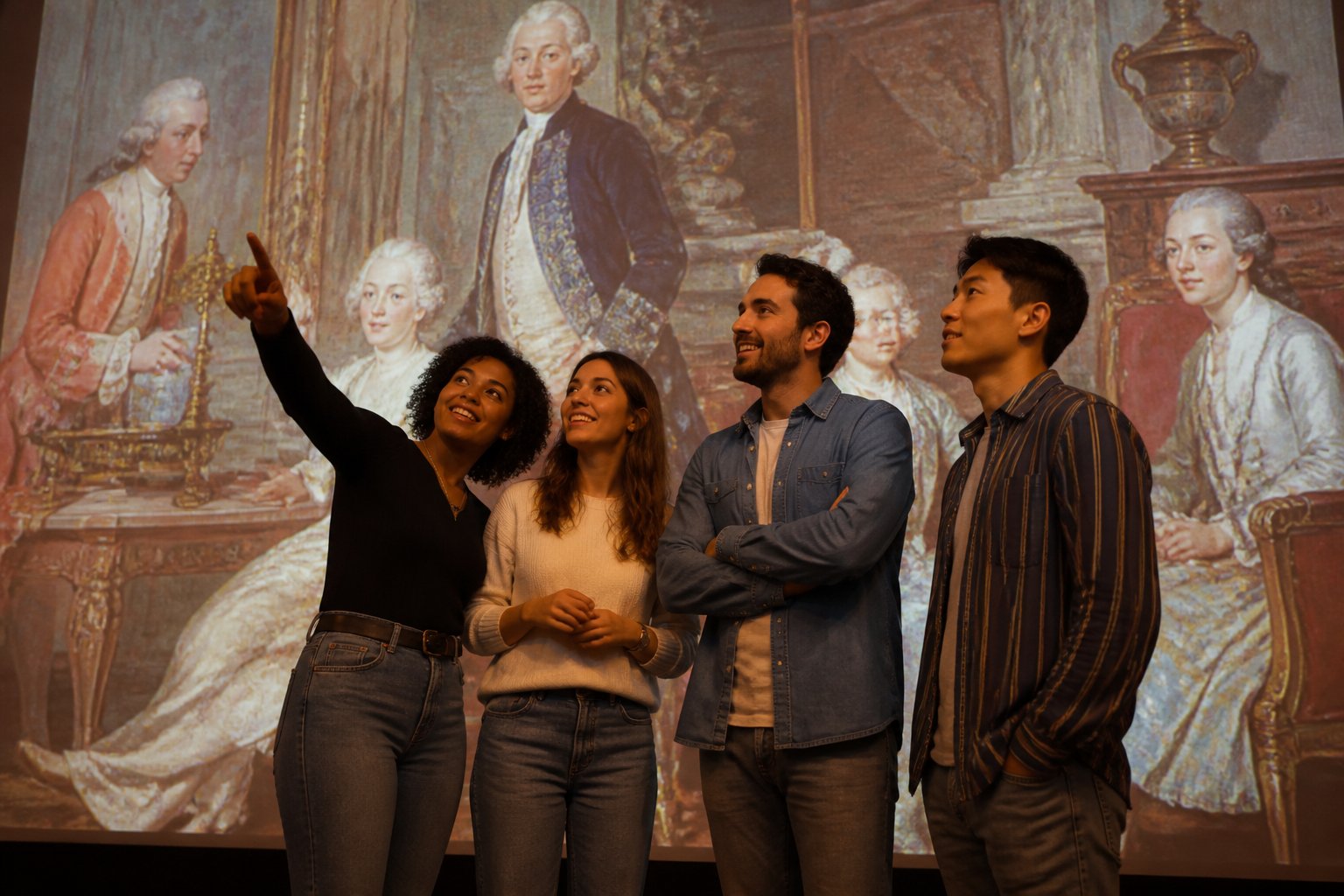
Large-scale projection rooms had a novelty advantage when they first appeared. That advantage has faded. Audiences have seen the looping Van Gogh sunflowers and the animated Klimt canvases. They appreciated the spectacle, took a photo, and moved on.
The issue is not quality. It is repeatability. A room that plays the same twenty-minute loop gives you one reason to visit and zero reasons to return. For museum teams measuring ROI, that limits membership conversions, school-group rebookings, and word-of-mouth longevity.
Projection-only rooms also struggle with dwell time. Research consistently shows visitors spend more time in spaces that acknowledge their presence. Without sensors, body tracking, or interactive triggers, a projection room is essentially a cinema you walk through.
How Interaction Increases Dwell Time And Shareability
When your exhibit reacts to visitor movement, something measurable happens. Dwell time increases because people experiment: they wave, jump, pose, and test the boundaries of the system. That exploration cycle keeps groups engaged far longer than a linear animation.
Shareability follows interaction naturally. A photo of a projection wall looks the same whether you are in it or not. A video of your silhouette spawning particles, controlling an avatar, or triggering a soundscape is personal and unique. That content gets shared because it features you, not just the room.
Interactive exhibits also boost stop rate. Passersby notice other visitors laughing, posing, and replaying. That social proof pulls new visitors in without signage or staff intervention.
The Difference Between Spectacle, Participation, And Play
Spectacle is the baseline. Big visuals, surround sound, and immersive art projections create atmosphere. They set the mood and justify the ticket price for a single visit.
Participation adds a layer. You touch a screen, select an option, or trigger an event. Interactive installations like touch tables and kiosks fall here. They work well for educational content, timelines, and collection exploration.
Play is the highest tier. You become the input. Your body, your gestures, your movement drive the visuals in real time. Pose-reactive avatars, particle fields that follow your silhouette, and digital art worlds that shift with group behavior all live in this category. Play generates the longest dwell times, the most social shares, and the strongest emotional memories.
The best immersive rooms layer all three. Spectacle draws you in. Participation holds your attention. Play makes the moment yours.
The Technologies Behind Responsive Environments
Responsive immersive rooms combine three technology layers: display systems that fill the space, sensor systems that detect visitors, and software that connects the two in real time. Your technology choices directly affect visitor engagement, maintenance overhead, and how often you can refresh content. Knowing what each layer does helps you ask better questions during vendor selection and avoid costly mismatches.
Projection Mapping, Sensors, And Spatial Media Systems
Projection mapping remains the most common display method for immersive rooms. High-lumen projectors cover walls, floors, and architectural features with content that transforms the entire environment. The technology scales from a single accent wall to full 360-degree room coverage.
What separates a modern immersive projection setup from a basic video loop is the sensor layer. Depth cameras, LIDAR, RFID readers, and computer-vision systems feed visitor position and movement data into the software engine. That engine, often built in platforms like TouchDesigner, Unity, or custom WebGL frameworks, renders visuals that shift based on real-time data visualization of where people stand and how they move.
Spatial audio adds another dimension. Directional speakers and surround sound systems create soundscapes that respond to visitor proximity, making the room feel alive without headphones or personal devices.
Body Tracking, Motion Tracking, And Real-Time Visual Reactions
Body tracking and motion tracking are the technologies turning passive projection rooms into interactive installations. Depth cameras like Intel RealSense or Azure Kinect capture skeletal data, tracking joints, gestures, and poses in real time.
This data powers everything from particle trails that follow your hands to full-body avatars that mirror your movements on the wall. The software interprets your pose and renders a visual response within milliseconds, making the interaction feel seamless.
Motion tracking, slightly different from full body tracking, detects broader movement patterns. It is effective for triggering zone-based events: step into this area and the wall reacts, move to another and the scene changes. For high-throughput family spaces, motion tracking offers a lower complexity entry point that still feels magical.
The key metric is latency. Anything above 100 milliseconds feels sluggish. The best systems deliver visual feedback in under 50 milliseconds, creating the illusion that the room is truly aware of you.
Where Augmented Reality, Mixed Reality, And Virtual Reality Fit
Augmented reality overlays digital content onto the physical world. In museum contexts, AR works through visitor smartphones, provided tablets, or dedicated AR Mirror stations. It excels at revealing hidden layers: original colors on faded artifacts, reconstructions of damaged objects, or animated narratives anchored to physical exhibits.
Mixed reality blends AR and physical environments more deeply, often using headsets that let digital and real objects coexist. It is powerful for archaeological reconstructions and behind-the-scenes experiences, but headset logistics (fitting, cleaning, staff support) limit throughput in busy galleries.
Virtual reality creates fully enclosed digital worlds. VR in museums works best in dedicated stations where visitors sit or stand in a controlled space. The immersion is unmatched, but the format is inherently single-user and requires staffing.
For most immersive rooms, AR and camera-based body tracking offer the best balance of engagement, throughput, and operational simplicity. Visitors do not need to wear or hold anything. They walk in, and the room responds. That frictionless entry point is why AR-derived interactive wall systems are gaining ground fast in museums, attractions, and exhibition circuits.
Designing Installations That Work For Museums And Touring Shows
A successful immersive room is not just good technology in a dark space. It is the right technology matched to your venue constraints, audience profile, and operational reality. The format decisions you make early in the process, before any software is written, determine whether your installation thrives for years or becomes a maintenance headache within months.
Matching Format To Venue Size, Audience, And Curatorial Goals
Start with three questions: How large is the space? Who walks through it? What story are you telling?
A 200-square-foot gallery alcove calls for a focused interactive wall or AR Mirror station, not a 360-degree projection room. A 3,000-square-foot hall can support full immersive projection with multiple tracking zones, layered soundscapes, and group-scale interactions.
Audience matters just as much. Family-heavy science centers need durable, high-throughput formats with short learning curves. Body tracking and motion-reactive walls work brilliantly here because they require no instructions. Art museums serving adult visitors can support slower, more contemplative interactive exhibits, including touch-based deep dives and spatial audio narratives.
Curatorial goals set the content direction. Are you augmenting a permanent collection with immersive learning layers? Building a standalone immersive exhibition as a ticketed event? Or adding a shareable activation to boost social reach? Each goal leads to a different technology mix and budget allocation.
Permanent Galleries Versus Pop-Ups And Touring Exhibitions
Permanent installations justify higher upfront investment because the cost amortizes over years. You can integrate projection into architecture, embed sensors in walls, and build custom hardware housings. Content refresh cycles, typically quarterly or seasonal, keep the experience feeling current without new fabrication.
Pop-ups and touring exhibitions demand a different mindset. Everything needs to pack, ship, and reassemble quickly. Lightweight, self-contained systems outperform complex fixed builds in this context. Modular interactive walls, portable AR Mirror setups, and plug-and-play projection kits reduce setup time from days to hours.
Touring shows also need consistency across venues. Your installation should deliver the same experience in a converted warehouse in Los Angeles and a cultural center in Chicago. That means software that adapts to different room dimensions and hardware designed for fast recalibration.
Accessibility, Operations, And Content Refresh Over Time
Accessibility is non-negotiable. Your immersive room should offer multiple input modes. Body tracking handles standing visitors; floor projections and lower screen zones serve wheelchair users. Spatial audio with visual cues supports visitors with hearing differences. Avoid designs that rely on a single interaction method.
Operationally, plan for daily realities. Who reboots the system when it crashes at 10 AM on a Saturday? Remote monitoring and automatic restart protocols eliminate most downtime. A spares strategy for projector lamps, cameras, and media players prevents week-long outages while waiting for parts.
Content refresh keeps your immersive room relevant. The best systems separate content from infrastructure, allowing curators to swap visual themes, update narratives, or add seasonal overlays without calling a developer. Modular software architecture is the difference between a living exhibit and a dated one.
How AR Experience Brings Interactivity Into The Room

AR Experience started with AR Mirror activations for brands and venues, building seven years of expertise in real-time pose detection, camera-based tracking, and software that reacts to human movement. That same core technology now powers interactive walls and immersive room installations where the entire space responds to your visitors, not just a single mirror station.
From AR Mirror Expertise To Interactive Wall Innovation
The AR Mirror is a proven format: a screen, a camera, and software that overlays digital effects onto your reflection in real time. AR Experience owns the software side of every AR Mirror project, which means the team controls the interaction logic, visual rendering, and tracking accuracy.
Scaling that same pipeline from a single mirror to a full wall or room-sized projection is a natural evolution. The camera sees your body. The software interprets your pose. The visuals respond on whatever surface you choose: a mirror, a wall, or an entire immersive environment. The underlying technology is the same; the canvas is bigger.
This path from mirror to room means AR Experience brings battle-tested tracking software into the immersive space rather than starting from scratch with untested tools.
Using Pose-Reactive Avatars, Particles, And Custom Visual Worlds
The real differentiator is what happens after the camera captures your visitor’s pose. AR Experience builds experiences where body data drives the visuals in real time.
Your visitors might see a digital avatar that mirrors their movements, rendered in a completely custom art style. Or their silhouette could trigger particle explosions, paint trails, or environmental shifts. Groups of visitors can interact with each other’s digital representations, turning the room into a collaborative, social playground.
Every visual world is custom. AR Experience works with your creative brief to develop themed content, whether you need abstract digital art for a contemporary gallery, historically inspired overlays for a heritage exhibit, or playful characters for a family-oriented science center.
Fast Concepting, Software Delivery, And Flexible Installation Support
AR Experience offers an initial brainstorming phase at no cost, sharing reference projects and examples to help you shape the concept before any budget is committed. Once a direction is approved, the full AR experience can be built in just a couple of weeks, with test links provided during development so you can review progress in real time.
The team always handles the software. For hardware and physical installation, you have options. Light, easily deployable setups can be managed directly by AR Experience. More complex fixed installations involving custom construction are handled through specialized partners: Bweez in France and Mirror.it in Italy. You can also choose a self-install path with solutions designed to be straightforward to deploy.
That flexibility matters when you are working with tight exhibition timelines, limited on-site crews, or venues in different cities. The software ships fast. The hardware adapts to your situation.
Frequently Asked Questions
What are immersive rooms in a museum, and how do they work?
Immersive rooms are gallery spaces designed to surround you with responsive digital content using projection mapping, sensors, spatial audio, and interactive software. They work by combining display systems (projectors or LED walls) with tracking technology (depth cameras, motion sensors) and real-time software that renders visuals based on visitor presence and movement. The result is an environment that reacts to you rather than playing a fixed loop.
What are some well-known immersive museum and exhibition experiences in the USA?
Several large-scale immersive exhibitions have toured major U.S. cities, including Immersive Van Gogh, Artechouse installations in Washington D.C. and New York, teamLab exhibitions, and the Hall des Lumières in Manhattan. The Smithsonian and the American Museum of Natural History have also integrated immersive technology into permanent and temporary exhibits, blending projection, AR, and interactive media.
Where can I find immersive art experiences in New York City?
New York City hosts some of the densest concentrations of immersive art experiences in the country. Venues like Artechouse NYC, Hall des Lumières, and the Museum of the Moving Image regularly feature immersive exhibitions. Chelsea galleries and cultural spaces in Brooklyn also host rotating interactive art installations that use projection, body tracking, and augmented reality.
What are the best immersive museums or exhibitions to visit in California?
California offers immersive experiences across Los Angeles and San Francisco. LACMA, the Broad, and various pop-up venues in the Arts District have featured interactive and immersive exhibitions. San Francisco’s Exploratorium is a longstanding leader in hands-on, sensor-driven exhibits. Seasonal touring shows frequently set up in both cities, often featuring large-scale projection rooms and interactive installations.
How are immersive exhibitions different from traditional gallery displays?
Traditional gallery displays present objects behind glass with wall text and static lighting. Immersive exhibitions surround you with multi-sensory content, using projection, sound, interactivity, and spatial design to place you inside the narrative. The key difference is agency: immersive exhibitions respond to your presence and actions, creating a participatory experience rather than a passive viewing one.
What are museum rooms and gallery spaces typically called?
Museum rooms go by different names depending on their function. Standard display areas are called galleries or exhibition halls. Immersive rooms are often referred to as immersive galleries, experience rooms, or activation spaces. Temporary setups might be called pop-up exhibitions or installation rooms. Touring formats are commonly branded as immersive experiences followed by the featured artist or theme name.